Integration of iron oxide nanoparticles into high-density polyethylene for sustainable cup coatings
(1) Jakarta Intercultural School, (2) Division of Pre-College and Undergraduate Studies, Brown University
https://doi.org/10.59720/25-054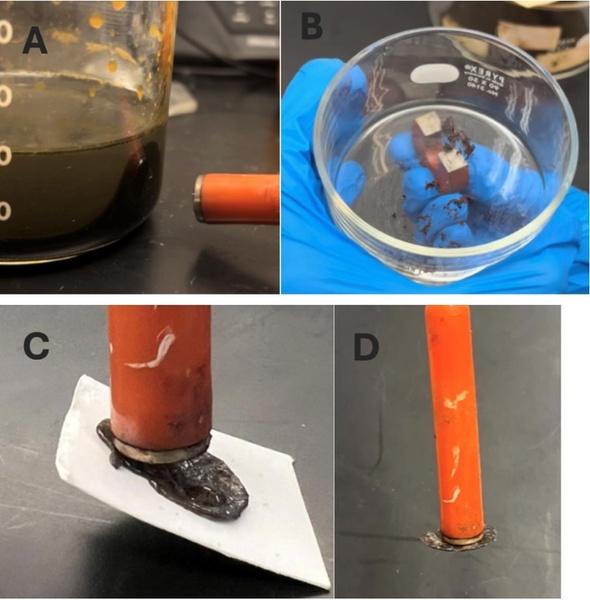
Microplastics persist across a wide range of ecosystems, including oceans, remote islands, and polar regions. They pose serious health and environmental risks: their toxicity and accumulation in biological systems are linked to inflammation and blood clotting in humans, while in ecosystems they disrupt food webs, reduce organismal fitness, and contribute to soil ecotoxicity. In this study, we hypothesized that incorporating magnetic iron (II) oxide nanoparticles into disposable cup linings could produce a waterproof magnetic polymer liner for paper cups. This integration may improve the recovery of plastic components from composite waste through magnetic recycling and reduce the risk of microplastic contamination in the environment. Iron (II) oxide is a magnetic compound that, if incorporated correctly, would not interfere with high-density polyethylene used in disposable paper cups, allowing it to maintain hydrophobic properties without disrupting structural integrity. For this study, iron (II) oxide nanoparticles were synthesized using iron (II) sulfate and iron (III) chloride, and characterized by energy dispersive X-ray spectroscopy and dynamic light scattering to confirm composition and size. Further, the liner’s magnetic properties were characterized through a magnetic field test. Our results demonstrated that the iron (II) oxide nanoparticles exhibited strong magnetic responsiveness and successfully bonded with the plastic layer, enhancing its manipulability. These findings suggest that iron (II) oxide nanoparticles could serve as a potential method for enhancing the recyclability of disposable cups while mitigating microplastic pollution, offering a potential possibility for broader industrial application in sustainable material development.
This article has been tagged with: