Analyzing the effects of genetic mutations in BRCA1, BRCA2, BARD1, and MLH1 in causing different cancers
(1) Valencia High School, (2) Stanford University School of Medicine
https://doi.org/10.59720/25-157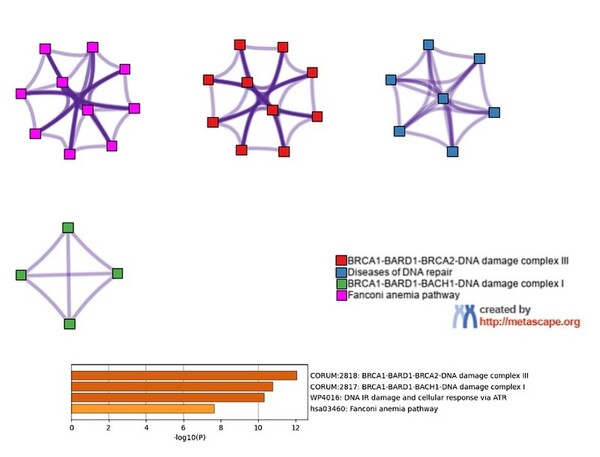
Although many studies have identified individual cancer-associated genes, there is still a gap in understanding which genes contribute broadly across multiple cancer types and how interactions between these genes influence cancer development when examined within the same analysis. Understanding these relationships is important because identifying the genes that contribute most significantly to cancer development may improve early detection, prevention, and targeted treatment strategies. We chose four genes commonly linked to cancer (BRCA1, BRCA2, BARD1, and MLH1) and hypothesized that mutations in the BRCA1 and BRCA2 genes would be associated with a higher number of cancer types and more severe mutation classifications compared to mutations in BARD1 and MLH1, given their central roles in DNA repair and genomic stability and their well-documented links to a broad range of hereditary cancers, whereas BARD1 functions primarily in partnership with BRCA1 and MLH1 is more narrowly tied to mismatch repair–associated cancers. Using publicly available CRISPR gene knockout data from the Broad Institute’s Dependency Map (DepMap), gene relationships via protein-protein interactions from the STRING database visualized through Metascape, and mutation data from the NIH ClinVar database to test how often cancer cell lines had genetic dependencies associated with these specific genes, we found that BRCA1 and BRCA2 had mutations occurring most frequently across cancer types, with indications of the BRCA1-BRCA2-BARD1 complex possibly contributing to this pattern of high mutation frequency among BRCA1, BRCA2, and BARD1. These findings can be used to improve cancer prevention and treatment strategies.
This article has been tagged with: