Investigating the effectiveness of ayurvedic plants on lowering uric acid levels to combat hyperuricemia
(1) Portola High School
https://doi.org/10.59720/25-169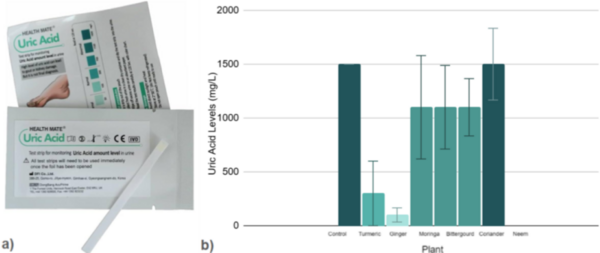
Millions of people around the world who suffer from hyperuricemia, a condition of excess uric acid that can become other life-threatening diseases, do not have access to treatment. This study aimed to find a natural, cost-effective solution by investigating the potential of six different ayurvedic plants (turmeric, ginger, moringa, bitter gourd, coriander, and neem) to reduce uric acid levels when used alone or in combination with other therapeutics. We hypothesized moringa to be the most effective, as it was previously shown in many studies to reduce uric acid significantly. To investigate this, we created plant powders from each plant and mixed them with water to create extracts. Then, we added uric acid solution and measured the resulting uric acid levels using colorimetric test strips. Ginger and turmeric were found to be the most effective because they lowered the uric acid levels the most out of all six plants. Ratios of turmeric and ginger were also found to be effective synergistically. Overall, our hypothesis was not supported because moringa’s effectiveness had only been previously studied individually, not in relation to other plants, and it did not perform as well comparatively. We conducted a literature search which revealed that the amounts of a uric acid-reducing substance called quercetin matched up with the performance of each of the plants, suggesting that it may be involved in the uric acid reduction. However, more detailed investigations must be conducted in the future directly comparing quercetin levels in different plant samples to validate this pattern.
This article has been tagged with: