Development of a pH-sensing hydrogel wound dressing for early infection monitoring for all skin color types
(1) Highland Park High School
https://doi.org/10.59720/25-176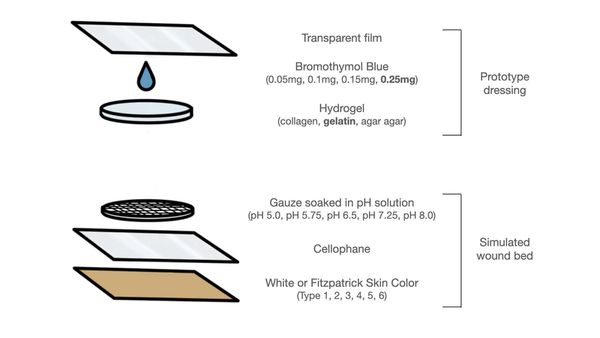
Wound infections cause significant morbidity and mortality. Increase in wound pH has been correlated with infection and may indicate infection before symptoms occur. However, little work on hydrogel wound dressings that can detect wound pH has been done. We therefore aimed to optimize a cost-effective pH sensing wound dressing that changes color to indicate infection. We hypothesized that using a collagen solution containing 0.13mM bromothymol blue (BTB) will permit a visible color change that is more visible than other hydrogel materials, as collagen is often used in wound healing applications and can be loaded with other materials. BTB was selected as the pH-indicating dye because it provides a color change detectable to the unaided eye. We tested several variables - hydrogel materials and concentration, amount of BTB, addition of BTB before/after solidification, and wound bed conditions - to find the optimal hydrogel that provided a distinct color change across a range of pH 5.0-8.0 on all six Fitzpatrick skin colors (1 = fairest to 6 = most pigmented). The optimal hydrogel consisted of 3mL of a 66.7 mg/mL gelatin solution with 0.13mM BTB added after solidification and showcased the greatest range in color from pH 5.0 to pH 8.0 and had a color change that was visually detectable and statistically significant (in pH 5.0 compared to pH 7.25 and 8.0) on all skin color types. Our work may provide a method for early detection of wound infection for patients with difficult access to care, such as in the developing world.
This article has been tagged with: