The ecological mysteries of Opheodesoma spectabilis : Seasonal trends, habitat preferences, and climate responses
(1) University Laboratory School, (2) University of Hawaiʻi at Mānoa School of Ocean and Earth Science and Technology
https://doi.org/10.59720/25-222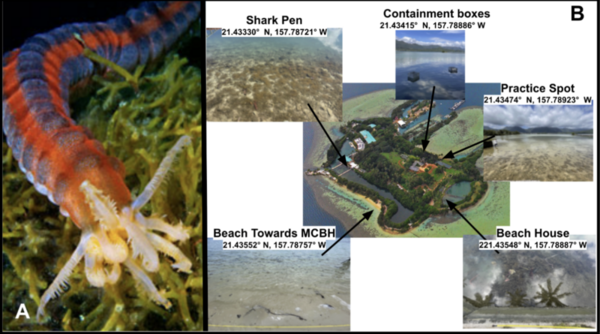
The 21st century marks the alarming effect of climate change on ocean conditions, leading to immense shifts in marine ecosystems and organisms. Among the most affected organisms are bioturbators, which mix sediment, bring up nutrients from the depths to the surface, and filter water, but much remains unknown about bioturbator ecology in the face of climate change. We hypothesized that the bioturbator species Opheodesoma spectabilis (conspicuous sea cucumber) 1) would increase in abundance in sandy areas with warmer temperatures, 2) would improve water quality, and 3) would exhibit stress responses under increased temperature and acidification. We observed a trend of O. spectabilis abundance with warmer water temperatures at specific sites in Kāneʻohe Bay, where the presence of gorilla algae-dominated substrates, higher dissolved oxygen saturation, and low water flow created optimal conditions for living. Few to no O. spectabilis were present in higher flow areas lacking algae, emphasizing the influence of substrate composition and habitat structure on species abundance. When simulating climate stressors in tanks, we found rapid O. spectabilis mortality at 36°C, suggesting that marine heat waves could severely impact populations. O. spectabilis exhibited the greatest ability to reduce turbidity, meaning clearer water visibility, compared to algae alone. These findings highlight the need for conservation strategies to address rising water temperatures, specifically for algae-dominated benthic habitats, and for further research to examine the combined effects of rising temperature, ocean acidification, and habitat conditions such as substrate composition and water flow on marine invertebrates.
This article has been tagged with: