It's better than me: Investigating the psychological risks of AI on self-esteem
(1) Seoul International School, (2) Ewha Womans University
https://doi.org/10.59720/25-237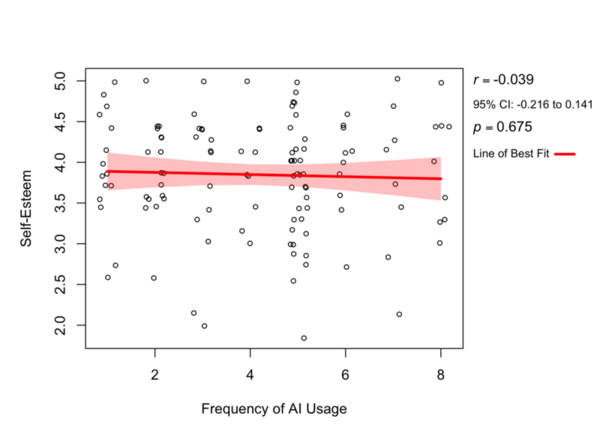
This study was motivated by increasing concerns over the psychological effects of artificial intelligence (AI) tools on human well-being. Specifically, this study examined the correlation between the use of AI information technology and self-esteem in performance contexts, determining whether AI can function as a source of upward social comparison similar to the existing literature on social media and peer-based comparisons. We hypothesized that frequent use of AI would be associated with lower performance self-esteem due to increased upward social comparison, which refers to comparing oneself with others perceived as more skilled, successful, or better off. Put another way, we hypothesized that people who frequently use AI would tend to compare their own abilities with AI (upward social comparison), therefore experiencing decreased self-esteem related to their skills or competence. This hypothesis was tested using an adult convenience sample. The study employed a survey with a sample of 121 participants and conducted a Pearson correlation test to investigate the relationship. Contrary to expectations, frequent interactions with generative AI platforms like ChatGPT and Gemini did not significantly impact users' performance self-esteem; therefore, the hypothesis was not supported. Nevertheless, the results have hopeful implications. The data suggest that current AI tools may not trigger the same social comparison often seen among people and peers. As such, this study concludes that AI, in its current chatbot form, may not pose a significant threat to performance-related self-esteem.
This article has been tagged with: