Sildenafil as a candidate geroprotective compound: Evidence from Drosophila lifespan extension
(1) Calvin Manitoba International School, (2) Department of Biological Sciences and Bioengineering, Inha University
https://doi.org/10.59720/26-036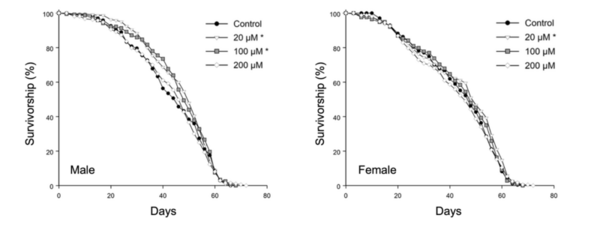
Sildenafil, a phosphodiesterase type five inhibitor originally developed to treat erectile dysfunction, has been reported to influence cellular metabolism, mitochondrial function, and vascular health, all of which are closely linked to aging. Based on these findings, we hypothesized that dietary sildenafil would exert anti-aging effects in the fruit fly, Drosophila melanogaster. To evaluate this, we examined its impact on lifespan, fecundity, body weight, and locomotor activity. Flies were fed food containing 20, 100, or 200 μM sildenafil. Low-dose treatment (20 μM) significantly extended lifespan in both sexes, while the intermediate dose (100μM) increased lifespan only in males and the highest dose (200 μM) showed no effect. Sildenafil increased cumulative egg production over the seven-day experimental period in females. After three weeks, both male and female flies given sildenafil displayed increased body weight, suggesting that lifespan extension may be associated with altered energy balance rather than reduced metabolism. Males showed a temporary decrease in locomotor activity after one week, but there were no long-term differences in either sex. Overall, sildenafil produced dose-dependent and sex-specific effects on longevity and reproduction, supporting its potential as an anti-aging candidate.
This article has been tagged with: