Dietary calcium intake and lead body burden in U.S. adolescents
(1) Thomas Jefferson High School for Science and Technology
https://doi.org/10.59720/26-062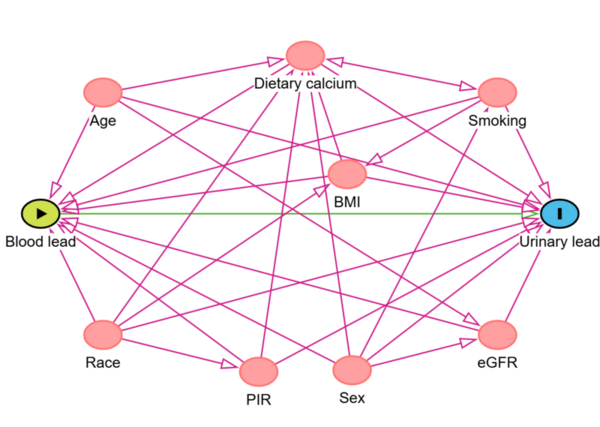
Lead exposure is a concern for adolescents, partly because rapid growth can change how the body handles lead. Although rodent studies and small-scale human trials suggest that calcium can influence lead absorption and elimination, evidence from large human populations is limited. We hypothesized that adolescents with higher calcium intake would excrete more lead, reflected by higher urinary lead at a given blood lead concentration. To test this, we analyzed data from 1,861 U.S. adolescents aged 12–19 years in the National Health and Nutrition Examination Survey (NHANES), a survey designed to represent the civilian U.S. population, from 2009–2018. We modeled habitual calcium intake with the National Cancer Institute method, and used survey-weighted regression to account for demographic and renal covariates. Calcium intake varied across the study population and was generally lower in some demographics, including lower-income groups. After accounting for blood lead and other covariates, adolescents who met the age-specific Estimated Average Requirement for calcium had about 14% higher urinary lead than those who did not meet this requirement. Taken together, our results indicate that meeting calcium recommendations may be associated with more efficient lead elimination during adolescence, which has implications for how clinicians and researchers interpret lead biomarkers in adolescent groups.
This article has been tagged with: