Experimental evaluation of time-dependent buffer effectiveness in open vs. sealed Long Island Sound microcosms
(1) Rye Country Day School, (2) Polygence, (3) Princeton University
https://doi.org/10.59720/26-073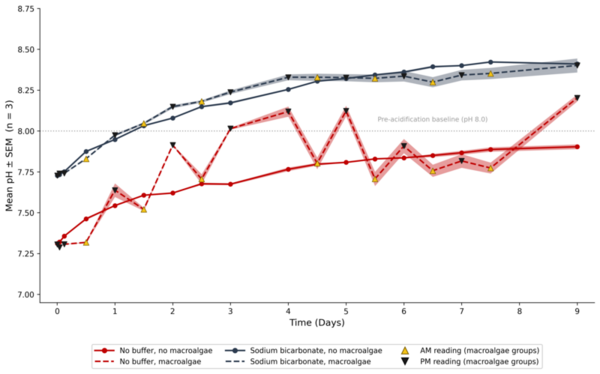
Rising atmospheric CO 2 concentrations disrupt the existing gas equilibrium between the atmosphere and the ocean, driving chemical reactions that lower seawater pH, a process known as ocean acidification. Ocean acidification threatens calcifying organisms such as shellfish whose shells dissolve before they can fully form. In coastal waters, acidification is further amplified by eutrophication and freshwater inputs. In response, shellfish industries actively use chemical, mineral, and biological buffering strategies to counteract seawater pH decline. This study tested the impact of air-water gas exchange on pH recovery in acidified Long Island Sound (LIS) water treated with buffers. We hypothesized that air-water gas exchange would limit the effectiveness of buffering strategies. We compared pH recovery in open and sealed containers following a standardized acidification shock. We used two- and three-factor Type II ANOVAs to quantify the effects of air-water gas exchange and buffering on pH recovery over time. Air-water gas exchange had no detectable effect at one-hour post-acidification but became the dominant factor after eight days. Both experiments suggest that air–water gas exchange progressively dominates buffering over time. They also suggest that buffering strategies are more effective in low-exchange environments, which are characteristic of stratified bottom waters, enclosed hatchery systems, or hypoxic layers. This framework helps identify where chemical, mineral, or biological interventions are most likely to improve pH stability in coastal waters.
This article has been tagged with: