Browse Articles

A comparative study on the suitability of virtual labs for school chemistry experiments

Praveen et al. | Aug 22, 2022

A comparative study on the suitability of virtual labs for school chemistry experiments

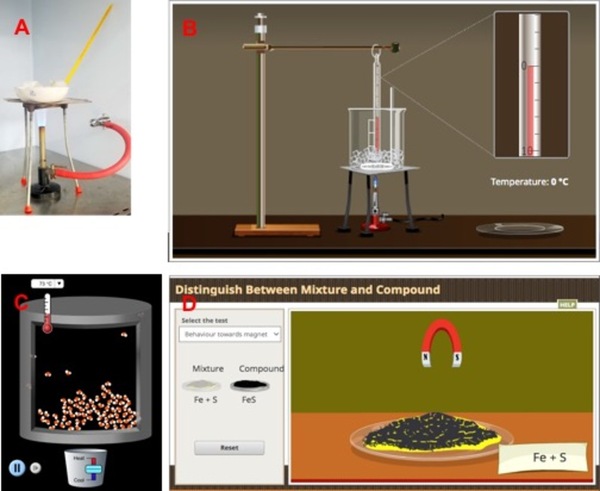
Virtual labs have been gaining popularity over the last few years, especially during the worldwide lockdown due to the COVID-19 pandemic. In this study, the suitability of virtual labs for school chemistry experiments is addressed and their effectiveness is compared to traditional physical lab experiments by focusing on physical and human resources, convenience, cost, safety, and time involved as well as topic "matter".

Read More...
Differences in online reviews between different communities: An empirical study on Amazon and Goodreads

Choi et al. | May 30, 2026

Differences in online reviews between different communities:  An empirical study on Amazon and Goodreads
Image credit: Choi and Choi

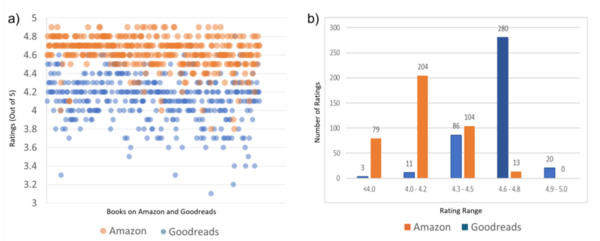
Online review platforms often provide different reviews on the same product, potentially confusing consumers. In this study, we found that the number of raters on Amazon is lower for the same book, while ratings on Amazon were higher than those on Goodreads. Furthermore, these differences in ratings and rater counts were larger for fiction books than for non‑fiction books.

Read More...

The influence of purpose-of-use on information overload in online social networking

Agarkar et al. | Nov 01, 2022

The influence of purpose-of-use on information overload in online social networking

Here, seeking to understand the effects of social media in relation to social media fatigue and/or overload in recent years, the authors used various linear models to assess the results of a survey of 27 respondents. Their results showed that increased duration of use of social media did not necessarily lead to fatigue, suggesting that quality may be more important than quantity. They also considered the purpose of an individual's social media usage as well as their engagement behavior during the COVID-19 pandemic.

Read More...

The effect of the pandemic on the behavior of junior high school students

Kong Grisius et al. | May 01, 2023

The effect of the pandemic on the behavior of junior high school students
Image credit: Chris Montgomery

Here, seeking to understand how the COVID-19 pandemic affected the social interactions of junior high school students, the authors surveyed students, teachers, and parents. Contrary to their initial hypotheses, the authors found positive correlation between increased virtual contact during social isolation and in-person conflict and disregard for social norms after the pandemic. While the authors identified the limitations of their study, they suggest that further research into the effect of online interactions is becoming increasingly important.

Read More...

An improved video fingerprinting attack on users of the Tor network

Srikanth et al. | Mar 31, 2022

An improved video fingerprinting attack on users of the Tor network

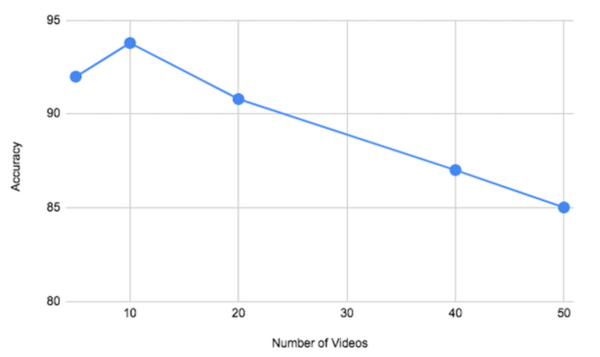
The Tor network allows individuals to secure their online identities by encrypting their traffic, however it is vulnerable to fingerprinting attacks that threaten users' online privacy. In this paper, the authors develop a new video fingerprinting model to explore how well video streaming can be fingerprinted in Tor. They found that their model could distinguish which one of 50 videos a user was hypothetically watching on the Tor network with 85% accuracy, demonstrating that video fingerprinting is a serious threat to the privacy of Tor users.

Read More...

Impact of study partner status and group membership on commitment device effectiveness among college students

Gupta et al. | Jun 03, 2022

Impact of study partner status and group membership on commitment device effectiveness among college students

Here seeking to identify a possible solution to procrastination among college students, the authors used an online experiment that involved the random assignment of study partners that they shared their study time goal with. These partners were classified by status and group membership. The authors found that status and group membership did not significantly affect the likelihood of college students achieving their committed goals, and also suggest the potential of soft commitment devices that take advantage of social relationships to reduce procrastination.

Read More...