
The authors access a panel of leaf traits across ten deciduous tree species to explore adaptive strategies between large and small trees.
Read More...Variation, relationship, and trade-offs of leaf traits in large and small deciduous broadleaf tree species
The authors access a panel of leaf traits across ten deciduous tree species to explore adaptive strategies between large and small trees.
Read More...Identifying shark species using an AlexNet CNN model
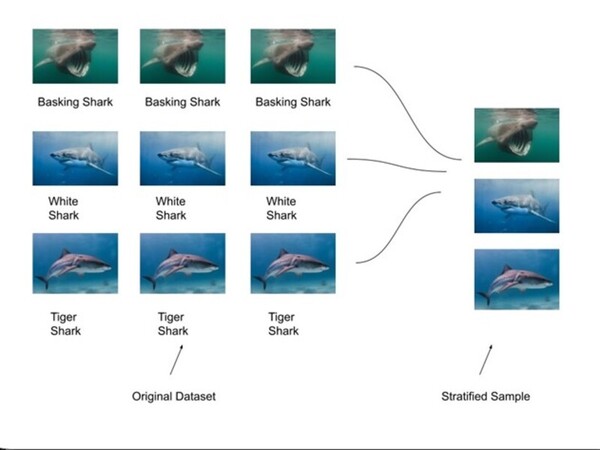
The challenge of accurately identifying shark species is crucial for biodiversity monitoring but is often hindered by time-consuming and labor-intensive manual methods. To address this, SharkNet, a CNN model based on AlexNet, achieved 93% accuracy in classifying shark species using a limited dataset of 1,400 images across 14 species. SharkNet offers a more efficient and reliable solution for marine biologists and conservationists in species identification and environmental monitoring.
Read More...Milkweed sustainability in the Sonoran Desert: A. erosa is more water-efficient compared to two other species
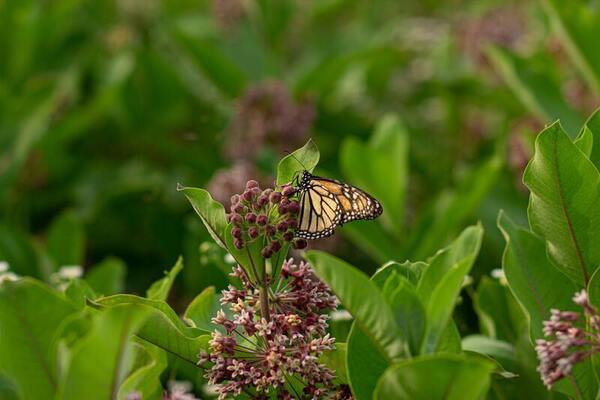
This study assesses the capacity for milkweed species, an important host plant for Monarch butterflies, to grow in desert environments with different water levels.
Read More...The Effect of Anubias barteri Plant Species on Limiting Freshwater Acidification
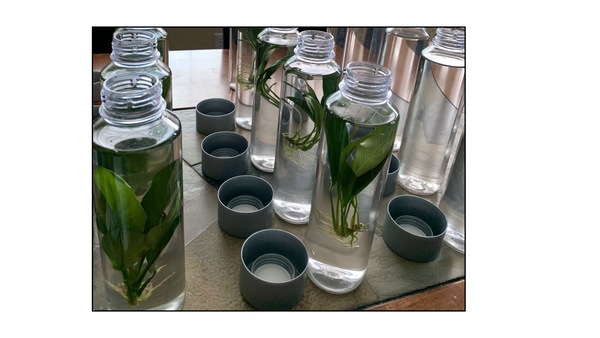
Research relating to freshwater acidification is minimal, so the impact of aquatic plants, Anubias barteri var. congensis and Anubias barteri var. nana, on minimizing changes in pH was explored in an ecosystem in Northern California. Creek water samples, with and without the aquatic plants, were exposed to dry ice to simulate carbon emissions and the pH was monitored over an eight-hour period. There was a 25% difference in the observed pH based on molar hydrogen ion concentration between the water samples with plants and those without plants, suggesting that aquatic plants have the potential to limit acidification to some extent. These findings can guide future research to explore the viable partial solution of aquatic plants in combating freshwater acidification.
Read More...Optimizing an eDNA assay and field deployment to detect decapod species in Oʻahu streams

This study explored the use of environmental DNA (eDNA) methods to detect native Hawaiian decapod species (‘opae), which are difficult to observe manually due to their low density.
Read More...Impact of environmental stressors on ultrasonic acoustic emissions in different species of plants
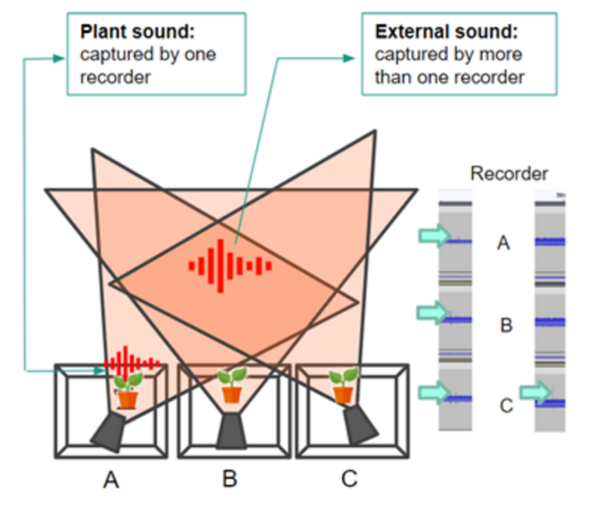
Current horticulture practices often rely on pesticides, causing environmental harm. To address this, authors explore the use of ultrasonic sound emissions to detect plant stress at an individual level.
Read More...Polluted water tested from the Potomac River affects invasive species plant growth

Here recognizing the potential for pollution to impact the ecosystems of local waterways, the authors investigated the growth of tiger lilies, which are invasive to the Potomac River, in relation to the level of pollution. The authors report that increasing levels of pollution led to increased growth of the invasive species based on their study.
Read More...Evaluating machine learning algorithms to classify forest tree species through satellite imagery

Here, seeking to identify an optimal method to classify tree species through remote sensing, the authors used a few machine learning algorithms to classify forest tree species through multispectral satellite imagery. They found the Random Forest algorithm to most accurately classify tree species, with the potential to improve model training and inference based on the inclusion of other tree properties.
Read More...The Role of Corresponding Race, Gender, and Species as Incentives for Charitable Giving

Inherent bias is often the unconscious driver of human behavior, and the first step towards overcoming these biases is our awareness of them. In this article the authors investigate whether race, gender or species affect the choice of charity by middle class Spaniards. Their conclusions serve as a starting point for further studies that could help charities refine their campaigns in light of these biases effectively transcending them or taking advantage of them to improve their fundraising attempts.
Read More...Fire and dry grass: Effects of Pennisetum villosum on a California native, Nassella pulchra, in drought times

Invasive species pose a significant threat to many ecosystems, whether by outcompeting native species and disturbing food webs, or through increasing risks of natural disasters like flooding and wildfires. The ornamental grass species Pennisetum villosum R. Br. was previously identified by the California Invasive Plant Council as being potentially invasive; this experiment was conducted to determine if P. villosum displays characteristics of an invasive species when grown in a California chaparral environment. Reults found that in both conditions, the two species had similar germination rates, and that P. villosum grew significantly larger than N. pulchra for around 95 days.
Read More...