Browse Articles

Assaying the Formation of Beneficial Biofilms by Lactic Acid Bacteria and the Effect of Ayurvedic Plant Extracts on Their Enhancement

Rajpal et al. | Oct 12, 2017

Assaying the Formation of Beneficial Biofilms by Lactic Acid Bacteria and the Effect of Ayurvedic Plant Extracts on Their Enhancement

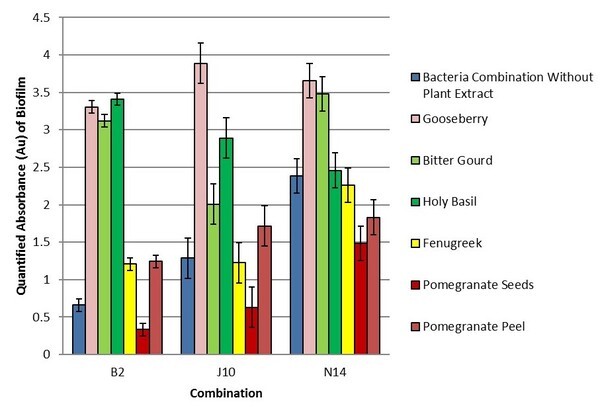
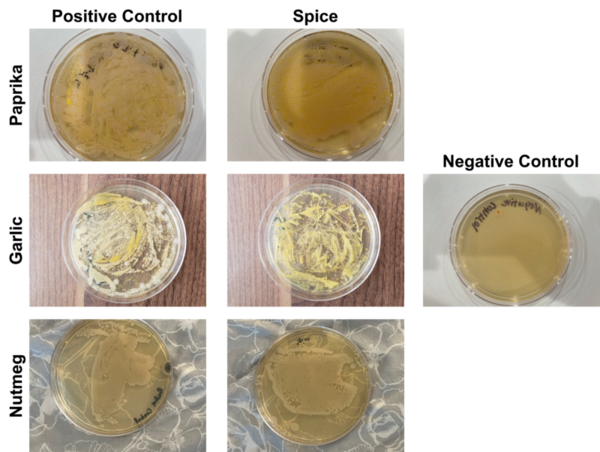
This study aimed to obtain an optimal non-antibiotic method to suppress the growth of pathogenic bacteria within the body. The two-fold purpose of this project was to determine which combination of bacteria would result in the most biofilm formation and then to assess the effect of ayurvedic plant extracts on the biofilm. The results show that the addition of a plant extract can affect the biofilm growth of a bacteria combination. The applications of this study can be used to design probiotic supplements with added beneficial plant extracts.

Read More...

Increasing CO2 levels in water decrease the hatching success of brine shrimp

Greer et al. | Jan 07, 2025

Increasing CO<sub>2</sub> levels in water decrease the hatching success of brine shrimp
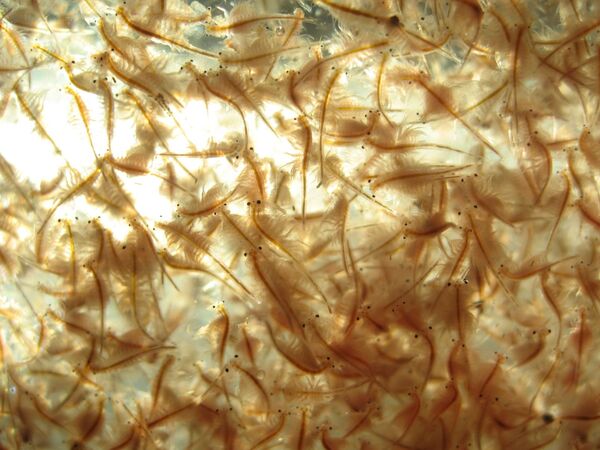
Image credit: "Live brine shrimp" by Saul Dolgin is licensed under CC BY 2.0. To view a copy of this license, visit https://creativecommons.org/licenses/by/2.0/?ref=openverse.

As atmospheric carbon dioxide (CO2) levels rise, ocean acidification poses a growing threat to marine ecosystems. To better understand these changes, this study investigates how varying CO2 levels influence the growth of brine shrimp. The findings offer important insights into the resilience of aquatic life and the broader implications of environmental change.

Read More...

Developing novel plant waste-based hydrogels for skin regeneration and infection detection in diabetic wounds

Mathew et al. | Aug 10, 2023

Developing novel plant waste-based hydrogels for skin regeneration and infection detection in diabetic wounds

The purpose of this investigation is to develop a hydrogel to aid skin regeneration by creating an extracellular matrix for fibroblast growth with antibacterial and infection-detection properties. Authors developed two natural hydrogels based on pectin and potato peels and characterized the gels for fibroblast compatibility through rheology, scanning electron microscopy, swelling, degradation, and cell cytotoxicity assays. Overall, this experiment fabricated various hydrogels capable of acting as skin substitutes and counteracting infections to facilitate wound healing. Following further testing and validation, these hydrogels could help alleviate the 13-billion-dollar financial burden of foot ulcer treatment.

Read More...

Analysis of ultraviolet light as a bactericide of gram-negative bacteria in Cladophora macroalgae extracts

Newell et al. | Nov 07, 2022

Analysis of ultraviolet light as a bactericide of gram-negative bacteria in <em>Cladophora</em> macroalgae extracts

Here, the authors sought to use Cladophora macroalgae as a possible antibiotic to address the growing threat of antibiotic resistance in pathogenic bacteria. However, when they observed algae extracts to be greatly contaminated with gram-negative bacteria, they adapted to explore the ability to use ultraviolet light as a bactericide. They found that treatment with ultraviolet light had a significant effect.

Read More...

Upregulation of the Ribosomal Pathway as a Potential Blood-Based Genetic Biomarker for Comorbid Major Depressive Disorder (MDD) and PTSD

Ravi et al. | Aug 22, 2018

Upregulation of the Ribosomal Pathway as a Potential  Blood-Based Genetic Biomarker for Comorbid Major Depressive Disorder (MDD) and PTSD

Major Depressive Disorder (MDD), and Post-Traumatic Stress Disorder (PTSD) are two of the fastest growing comorbid diseases in the world. Using publicly available datasets from the National Institute for Biotechnology Information (NCBI), Ravi and Lee conducted a differential gene expression analysis using 184 blood samples from either control individuals or individuals with comorbid MDD and PTSD. As a result, the authors identified 253 highly differentially-expressed genes, with enrichment for proteins in the gene ontology group 'Ribosomal Pathway'. These genes may be used as blood-based biomarkers for susceptibility to MDD or PTSD, and to tailor treatments within a personalized medicine regime.

Read More...