Browse Articles

A Temperature-Based Comparison of Compounds Found in Bao Chong Tea, Green Tea, and Black Tea

Lin et al. | May 14, 2019

A Temperature-Based Comparison of Compounds Found in Bao Chong Tea, Green Tea, and Black Tea

While tea has a complex history, recently the health benefits of this beverage have come into focus. In this study, researchers sought to compare the levels of caffeine, catechins and L-theanine between different types of tea using NMR spectroscopy. Further, the impact of brewing temperature on the release of these compounds was also assessed. Of those tested, Bao Chong tea had the highest levels of these compounds. Brewing temperatures between 45ºC and 75ºC were found to be optimal for compound release. These results can help consumers make informed choices about their tea preparation and intake.

Read More...

The Emergence of Tetracycline Resistance in Rumen Bacteria

Memili et al. | Sep 16, 2016

The Emergence of Tetracycline Resistance in Rumen Bacteria

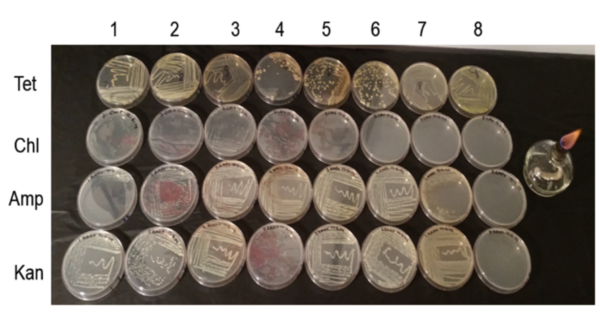
The emergence of antibiotic-resistant pathogenic bacteria is a major concern for human health, rendering some antibiotics ineffective in treating diseases. The authors of this study tested the hypothesis that exposing rumen bacteria to tetracycline will gradually lead to the development of tetracycline-resistant bacteria, some of which will develop multidrug resistance.

Read More...

Exploring Interactions between PFAS (Per- and Polyfluoroalkyl Substances) and proteins

Lu-Yang et al. | May 16, 2026

Exploring Interactions between PFAS (Per- and Polyfluoroalkyl Substances) and proteins
Image credit: Authors

Here the authors investigated how the "forever chemical" perfluorooctanoic acid binds to bovine serum albumin (BSA) using computational software to simulate its potential impact on essential human plasma proteins. They identify a possible, high-energy binding configuration that could persistently impair protein functions, underscoring the critical need for further research into the long-term health risks of per- and poly-fluoroalkyl substances exposure.

Read More...

The growth of bacteria on everyday objects and the antimicrobial effects of household spices

Daehan Yi et al. | Apr 29, 2026

The growth of bacteria on everyday objects and the antimicrobial effects of household spices
Image credit: Daehan Yi, Boughaleb Hassani and Ribeiro

The study investigates the antibacterial properties of household spices on bacteria isolated from everyday objects, aiming to address the limited understanding of bacterial resilience on surfaces and the potential of spices as antibacterial agents. Researchers hypothesized that bacteria would grow faster on some surfaces than others and that spices like honey, chili powder, turmeric, and sumac would inhibit bacterial growth at varying rates. The findings suggest that household spices possess significant antibacterial properties and could be used as emergency disinfectants, particularly in under-resourced settings. However, they cannot replace medical treatments but offer insights into alternative health solutions using common ingredients.

Read More...