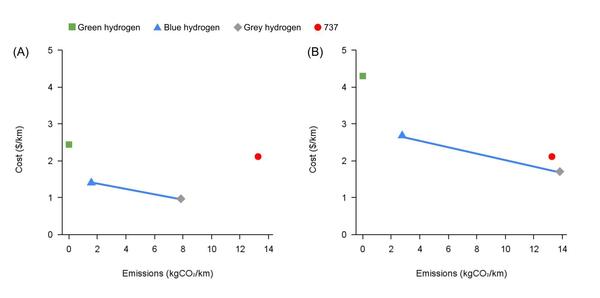
Growing climate concerns have intensified research into zero-emission transportation fuels, notably hydrogen. Hydrogen is considered a clean fuel because its only major by-product is water. This project analyzes how hydrogen compares to kerosene as a commercial aircraft fuel with respect to cost, CO2 emissions, and flight range.
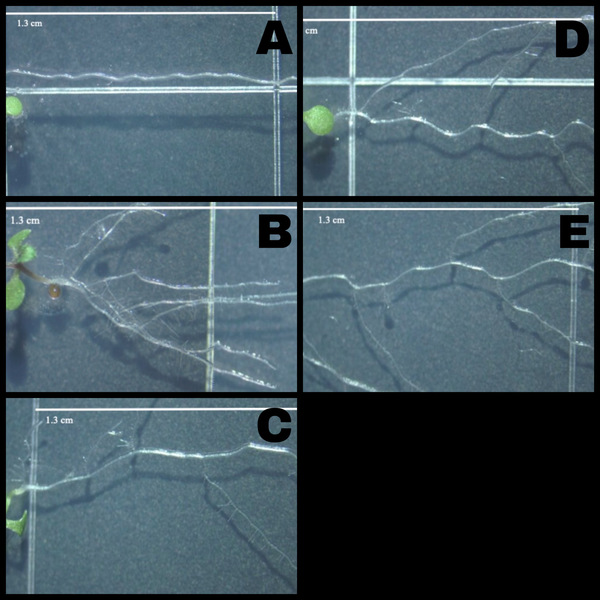
The use of fertilizers is associated with an increase in soil degradation, which is predicted to lead to a decrease in crop production within the next decade. Thus, it is critical to find solutions to support crop production to sustain the robust global population. In this study, the authors investigate how probiotic bacteria, like Rhizobium leguminosarum, Bacillus subtilis and Pseudomonas fluorescens, can impact the growth of Arabidopsis thaliana when applied to the seeds.They hypothesized that solutions with multiple bacterial species compared to those with only a single bacterial species would promote seed germination more effectively.
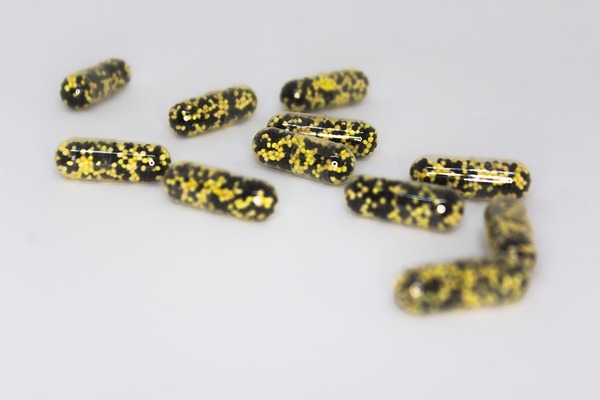
Industrial process are designed to optimize speed, energy use and quality. Some steps involve the translation of product-filled barrels, how far and fast this happens depends on the properties of the product within. This article investigates such properties on a mini-scale, where the roll of bead size, texture and material on the distance travelled by a cylindrical capsule is investigated.
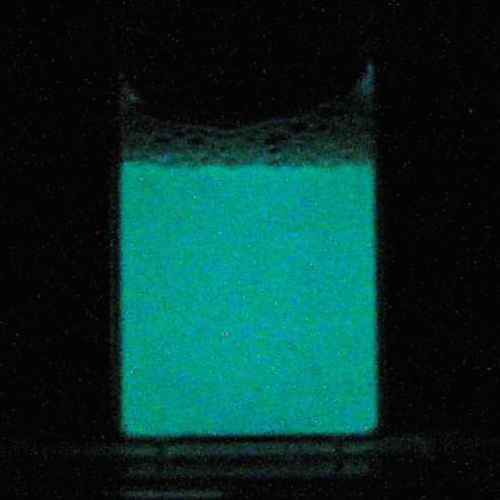
Vibrio fischeri is an amazing species of bacteria that lives symbiotically in the light organ of luminescent bobtail squid. In this study, authors study the strength and optimal conditions for V. fischeri light production, and assess whether this luminescence could be a natural light source comparable to manmade lighting.
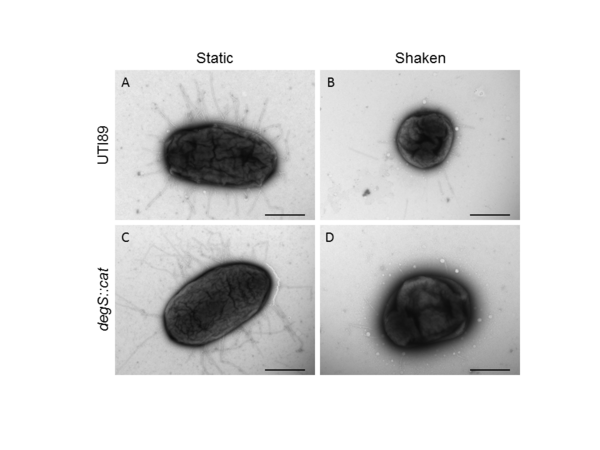
DegS is an integral inner membrane protein in E. coli that helps break down misfolded proteins. When it is mutated, there is a large increase in the production of outer membrane vesicles (OMVs), which are thought to play a role in pathogenesis. This study used mutant strains of uropathogenic E. coli (UPEC) to characterize the role of DegS and OMVs on UPEC virulence.
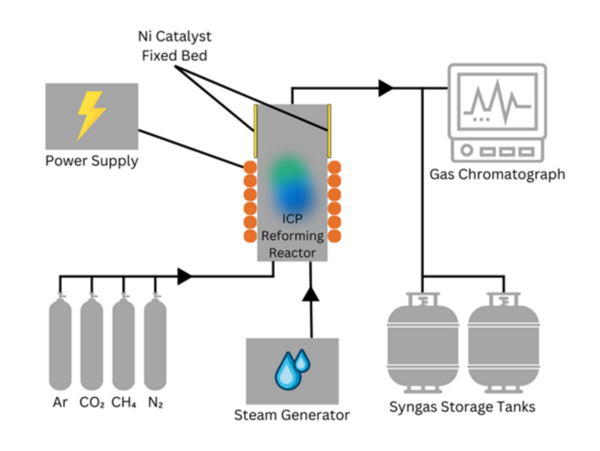
The escalating crisis of climate change, driven by the accumulation of greenhouse gases from human activities, demands urgent and innovative solutions to curb rising global temperatures. Plasma-based methane (CH4) and carbon dioxide (CO2) reforming offers a promising pathway for carbon capture and the sustainable production of hydrogen fuel and syngas components. To advance this technology, particularly in terms of energy efficiency and selectivity, it is essential to enhance the conversion efficiencies of CO2 and CH4.
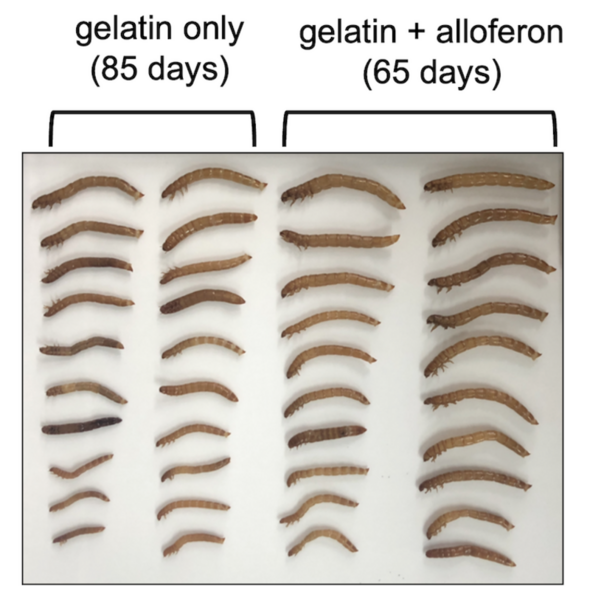
Mealworms (Tenebrio molitor) are important food sources for reptiles, birds, and other organisms, as well as for humans. However, the slow growth and low survival rate of mealworms cause problems for mass production. Since alloferon, a synthetic peptide, showed long-term immunological effects on mealworms, we hypothesized that alloferon would function as a growth promoter to maximize mealworm production. We discovered that the overall weight of the alloferon-containing gelatin diet group was 39.5-90% heavier, and the development time of the experimental group was shortened up to 20.6-39.6% than the control group.
Here, the authors sought to evaluate the efforts of fast fashion clothing companies towards sustainability, specifically in regards to the United Nations Sustainable Development Goals. The authors used natural language processing to investigate the sustainability reports of fast fashion companies focusing on terms established by the UN. They found that the most consistently addressed areas were related to sustainable consumption/production, with a focus on health and well-being emerging during the recent pandemic.
The Environmental Protection Agency (EPA) reports a significant number of heavy metal-contaminated sites across the United States. To address this public health concern, rhizoremediation using microbes has emerged as a promising solution. Here, a combination of soil microbes were inoculated in the rhizosphere in soil contaminated with 500 parts per million (ppm) of lead. Results showed rhizoremediation is an effective bioremediation strategy and may increase crop productivity by converting nonarable lands into arable lands.
Anticholinergics are used in treating asthma, a chronic inflammation of the airways. These drugs block human M1 and M2 muscarinic acetylcholine receptors, inhibiting bronchoconstriction. However, studies have reported complications of anticholinergic usage, such as exacerbated eosinophil production and worsened urinary retention. Modification of known anticholinergics using bioisosteric replacements to increase efficacy could potentially minimize these complications. The present study focuses on identifying viable analogs of anticholinergics to improve binding energy to the receptors compared to current treatment options. Glycopyrrolate (G), ipratropium (IB), and tiotropium bromide (TB) were chosen as parent drugs of interest, due to the presence of common functional groups within the molecules, specifically esters and alcohols. Docking score analysis via AutoDock Vina was used to evaluate the binding energy between drug analogs and the muscarinic acetylcholine receptors. The final results suggest that G-A3, IB-A3, and TB-A1 are the most viable analogs, as binding energy was improved when compared to the parent drug. G-A4, IB-A4, IB-A5, TB-A3, and TB-A4 are also potential candidates, although there were slight regressions in binding energy to both muscarinic receptors for these analogs. By researching the effects of bioisosteric replacements of current anticholinergics, it is evident that there is a potential to provide asthmatics with more effective treatment options.