Browse Articles

A machine learning approach for abstraction and reasoning problems without large amounts of data

Isik et al. | Jun 25, 2022

A machine learning approach for abstraction and reasoning problems without large amounts of data

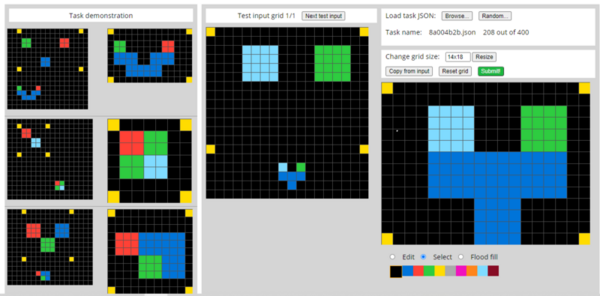
While remarkable in its ability to mirror human cognition, machine learning and its associated algorithms often require extensive data to prove effective in completing tasks. However, data is not always plentiful, with unpredictable events occurring throughout our daily lives that require flexibility by artificial intelligence utilized in technology such as personal assistants and self-driving vehicles. Driven by the need for AI to complete tasks without extensive training, the researchers in this article use fluid intelligence assessments to develop an algorithm capable of generalization and abstraction. By forgoing prioritization on skill-based training, this article demonstrates the potential of focusing on a more generalized cognitive ability for artificial intelligence, proving more flexible and thus human-like in solving unique tasks than skill-focused algorithms.

Read More...

A potentially underestimated source of CO2 and other greenhouse gases in agriculture

Corcimaru et al. | May 18, 2022

A potentially underestimated source of CO<sub>2</sub> and other greenhouse gases in agriculture

Here the authors investigated the role of agricultural fertilizers as potential contributors to greenhouse gas emissions. In contrast to the typical investigations that consider microbiological processes, the authors considered purely chemical processes. Based on their results they found that as much as 20.41% of all CO2 emission from land-based activities could be a result of mineral nitrogen fertilizers.

Read More...

Impact of light intensity and electrolyte volume on performance of photo-electrochemical (PEC) solar cell

Patel et al. | Mar 14, 2022

Impact of light intensity and electrolyte volume on performance of photo-electrochemical (PEC) solar cell

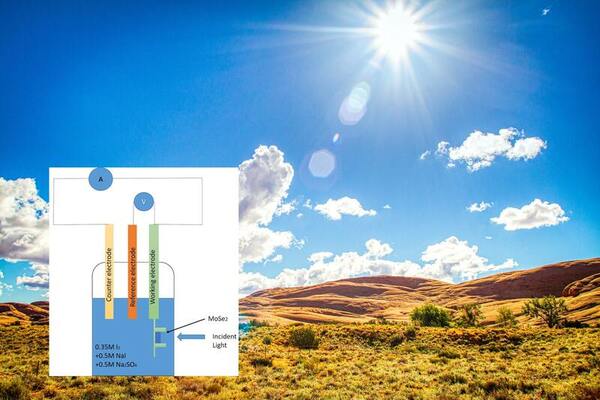
Here, seeking to develop more efficient solar cells, the authors investigated photo-electrochemical (PEC) solar cells, specifically molybdenum diselenide (MoSe2) based on its high resistance to corrosion. They found that the percentage efficiency of these PEC solar cells was proportional to light intensity–0.9 and that performance was positively influenced by increasing the electrolyte volume. They suggest that studies such as these can lead to new insight into reaction-based solar cells.

Read More...

Wound healing properties of mesenchymal conditioned media: Analysis of PDGF, VEGF and IL-8 concentrations

Prasad et al. | Dec 15, 2021

Wound healing properties of mesenchymal conditioned media: Analysis of PDGF, VEGF and IL-8 concentrations

Regenerative medicine has become a mainstay in recent times, and employing stem cells to treat several degenerative, inflammatory conditions has resulted in very promising outcomes. These forms of cell-based therapies are novel approaches to existing treatment modalities. In this study, the authors compared the concentrations of the cytokines PDGF, IL-8, and VEGF between conditioned and spent media of mesenchymal stem cells (MSCs) to evaluate their potential therapeutic properties for wound healing in inflammatory conditions. They hypothesized that conditioned media contains higher concentrations of wound healing cytokines compared to spent media. The authors found that while IL-8 and VEGF were present in highest concentrations in conditioned media, PDGF was present in maximal amounts in spent media.

Read More...

The Role of a Mask - Understanding the Performance of Deep Neural Networks to Detect, Segment, and Extract Cellular Nuclei from Microscopy Images

Dasgupta et al. | Jul 06, 2021

The Role of a Mask - Understanding the Performance of Deep Neural Networks to Detect, Segment, and Extract Cellular Nuclei from Microscopy Images

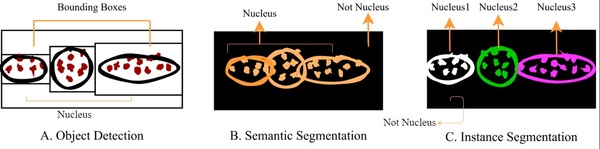
Cell segmentation is the task of identifying cell nuclei instances in fluorescence microscopy images. The goal of this paper is to benchmark the performance of representative deep learning techniques for cell nuclei segmentation using standard datasets and common evaluation criteria. This research establishes an important baseline for cell nuclei segmentation, enabling researchers to continually refine and deploy neural models for real-world clinical applications.

Read More...

Propagation of representation bias in machine learning

Dass-Vattam et al. | Jun 10, 2021

Propagation of representation bias in machine learning

Using facial recognition as a use-case scenario, we attempt to identify sources of bias in a model developed using transfer learning. To achieve this task, we developed a model based on a pre-trained facial recognition model, and scrutinized the accuracy of the model’s image classification against factors such as age, gender, and race to observe whether or not the model performed better on some demographic groups than others. By identifying the bias and finding potential sources of bias, his work contributes a unique technical perspective from the view of a small scale developer to emerging discussions of accountability and transparency in AI.

Read More...

A comparative analysis of machine learning approaches for prediction of breast cancer

Nag et al. | May 11, 2021

A comparative analysis of machine learning approaches for prediction of breast cancer

Machine learning and deep learning techniques can be used to predict the early onset of breast cancer. The main objective of this analysis was to determine whether machine learning algorithms can be used to predict the onset of breast cancer with more than 90% accuracy. Based on research with supervised machine learning algorithms, Gaussian Naïve Bayes, K Nearest Algorithm, Random Forest, and Logistic Regression were considered because they offer a wide variety of classification methods and also provide high accuracy and performance. We hypothesized that all these algorithms would provide accurate results, and Random Forest and Logistic Regression would provide better accuracy and performance than Naïve Bayes and K Nearest Neighbor.

Read More...

Testing HCN1 channel dysregulation in the prefrontal cortex using a novel piezoelectric silk neuromodulator

Mathew et al. | May 05, 2021

Testing HCN1 channel dysregulation in the prefrontal cortex using a novel piezoelectric silk neuromodulator

Although no comprehensive characterization of schizophrenia exists, there is a general consensus that patients have electrical dysfunction in the prefrontal cortex. The authors designed a novel piezoelectric silk-based implant and optimized electrical output through the addition of conductive materials zinc oxide (ZnO) and aluminum nitride (AlN). With further research and compatibility studies, this implant could rectify electrical misfiring in the infralimbic prefrontal cortex.

Read More...

Culturally Adapted Assessment Tool for Autism Spectrum Disorder and its Clinical Significance

Das et al. | Apr 19, 2021

Culturally Adapted Assessment Tool for Autism Spectrum Disorder and its Clinical Significance

Diagnosing of Autism Spectrum Disorder (ASD) using tools developed in the West is challenging in the Indian setting due to a huge diversity in sociocultural and economic backgrounds. Here, the authors developed a home-based, audiovisual game app (Autest) suitable for ASD risk assessment in Indian children under 10 years of age. Ratings suggested that the tool is effective and can reduce social inhibition and facilitate assessment. Further usage and development of Autest can improve risk assessment and early intervention measures for children with ASD in India.

Read More...