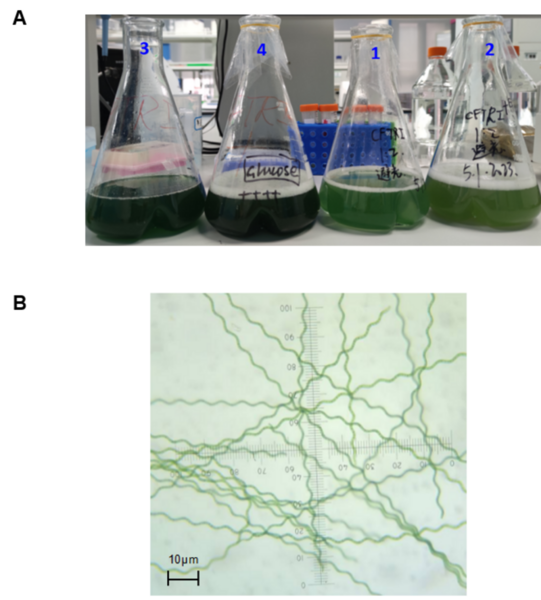
The authors looked at the ability to grow S. platensis on a larger scale with reduced cost given that it is currently quite expensive to grow, but poses as an important food source in the future.
Read More...Heterotrophic culture of Spirulina platensis improved its growth and the study of its nutritional effect
The authors looked at the ability to grow S. platensis on a larger scale with reduced cost given that it is currently quite expensive to grow, but poses as an important food source in the future.
Read More...Optimal pH for indirect electrochemical oxidation of isopropyl alcohol with Ru-Ti anode and NaCl electrolyte

In this study, the authors determine optimal pH levels for maximizing isopropanol degradation in water. This has important applications for cleaning up polluted wastewater in the environment.
Read More...An Analysis of the Mathematical Accuracy of Perspective in Paintings

Here the authors investigate whether there are mathematical inaccuracies of perspective in artists' paintings that are undetectable with our naked eyes. Using the cross-ratio method, they find that there are three significant errors in various famous paintings which increase as the structures in the paintings recede from the viewer.
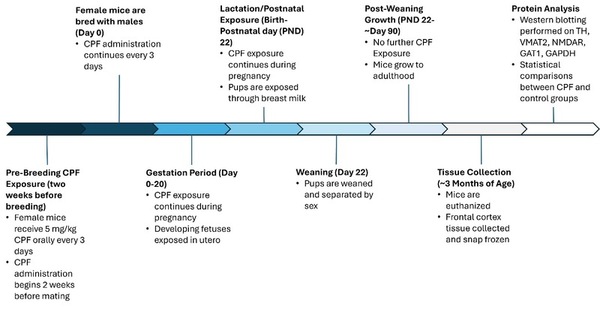
Read More...Chlorpyrifos exposure in mice leads to altered expression of key neurodevelopmental proteins
Reinforcement learning in 2-D space with varying gravitational fields

In this study the authors looked at the ability to navigate planes in space between randomly placed planets. They used machine and reinforcement learning to run simulations and found that they were able to identify optimal paths for travel. In the future these techniques may allow for safer travel in unknown spaces.
Read More...Performance comparison of indoor polyculture utilizing hydroponic and soil-based systems
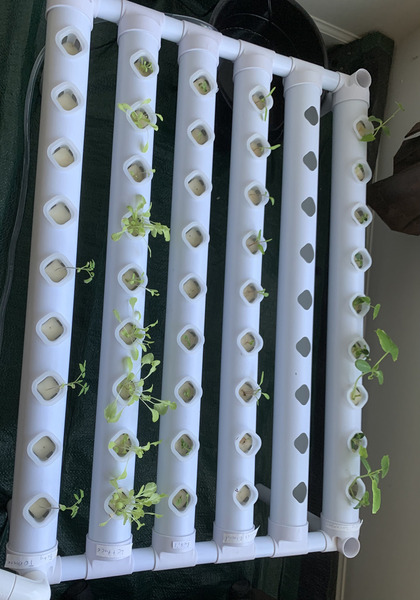
Hydroponics is often promoted as a highly efficient alternative to traditional soil farming, but its effectiveness in small indoor polyculture systems is not well understood. In this study, students compared plant growth and maturity across hydroponic and soil-based indoor polycultures and found that soil grown plants were generally taller and more mature than those grown hydroponically. These results suggest that soil-based methods may outperform hydroponics in certain household polyculture settings.
Read More...Pressing filtration for extraction of cabbage dietary fiber and soluble components
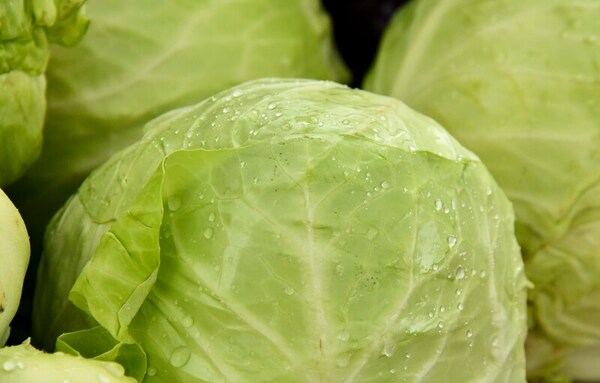
Here the authors introduce pressing filtration as a novel, efficient, and low-energy method for extracting dietary fiber from cabbage, which successfully retains heat-sensitive nutrients and achieves a high fiber yield. The study demonstrates the scalability and economic viability of this technique for commercial use, highlighting that the resulting high-fiber cabbage powder can be incorporated into familiar foods like hamburger buns and beef patties without compromising taste or sensory quality.
Read More...Correlation between trihalomethane concentrations and various cancers in Massachusetts counties
.png)
The authors assess incidence and mortality rates of two cancer types in relation to trihalomethane pollutant concentrations in drinking water.
Read More...Levering machine learning to distinguish between optimal and suboptimal basketball shooting forms
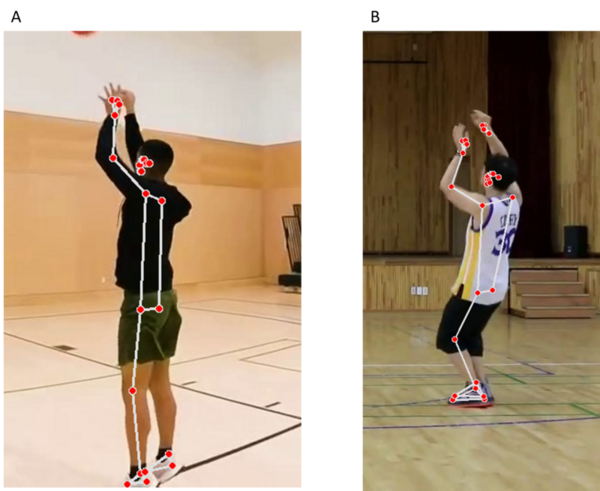
The authors looked at different ways to build computational resources that would analyze shooting form for basketball players.
Read More...The impact of culturally informed music therapy on visually impaired youth: A Jaffna, Sri Lanka study

The authors looked at the effect of music therapy on visually impaired youth. They found that culturally relevant curricula is an important consideration while also showing that broadly music therapy enhances working memory, emotional well-being and inhibitory control.
Read More...