This study uses a fruit fly model of type 1 diabetes (T1D) to determine whether strengthening intestinal tight junctions to reduce intestinal permeability would improve T1D symptoms.
Read More...Observing effects of resolving leaky gut on sugar, fat, and insulin levels during type 1 diabetes in fruit flies
This study uses a fruit fly model of type 1 diabetes (T1D) to determine whether strengthening intestinal tight junctions to reduce intestinal permeability would improve T1D symptoms.
Read More...Development of Diet-Induced Insulin Resistance in Drosophila melanogaster and Characterization of the Anti-Diabetic Effects of Resveratrol and Pterostilbene
Dhar and colleagues established a Type II diabetes mellitus (T2DM) model in fruit flies, using this model to induce insulin resistance and characterize the effects Resveratrol and Pterostilbene on a number of growth and activity metrics. Resveratrol and Pterostilbene treatment notably overturned the weight gain and glucose levels. The results of this study suggest that Drosophila can be utilized as a model organism to study T2DM and novel pharmacological treatments.
Read More...More Efficient Helicopter Blades Based on Whale Tubercles
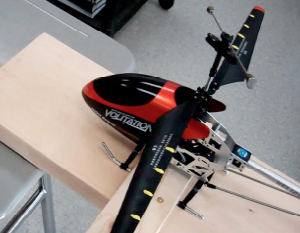
Biomimicry is the practice of applying models and systems found in nature to improve the efficiency and usefulness of human technologies. In this study, the authors designed helicopter blades with tubercle structures similar to those found on the tails of humpback whales. The authors found that certain arrangements of these tubercle structures improved the windspeed and efficiency of a model helicopter.
Read More...Analyzing market dynamics and optimizing sales performance with machine learning
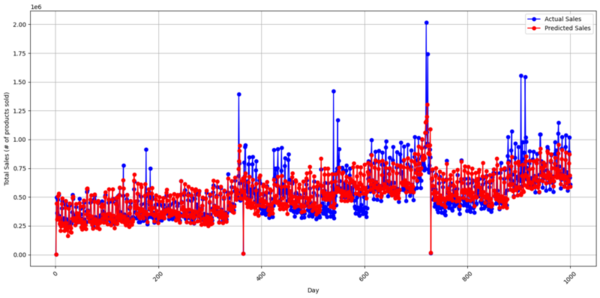
This study uses interpretable machine learning models, lasso and ridge regression with Shapley analysis, to identify key sales drivers for Corporación Favorita, Ecuador’s largest grocery chain. The results show that macroeconomic factors, especially labor force size, have the greatest impact on sales, though geographic and seasonal variables like city altitude and holiday proximity also play important roles. These insights can help businesses focus on the most influential market conditions to enhance competitiveness and profitability.
Read More...Drought prediction in the Midwestern United States using deep learning
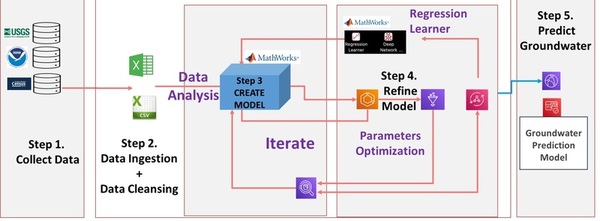
The authors studied the ability of deep learning models to predict droughts in the midwestern United States.
Read More...Collaboration beats heterogeneity: Improving federated learning-based waste classification
Based on the success of deep learning, recent works have attempted to develop a waste classification model using deep neural networks. This work presents federated learning (FL) for a solution, as it allows participants to aid in training the model using their own data. Results showed that with less clients, having a higher participation ratio resulted in less accuracy degradation by the data heterogeneity.
Read More...Evaluating the feasibility of SMILES-based autoencoders for drug discovery
The authors investigate the ability of machine learning models to developing new drug-like molecules by learning desired chemical properties versus simply generating molecules that similar to those in the training set.
Read More...Differential privacy in machine learning for traffic forecasting
In this paper, we measured the privacy budgets and utilities of different differentially private mechanisms combined with different machine learning models that forecast traffic congestion at future timestamps. We expected the ANNs combined with the Staircase mechanism to perform the best with every value in the privacy budget range, especially with the medium high values of the privacy budget. In this study, we used the Autoregressive Integrated Moving Average (ARIMA) and neural network models to forecast and then added differentially private Laplacian, Gaussian, and Staircase noise to our datasets. We tested two real traffic congestion datasets, experimented with the different models, and examined their utility for different privacy budgets. We found that a favorable combination for this application was neural networks with the Staircase mechanism. Our findings identify the optimal models when dealing with tricky time series forecasting and can be used in non-traffic applications like disease tracking and population growth.
Read More...Investigation of the impact of acid reflux on dental cements
The authors test the effects of pH level on different kinds of dental cement to model the long-term effects of reflux-induced stomach acid exposure.
Read More...Evaluating the clinical applicability of neural networks for meningioma tumor segmentation on 3D MRI
Authors emphasize the challenges of manual tumor segmentation and the potential of deep learning models to enhance accuracy by automatically analyzing MRI scans.
Read More...