Industrialization has transformed human life and improved it for many. Nonetheless, a side effect has been an increase in chemical waste, which when not disposed of properly, has detrimental effects on surrounding habitats. An increase in ocean acidification could potentially affect many forms of life, disrupting the ecological balance in unforeseeable ways. In this article the authors explore the effect of acidification on corals and shells, and observe that an increase in ocean acidity has a significant effect on corals, but not shells. This illustrates how acidification could negatively affect marine life, and calls our attention to managing the factors that contribute to increasing the pH of the Earth's water bodies.
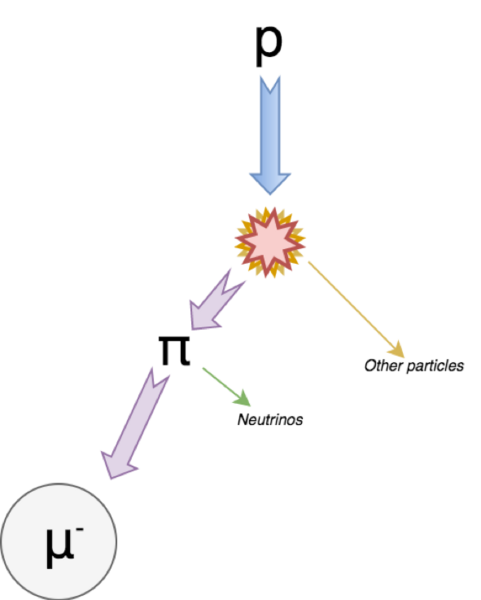
Muons, one of the fundamental elementary particles, originate from the collision of cosmic rays with atmospheric particles and are also generated in particle accelerator collisions. In this study, Samson et al analyze the factors that influence muon flux and lifetime using Cosmic Ray Muon Detectors (CRMDs). Overall, the study suggests that water can be used to decrease muon flux and that scintillator orientation is a potential determinant of the volume of data collected in muon decay studies.
Nosocomial infections acquired in hospitals pose a risk to patients, a risk compounded by resistant microorganisms. To combat this problem, researchers have turned to bioactive compounds from medicinal plants such as the widely used neem. In the present study, researchers sought to determine the effectiveness of different neem preparations against several hospital acquired human pathogens. Neem powder in water successfully inhibited microorganism growth making it a potential agent to combat these infections.
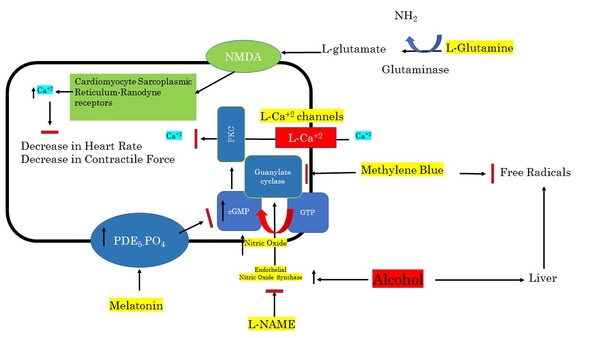
Chronic alcohol consumption can cause cardiac myopathy, which afflicts about 500,000 Americans annually. Gunturi et al. wanted to understand the effects of alcohol on heart rate and confirm the role of nitric oxide (NO) signaling in heart rate regulation. Using the model organism Daphnia magna, a water crustacean with a large, transparent heart, they found that the heart rate of Daphnia magna was reduced after treatment with alcohol. This depression could be reversed after treatment with inhibitors of NO synthesis and signaling. Their work has important implications for how we understand alcohol-induced effects on heart rate and potential treatments to reverse heart rate depression as a result of alcohol consumption.
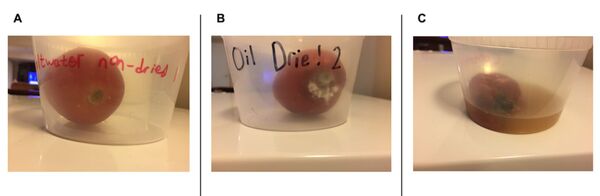
As levels of food waste continue to rise, it is essential to find improved techniques of prolonging the shelf life of produce. The authors aimed to find a simple, yet effective, method of slowing down spoilage in tomatoes. Linear regression analysis revealed that the tomatoes soaked salt water and not dried displayed the lowest correlation between time and spoilage, confirming that this preparation was the most effective.
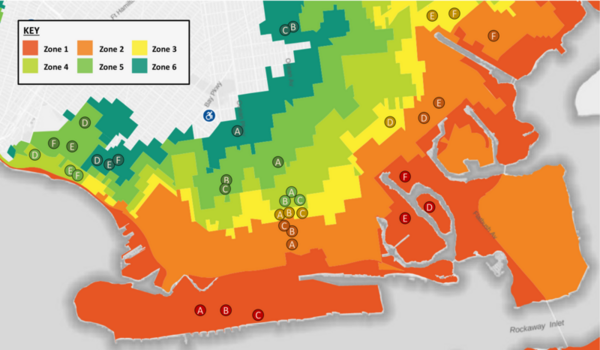
With climate change and rising sea levels, south Brooklyn is exposed to massive flooding and intense precipitation. Previous research discovered that flooding shifts plant species distribution, decreases soil pH, and increases salt concentration, nitrogen, phosphorus, and potassium levels. The authors predicted a decreasing trend from Zone 1 to 6: high-pH, high-salt, and high-nutrients in more flood-prone areas to low-pH, low-salt, and low-nutrient in less flood-prone regions. They performed DNA barcoding to identify plant species inhabiting flood zones with expectations of decreasing salt tolerance and moisture uptake by plants' soil from Zones 1-6. Furthermore, they predicted an increase in invasive species, ultimately resulting in a decrease in biodiversity. After barcoding, they researched existing information regarding invasiveness, ideal soil, pH tolerance, and salt tolerance. They performed soil analyses to identify pH, nitrogen (N), phosphorus (P), and potassium (K) levels. For N and P levels, we discovered a general decreasing trend from Zone 1 to 6 with low and moderate statistical significance respectively. Previous studies found that soil moisture can increase N and P uptake, helping plants adopt efficient resource-use strategies and reduce water stress from flooding. Although characteristics of plants were distributed throughout all zones, demonstrating overall diversity, the soil analyses hinted at the possibility of a rising trend of plants adapting to the increase in flooding. Future expansive research is needed to comprehensively map these trends. Ultimately, investigating trends between flood zones and the prevalence of different species will assist in guiding solutions to weathering climate change and protecting biodiversity in Brooklyn.
This study compared two commercial shower filters and three individual filtration media to evaluate their ability to reduce total residual chlorine under household flow conditions. By identifying which materials most effectively reduce chlorine during regular shower use, this research provides practical information for consumers and offers guidance for designing more affordable and reusable shower filtration systems.
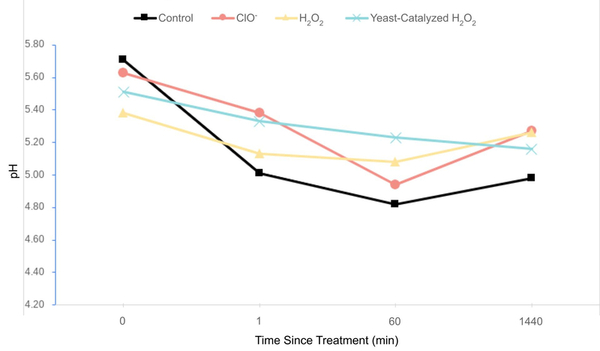
The authors looked at different treatments to clean up rainwater collected at home. They found that chlorine treatment and treatment with hydrogen peroxide catalyzed by yeast showed similar potential for cleaning up contaminated rainwater, but that further studies are needed to better assess impact on specific contaminant levels still present.