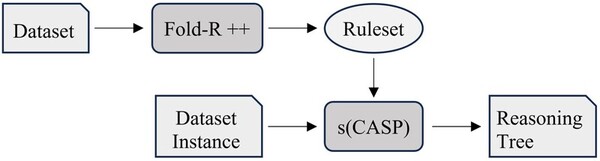
The authors compare current machine learning algorithms with a new Explainable AI algorithm that produces a human-comprehensible decision tree alongside predictions.
Read More...Explainable AI tools provide meaningful insight into rationale for prediction in machine learning models
The authors compare current machine learning algorithms with a new Explainable AI algorithm that produces a human-comprehensible decision tree alongside predictions.
Read More...Chemoreception in Aurelia aurita studied by AI-enhanced image analysis

The authors studied the chemoreception of moon jellyfish in response to food, and developed an AI tool to identify track and quantify the pulsation of swimming jellyfish.
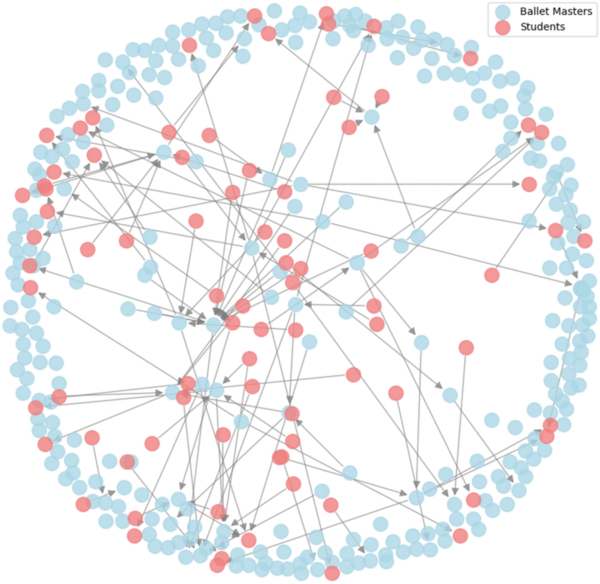
Read More...The role of institutional prestige, gender, and number of citizenships in ballet masters’ careers
Unveiling bias in ChatGPT-3.5: Analyzing constitutional AI principles for politically biased responses
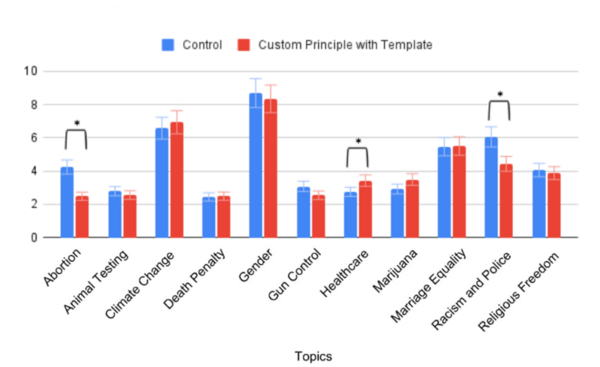
Various methods exist to mitigate bias in AI models, including "Constitutional AI," a technique which guides the AI to behave according to a list of rules and principles. Lo, Poosarla, Singhal, Li, Fu, and Mui investigate whether constitutional AI can reduce bias in AI outputs on political topics.
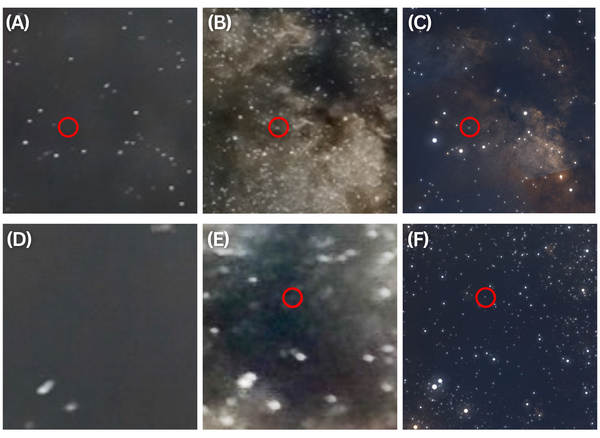
Read More...The impact of light pollution on astrophotography and visual astronomy in varying environments
Increasing Average Yearly Temperature in Two U.S. Cities Shows Evidence for Climate Change
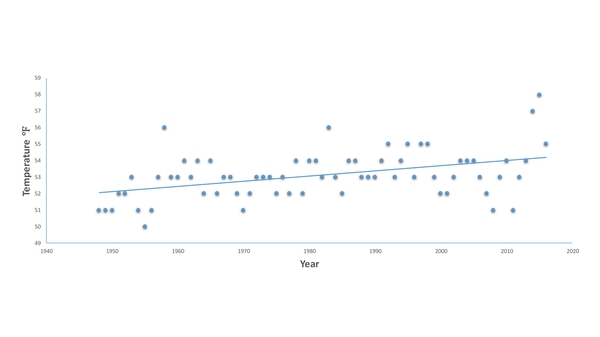
The authors were interested in whether they could observe the effects of climate change by analyzing historical temperature data of two U.S. cities. They predicted that they should observe a warming trend in both cities. Their results showed that despite yearly variations, warming trends can be observed both in Rochester, NY and Seattle, WA which fit the predictions of climate change forecasts.
Read More...Stereolithography 3D-printed stents with silica and zirconia nanoparticle reinforcement for intracranial aneurysm treatment
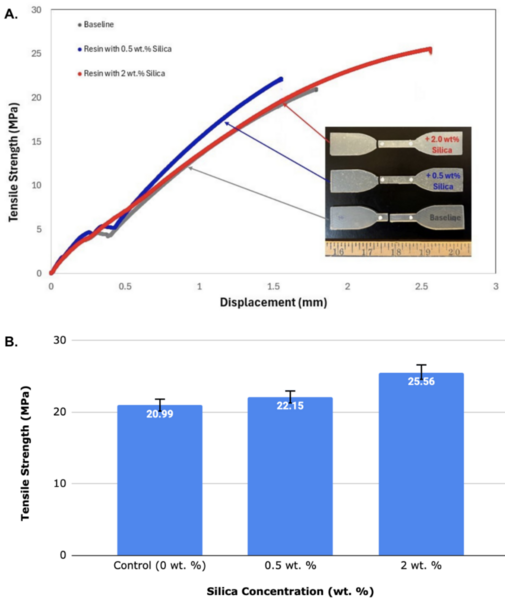
This manuscript focuses on improving the mechanical strength and radiopacity of SLA 3D-printed stent materials by incorporating nanoparticles for their application in flow-diverting stents (FDSs) used to treat aneurysms. The authors used biocompatible, bioresorbable resin formulations with varying concentrations of silica and zirconium to enhance tensile strength and radiopacity, respectively. The authors employed SEM to confirm the incorporation of nanoparticles, and CT imaging was used to assess the effect of zirconium-infused FDSs.
Read More...Innovative fake health news detection: Integrating emotional features into graph neural networks
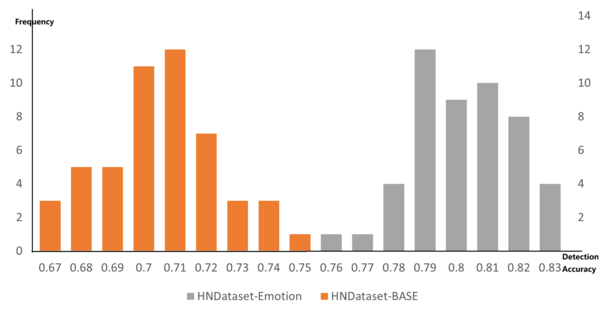
This manuscript tackles a major social issue in the health news sector, with social media being one of the primary sources of information and a prime spot to propagate fake news. The author proposes X-HND , which is a unique architecture that combines emotional and contextual analysis in a Graph Neural Network to accurately detect fake news. This was a multi-step process which involved the creation of a custom health news dataset (HNDataset), and an emotional variant that uses RoBERTa to extract emotion. These dataset were then used to prove the hypothesis that accuracy increases when the custom dataset is used to train the model and that with the integration of emotion capture, the detection accuracy increases further.
Read More...Revisiting the Belmont Report: an analysis of the bioethical values of Generation Z

The authors studied the bioethical values of Generation Z.
Read More...The relationship between multilingualism and visual imagery: Investigating aphantasia using the VVIQ
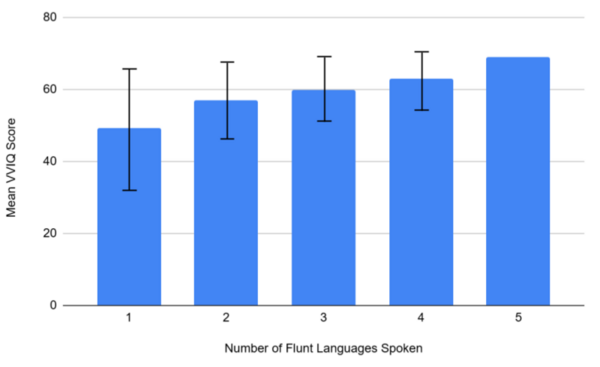
The authors looked at the correlation between being able to speak more than one language (multilingualism) and visual imagery. They found multilingual individuals had higher visual imagery as measured by the VVIQ.
Read More...