Browse Articles

Antibacterial Effects of Copper Surfaces

Mulukutla et al. | May 19, 2020

Antibacterial Effects of Copper Surfaces

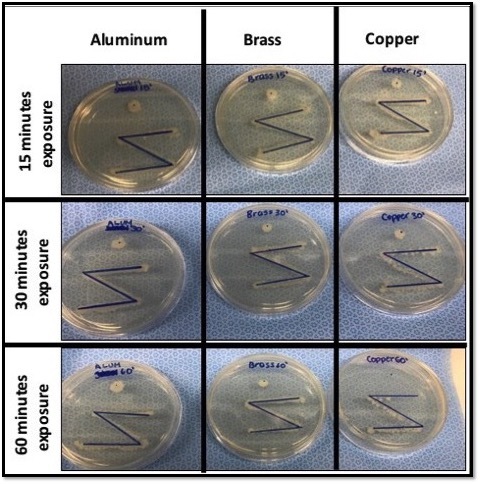
This study examined the ability of copper and copper alloy surfaces to inhibit bacterial growth, which may be help prevent healthcare-associated infections. The authors exposed two non-pathogenic strains of bacteria to different metal plates for varying degrees of time and measured bacterial growth.

Read More...

Temperatures of 20°C Produce Increased Net Primary Production in Chlorella sp.

Biddinger et al. | Feb 25, 2020

Temperatures of 20°C Produce Increased Net Primary Production in <em>Chlorella sp.</em>

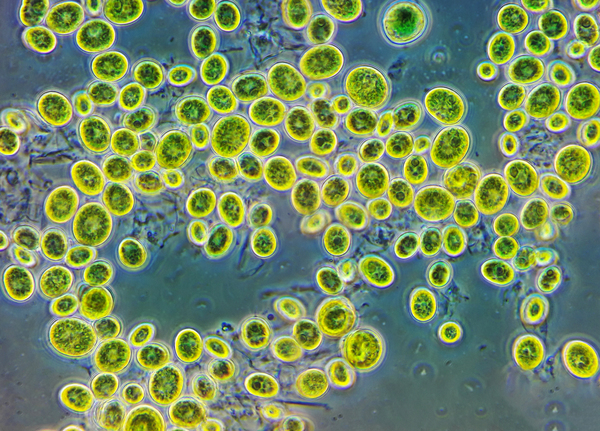
Chlorella sp. are unicellular green algae that use photosynthesis to reduce carbon dioxide into glucose. In this study, authors sought to determine the temperature that Chlorella sp. is maximally efficient at photosynthesis, and therefore removing the most carbon dioxide from the system. This activity could be harnessed to naturally remove carbon dioxide from the environment, fighting the effects of climate change.

Read More...

A Temperature-Based Comparison of Compounds Found in Bao Chong Tea, Green Tea, and Black Tea

Lin et al. | May 14, 2019

A Temperature-Based Comparison of Compounds Found in Bao Chong Tea, Green Tea, and Black Tea

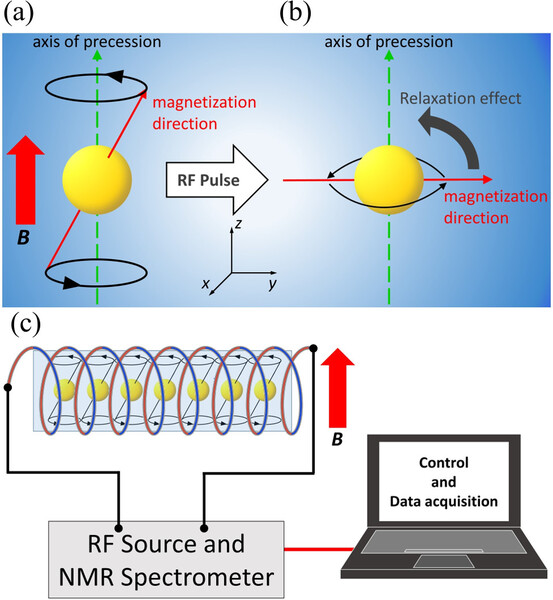
While tea has a complex history, recently the health benefits of this beverage have come into focus. In this study, researchers sought to compare the levels of caffeine, catechins and L-theanine between different types of tea using NMR spectroscopy. Further, the impact of brewing temperature on the release of these compounds was also assessed. Of those tested, Bao Chong tea had the highest levels of these compounds. Brewing temperatures between 45ºC and 75ºC were found to be optimal for compound release. These results can help consumers make informed choices about their tea preparation and intake.

Read More...

Breaking the Ice: A Scientific Take on the Ice Melting Abilities of Household Salts

Sehgal et al. | Dec 04, 2017

Breaking the Ice: A Scientific Take on the Ice Melting Abilities of Household Salts

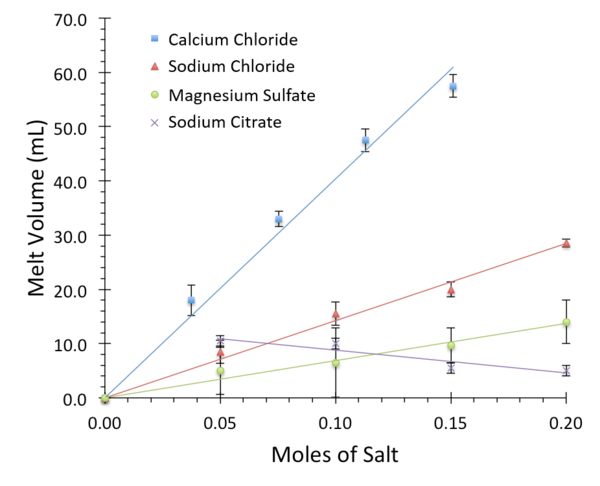
The use of salt to melt ice is a common and important practice to keep roadways safe during winter months. However, various subtypes of salt differ in their chemical and physical properties, as well as their environmental impact. In this study, the authors measure the effectiveness of different salts at disrupting ice structures and identify calcium chloride as the most effective.

Read More...

Performance comparison of indoor polyculture utilizing hydroponic and soil-based systems

Sreenath et al. | Jul 26, 2026

Performance comparison of indoor polyculture utilizing hydroponic and soil-based systems

Hydroponics is often promoted as a highly efficient alternative to traditional soil farming, but its effectiveness in small indoor polyculture systems is not well understood. In this study, students compared plant growth and maturity across hydroponic and soil-based indoor polycultures and found that soil grown plants were generally taller and more mature than those grown hydroponically. These results suggest that soil-based methods may outperform hydroponics in certain household polyculture settings.

Read More...

Implications of various pure tones on Phaseolus vulgaris and Gaultheria shallon

Judit et al. | Jul 13, 2026

Implications of various pure tones on <i>Phaseolus vulgaris</i> and <i>Gaultheria shallon<i>

This study investigated how different sound frequencies (0, 1,000, 5,000, and 15,000 Hz) affect the growth of Phaseolus vulgaris and the transpiration rates of Gaultheria shallon. Although some differences in plant growth were observed, the authors found no consistent evidence that sound frequency enhanced overall growth or transpiration, highlighting the need for further research.

Read More...