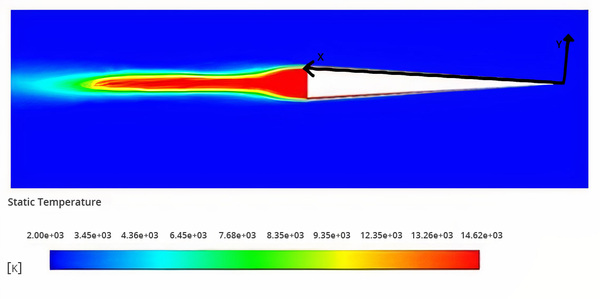
This study's goal was to identify the Mach numbers for which electrostatic drag and heat transfer manipulation would be most applicable inside the stratosphere. The experiments were conducted using computational fluid dynamics software. The study demonstrated that, on average, higher Mach speeds resulted in a considerably higher potential decrease in density. The study highlights that further research on the surface charge method is warranted to explore higher hypersonic speeds within the stratosphere.
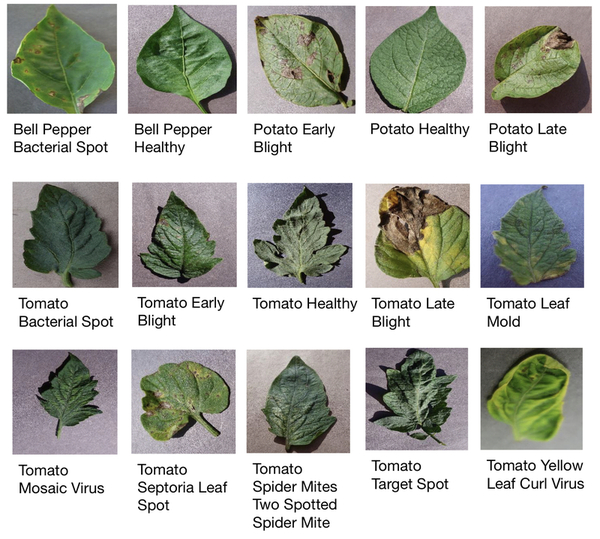
About 25% of the food grown never reaches consumers due to spoilage, and 11.5 billion pounds of produce from gardens are wasted every year. Current solutions involve farmers manually looking for and treating diseased crops. These methods of tending crops are neither time-efficient nor feasible. I used a convolutional neural network to identify signs of plant disease on leaves for garden owners and farmers.
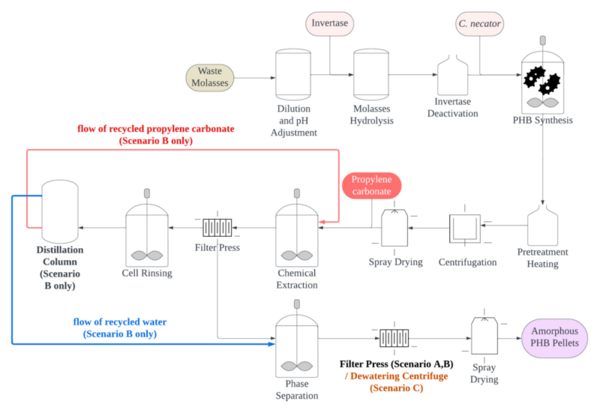
The authors looked at alternative production processes for PHB plastic in an effort to reduce environmental impact. They found that no alternative process was able to significantly decrease the environmental impact of PHB production, but that optimizing dewatering steps during production could lead to the largest improvement on environmental impact.
In this study, the authors examined the effects of commonly used pesticides (metolachlor, glyphosate, chlorpyrifos, and atrazine) on population size, motor function, and learning in Drosophila melanogaster.
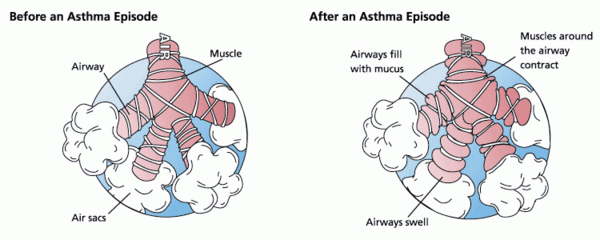
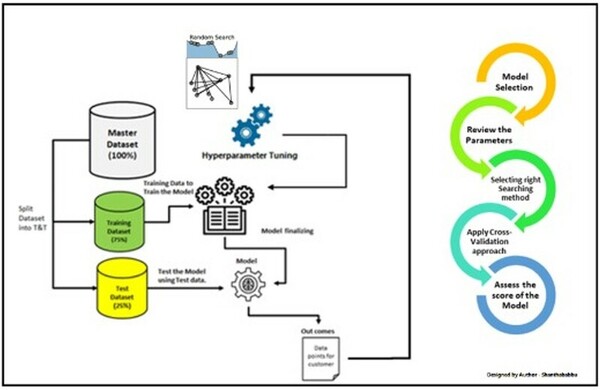
Seeking to investigate the effects of ambient pollutants on human respiratory health, here the authors used machine learning to examine asthma in Lost Angeles County, an area with substantial pollution. By using machine learning models and classification techniques, the authors identified that nitrogen dioxide and ozone levels were significantly correlated with asthma hospitalizations. Based on an identified seasonal surge in asthma hospitalizations, the authors suggest future directions to improve machine learning modeling to investigate these relationships.
Asthma affects over 334 million people worldwide and is triggered by inhalation of environmental stimuli. The authors of this study characterized the effect of exposure to common spoilage yeast, Pichia kidriavzevii on alveolar epithelial cells. A direct correlation between infection duration and asthmatic status of these cells was found, indicating the potential for this yeast to be an environmental stimulus of asthma and warranting further study.
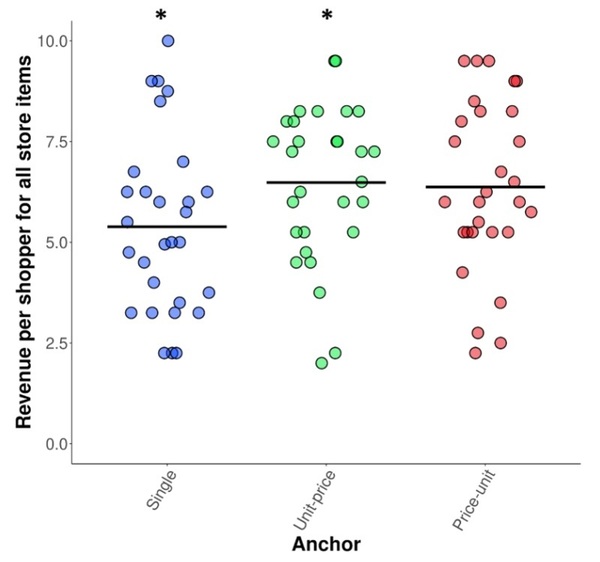
This study examines how anchoring—providing numerical suggestions like "2 for $4"—can influence consumer purchasing decisions and increase revenue. The researchers tested three types of price anchors on 29 high school students shopping in a mock store.
The lexical decision task is designed to test aspects of vocabulary retrieval from short-term and long-term memory by prompting the subject to differentiate between words and non-words. From this task, researchers can determine the effects of certain stimuli on linguistic processing. Numerous studies have investigated the effects of music on various cognitive capacities, like memory and vocabulary. In the current study, we hypothesized that participants would show greater accuracy rates on the lexical decision task when exposed to a selected piece of classical music while completing the task, as compared to completing the task in silence. We tested this hypothesis on a group of 25 participants who completed the lexical decision task once in silence and once while listening to Beethoven's “Moonlight Sonata, 1st Movement”. The results suggest a positive association between the effects of classical background music and improved accuracy. Our results indicate that listening to certain types of music may enhance linguistic processes such as reading and writing. Further research with a larger group of participants is necessary to better understand the association between music and linguistic processing abilities.