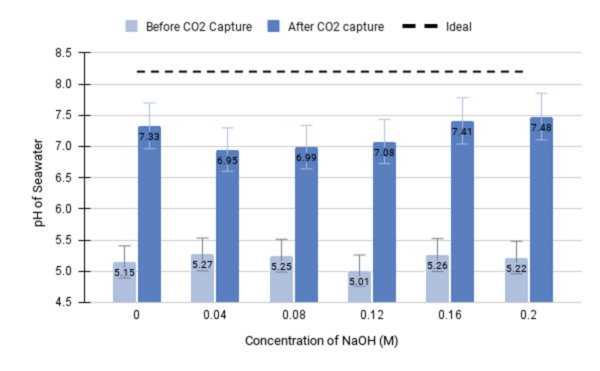
The authors set out to develop an electrochemical device that would have efficient and sustained carbon dioxide capture.
Read More...Managing CO2 levels through precipitation-based capture from seawater and electrochemical conversion
The authors set out to develop an electrochemical device that would have efficient and sustained carbon dioxide capture.
Read More...Examining the Growth of Methanotrophic Bacteria Immersed in Extremely Low-Frequency Electromagnetic Fields
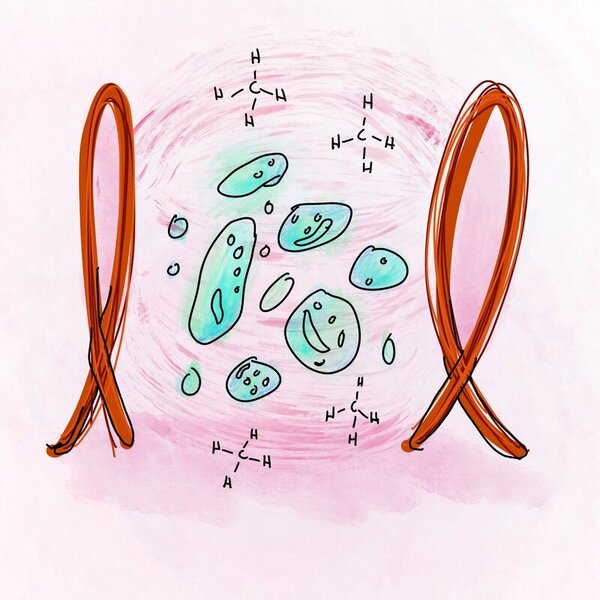
Scientist are investigating the use of methane-consuming bacteria to aid the growing problem of rising greenhouse gas emissions. While previous studies claim that low-frequency electromagnetic fields can accelerate the growth rate of these bacteria, Chu et al. demonstrate that this fundamental ideology is not on the same wavelength with their data.
Read More...Influence of socioeconomic status on academic performance in virtual classroom settings

In this study, the authors conduct a survey to evaluate the impact of household socioeconomic status on effectiveness of distance learning for students.
Read More...How does light affect the distribution of Euglena sp. and Tetrahymena pyriformis

In this article, the authors explored the locomotory movement of Euglena sp. and Tetrahymena pyriformis in response to light. Such research bears relevance to the migration and distribution patterns of both T. pyriformis and Euglena as they differ in their method of finding sustenance in their native environments. With little previous research done on the exploration of a potential response to photostimulation enacted by T. pyriformis, the authors found that T. pyriformis do not bias in distribution towards areas of light - unlike Euglena, which displayed an increased prevalence in areas of light.
Read More...Prediction of molecular energy using Coulomb matrix and Graph Neural Network
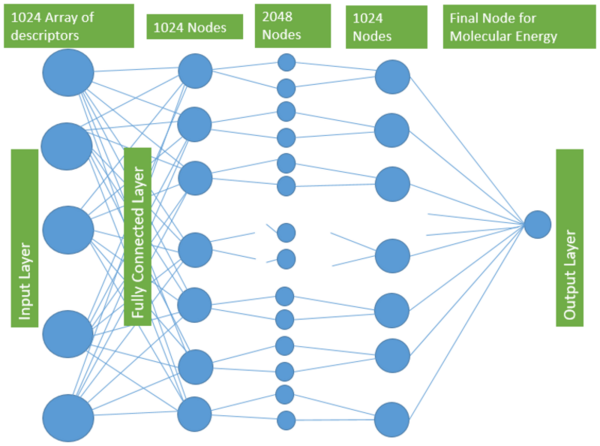
With molecular energy being an integral element to the study of molecules and molecular interactions, computational methods to determine molecular energy are used for the preservation of time and resources. However, these computational methods have high demand for computer resources, limiting their widespread feasibility. The authors of this study employed machine learning to address this disadvantage, utilizing neural networks trained on different representations of molecules to predict molecular properties without the requirement of computationally-intensive processing. In their findings, the authors determined the Feedforward Neural Network, trained by two separate models, as capable of predicting molecular energy with limited prediction error.
Read More...Reducing levels of C-Reactive Protein: An eight-week, open-label clinical trial of three oral supplements

In this study, the effects of vitamin C, ginger, or curcumin supplements on C-reactive protein levels in healthy participants are determined in an eight-week open-label trial.
Read More...The influence of implicit social pressure on prosocial behavior of adolescents

In this study the authors sought to understand the influence of implicit social pressure on prosocial behavior (voluntary acts that benefit someone else) in adolescents age 12–19. They considered how participants divided money between themselves and four teammate they did a school project with. Despite being shown examples of how to divide money (social pressure), their results showed that both boys and girls were unaffected by prosocial, neutral, and antisocial pressures.
Read More...How Ya Doin'? with COVID-19

In this study, the authors survey students and adults about how the COVID-19 pandemic has impacted their sleep patterns, eating habits, mood, physical activity, and screen time.
Read More...EEG study of virtual learning demonstrates worsened learning outcomes and increased mirror neuron activation

In this article, Choi and Rossitto investigated the limitations of virtual learning by examining in-person dance learning compared to virtual dance learning while wearing EEG headsets. They found that in-person learners outperformed virtual learners and that virtual learners had higher mirror neuron activity as assessed by Mu rhythm power.
Read More...The Effect of Anubias barteri Plant Species on Limiting Freshwater Acidification
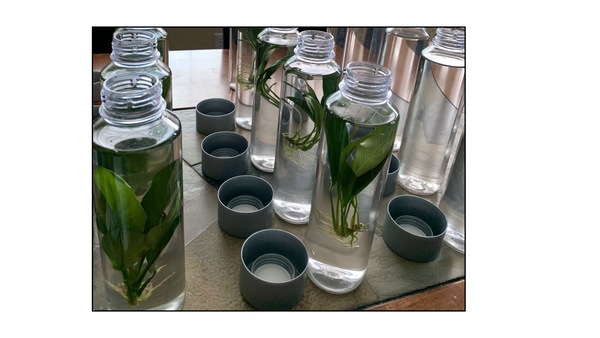
Research relating to freshwater acidification is minimal, so the impact of aquatic plants, Anubias barteri var. congensis and Anubias barteri var. nana, on minimizing changes in pH was explored in an ecosystem in Northern California. Creek water samples, with and without the aquatic plants, were exposed to dry ice to simulate carbon emissions and the pH was monitored over an eight-hour period. There was a 25% difference in the observed pH based on molar hydrogen ion concentration between the water samples with plants and those without plants, suggesting that aquatic plants have the potential to limit acidification to some extent. These findings can guide future research to explore the viable partial solution of aquatic plants in combating freshwater acidification.
Read More...