Browse Articles

Banana-based Biofuels for Combating Climate Change: How the Composition of Enzyme Catalyzed Solutions Affects Biofuel Yield

Klein-Hessling Barrientos et al. | May 27, 2020

Banana-based Biofuels for Combating Climate Change: How the Composition of Enzyme Catalyzed Solutions Affects Biofuel Yield

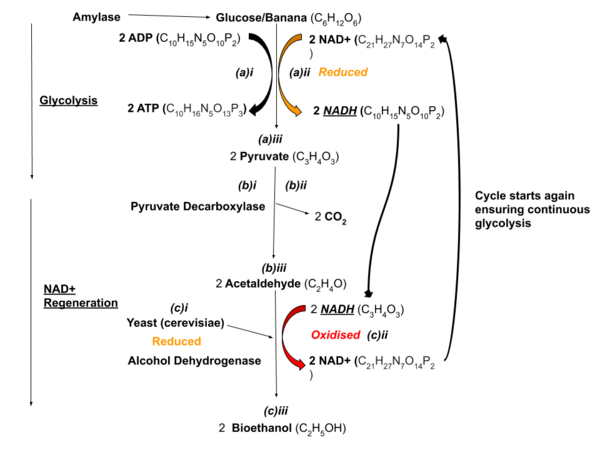
The authors investigate whether amylase or yeast had a more prominent role in determining the bioethanol concentration and bioethanol yield of banana samples. They hypothesized that amylase would have the most significant impact on the bioethanol yield and concentration of the samples. They found that while yeast is an essential component for producing bioethanol, the proportion of amylase supplied through a joint amylase-yeast mixture has a more significant impact on the bioethanol yield. This study provides a greater understanding of the mechanisms and implications involved in enzyme-based biofuel production, specifically of those pertaining to amylase and yeast.

Read More...

Differentiation of Waste Plastic Pyrolysis Fuels to Conventional Diesel Fuel

Jewison et al. | May 25, 2018

Differentiation of Waste Plastic Pyrolysis Fuels to Conventional Diesel Fuel

Plastic pollution and energy shortages are pressing issues in today’s world. The authors examined whether waste plastic pyrolysis fuels are similar to conventional diesel and, thus, a plausible alternative fuel. Results showed that waste plastic pyrolysis fuels did not match up to diesel overall, though several fuels came close in calorific value.

Read More...

The Effect of UV Treatment on the Degradation of Compostable Polylactic Acid

Zhang et al. | Nov 28, 2013

The Effect of UV Treatment on the Degradation of Compostable Polylactic Acid

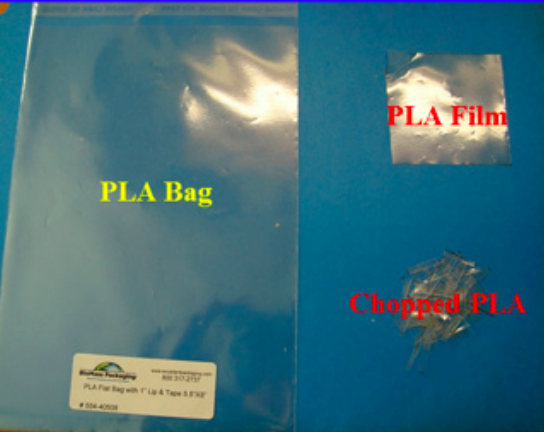
Polylactic acid (PLA) is a bio-based, compostable plastic that is comparable in cost to petroleum-based plastics. This study aims to evaluate the effects of UV treatment and mechanical chopping on the degradation of PLA. Based on their findings, the authors propose an alternative PLA degradation process that may be more time and energy efficient than current processes.

Read More...

Utilizing a Wastewater-Based Medium for Engineered Saccharomyces cerevisiae for the Biological Production of Fatty Alcohols and Carboxylic Acids to Replace Petrochemicals

Ramesh et al. | Oct 02, 2019

Utilizing a Wastewater-Based Medium for Engineered <em>Saccharomyces cerevisiae</em> for the Biological Production of Fatty Alcohols and Carboxylic Acids to Replace Petrochemicals

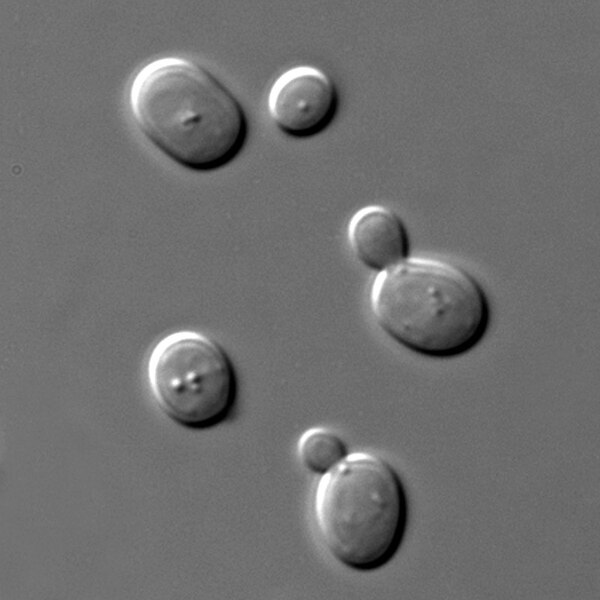
Saccharomyces cerevisiae yeast is used to produce bioethanol, an alternative to fossil fuels. In this study, authors take advantage of this well studied yeast by genetically engineering them to increase fatty acid biosynthesis and culturing in a cost-effective wastewater based medium; potentially providing a sustainable alternative to petrochemicals.

Read More...

Comparative life cycle analysis: Solvent recycling and improved dewatering scenarios in PHB plastic production

Chiu et al. | Jun 13, 2025

Comparative life cycle analysis: Solvent recycling and improved dewatering scenarios in PHB plastic production

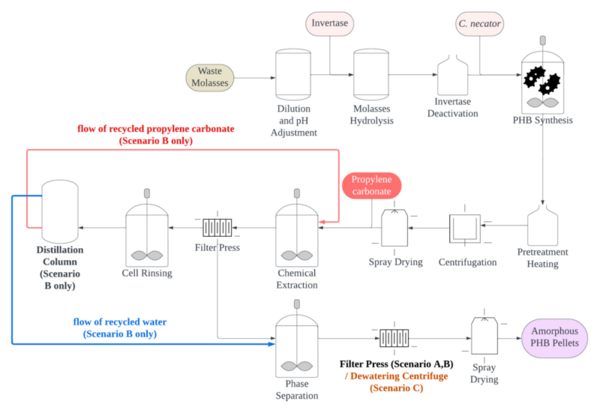
The authors looked at alternative production processes for PHB plastic in an effort to reduce environmental impact. They found that no alternative process was able to significantly decrease the environmental impact of PHB production, but that optimizing dewatering steps during production could lead to the largest improvement on environmental impact.

Read More...

Analysis of reduction potentials to determine the most efficient metals for electrochemical cell alternatives

Carroll et al. | Jul 10, 2020

Analysis of reduction potentials to determine the most efficient metals for electrochemical cell alternatives

In this study, the authors investigate what metals make the most efficient electrochemical cells, which are batteries that use the difference in electrical potential to generate electricity. Calculations predicted that a cell made of iron and magnesium would have the highest efficiency. Construction of an electrochemical cell of iron and magnesium produced voltages close to the theoretical voltage predicted. These findings are important as work continues towards making batteries with the highest storage efficiency possible.

Read More...