Browse Articles

The Effects of Atmospheric Attenuation on Cosmic Ray Muons: How is Surface Level Cosmic Ray Muon Flux Affected by Atmospheric Attenuation?

Sun et al. | Sep 11, 2021

The Effects of Atmospheric Attenuation on Cosmic Ray Muons: How is Surface Level Cosmic Ray Muon Flux Affected by Atmospheric Attenuation?

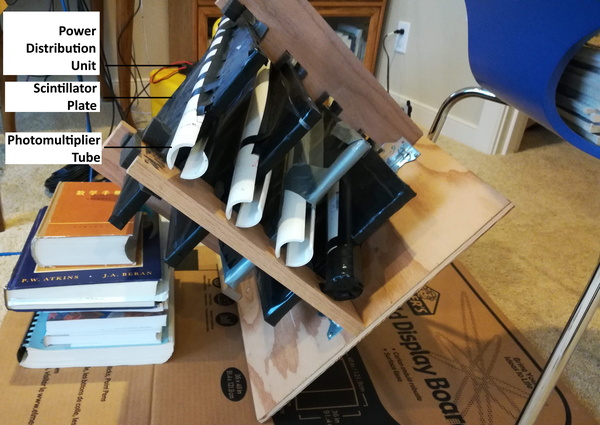
Cosmic rays are high-energy astronomical particles originating from various sources across the universe. Here, The authors sought to understand how surface-level cosmic-ray muon flux is affected by atmospheric attenuation by measuring the variation in relative muon-flux rate relative to zenith angle, testing the hypothesis that muons follow an exponential attenuation model. The attenuation model predicts an attenuation length of 6.3 km. This result implies that only a maximum of 24% of muons can reach the Earth’s surface, due to both decay and atmospheric interactions.

Read More...
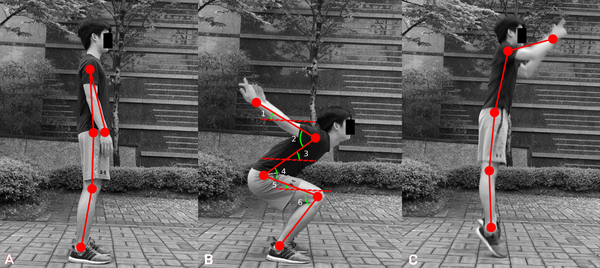

Determination of Optimal Relevant Joint Angles for Vertical Jump Height Across Teenagers with Differing Amounts of Jumping Experience

Bahng et al. | May 09, 2021

Determination of Optimal Relevant Joint Angles for Vertical Jump Height Across Teenagers with Differing Amounts of Jumping Experience

Reaching one’s maximum jump height requires optimizing one’s jump techniques. In order to find this optimal jump technique, three high school participants with varying vertical jump (VJ) abilities recorded videos of themselves with varying degrees of maximum/minimum shoulder, knee, and hip angles—with or without respect to the horizontal—at the isometric phase of a regular countermovement (CM) VJ or countermovement jump (CMJ). Results showed that the shoulder angle without respect to the horizontal (SA), knee angle with respect to the horizontal (KAH), and the hip angle with respect to the horizontal (HAH) possessed a more consistent correlation with VJ height across the subjects compared to the same respective angles with opposite relations to the horizontal.

Read More...

Converting SiO2 wafers to hydrophobic using chlorotrimethylsilane

Lee et al. | Aug 20, 2024

Converting SiO<sub>2</sub> wafers to hydrophobic using chlorotrimethylsilane

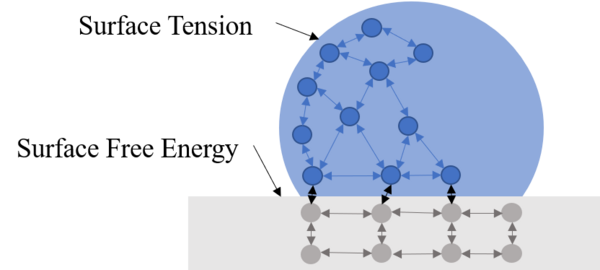
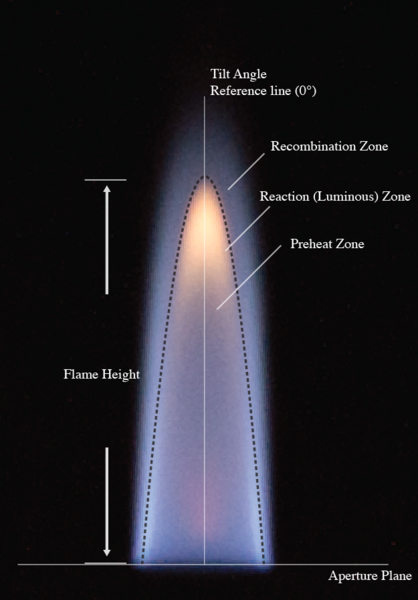
Semiconductors are the center of the fourth industrial revolution as they are key components for all electronics. Exposed wafers made of silicon (Si), which can easily oxidize, convert to silicon dioxide (SiO2). The surface of SiO2 wafers consists of many Si-OH bonds, allowing them to easily bond with water, resulting in a “wet” or hydrophilic condition. We sought to determine a way to modify the surface of SiO2 wafers to become hydrophobic to ensure safe wet cleaning.

Read More...

Utilizing the Magnus effect to produce more downforce than a standard wing

Angiras et al. | Aug 15, 2022

Utilizing the Magnus effect to produce more downforce than a standard wing

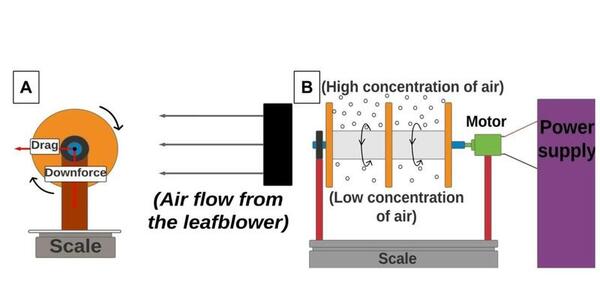
Here, seeking a better solution to produce downforce that keeps a vehicle grounded at high speeds than wings which tend to result in degraded car performance due to increased air resistance, the authors considered using the Magnus effect as a replacement. The authors found that a spinning cylinder generated significantly more downforce through the Magnus effect than a standard wing at all wind speeds as simulated through the use of a leaf blower. They suggest that a cylinder could be a potential replacement for a wing when downforce is a priority.

Read More...

Locating sources of a high energy cosmic ray extensive air shower using HiSPARC data

Aziz et al. | Oct 24, 2023

Locating sources of a high energy cosmic ray extensive air shower using HiSPARC data

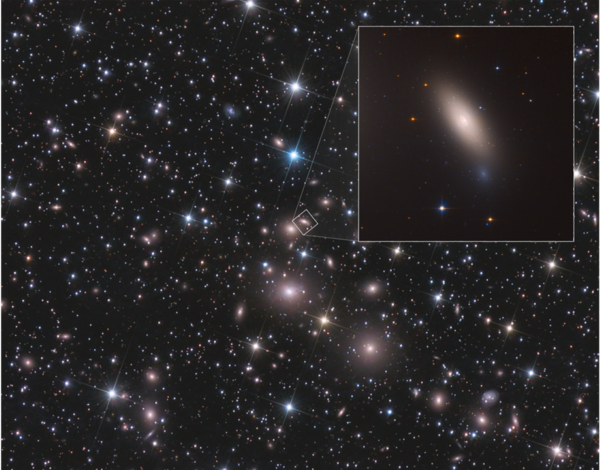
Using the data provided by the University of Twente High School Project on Astrophysics Research with Cosmics (HiSPARC), an analysis of locations for possible high-energy cosmic ray air showers was conducted. An example includes an analysis conducted of the high-energy rain shower recorded in January 2014 and the use of Stellarium™ to discern its location.

Read More...

Optimizing Interplanetary Travel Using a Genetic Algorithm

Murali et al. | Oct 28, 2018

Optimizing Interplanetary Travel Using a Genetic Algorithm

In this work, the authors develop an algorithm that solves the problem of efficient space travel between planets. This is a problem that could soon be of relevance as mankind continues to expand its exploration of outer space, and potentially attempt to inhabit it.

Read More...