Browse Articles

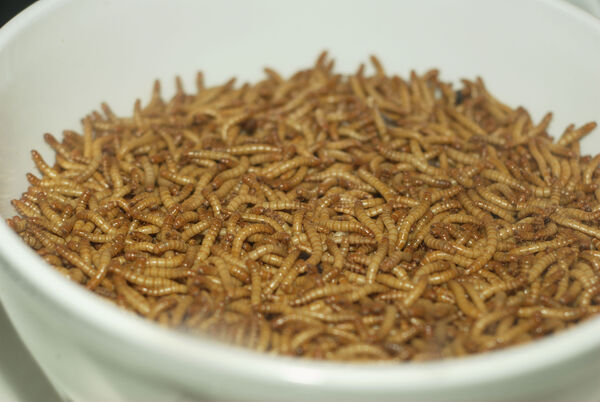
The Effects of Post-Consumer Waste Polystyrene on the Rate of Mealworm Consumption

Green et al. | Nov 29, 2018

The Effects of Post-Consumer Waste Polystyrene on the Rate of Mealworm Consumption

In a world where plastic waste accumulation is threatening both land and sea life, Green et al. investigate the ability of mealworms to breakdown polystyrene, a non-recyclable form of petrochemical-based polymer we use in our daily lives. They confirm that these organisms, can degrade various forms of polystyrene, even after it has been put to use in our daily lives. Although the efficiency of the degradation process still requires improvement, the good news is, the worms are tiny and themselves are biodegradable, so we can use plenty of them without worrying about space and how to get rid of them. This is very promising and certainly good news for the planet.

Read More...
Transfer learning and data augmentation in osteosarcoma cancer detection

Chu et al. | Jun 03, 2023

Transfer learning and data augmentation in osteosarcoma cancer detection
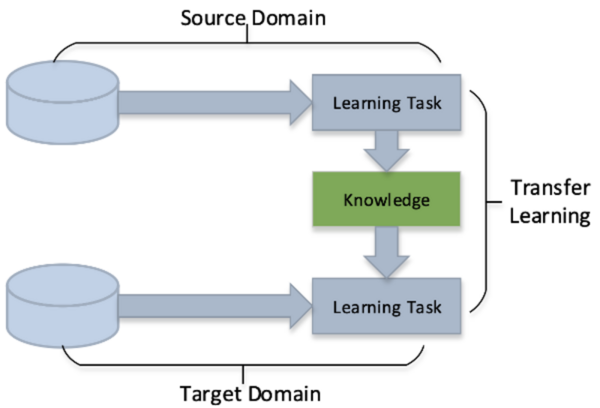
Image credit: Chu and Khan 2023

Osteosarcoma is a type of bone cancer that affects young adults and children. Early diagnosis of osteosarcoma is crucial to successful treatment. The current methods of diagnosis, which include imaging tests and biopsy, are time consuming and prone to human error. Hence, we used deep learning to extract patterns and detect osteosarcoma from histological images. We hypothesized that the combination of two different technologies (transfer learning and data augmentation) would improve the efficacy of osteosarcoma detection in histological images. The dataset used for the study consisted of histological images for osteosarcoma and was quite imbalanced as it contained very few images with tumors. Since transfer learning uses existing knowledge for the purpose of classification and detection, we hypothesized it would be proficient on such an imbalanced dataset. To further improve our learning, we used data augmentation to include variations in the dataset. We further evaluated the efficacy of different convolutional neural network models on this task. We obtained an accuracy of 91.18% using the transfer learning model MobileNetV2 as the base model with various geometric transformations, outperforming the state-of-the-art convolutional neural network based approach.

Read More...

Estimating Paleoenvironments Utilizing Foraminiferal Fossils from the Toyohama Formation, Aichi Prefecture, Central Japan

Kimitsuki et al. | Dec 11, 2017

Estimating Paleoenvironments Utilizing Foraminiferal Fossils from the Toyohama Formation, Aichi Prefecture, Central Japan

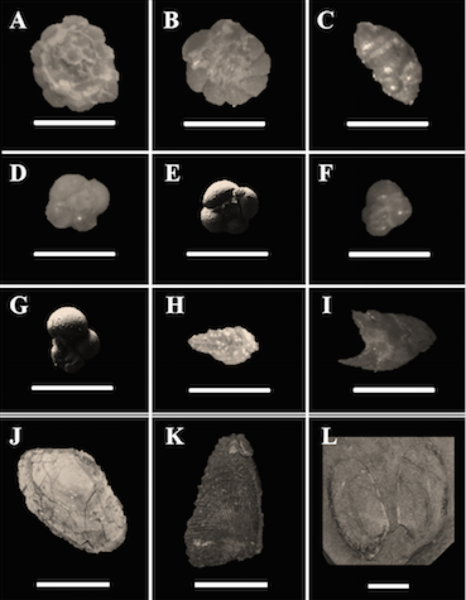
Foraminifera are a diverse phylum of marine protists that produce elaborate shells. Because of their abundance and morphological diversity, foraminiferal fossil assemblages are used for biostratigraphy, to accurately date sedimentary rocks and to characterize past ocean environments. In this paper, authors collected fossils within the Morozaki Group in central Honshu, Japan, to assess past marine environments and species diversity.

Read More...

Increasing CO2 levels in water decrease the hatching success of brine shrimp

Greer et al. | Jan 07, 2025

Increasing CO<sub>2</sub> levels in water decrease the hatching success of brine shrimp
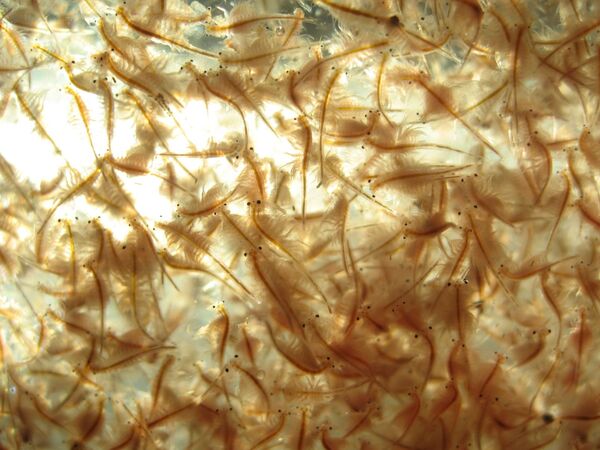
Image credit: "Live brine shrimp" by Saul Dolgin is licensed under CC BY 2.0. To view a copy of this license, visit https://creativecommons.org/licenses/by/2.0/?ref=openverse.

As atmospheric carbon dioxide (CO2) levels rise, ocean acidification poses a growing threat to marine ecosystems. To better understand these changes, this study investigates how varying CO2 levels influence the growth of brine shrimp. The findings offer important insights into the resilience of aquatic life and the broader implications of environmental change.

Read More...

The most efficient position of magnets

Shin et al. | Mar 28, 2024

The most efficient position of magnets
Image credit: immo RENOVATION

Here, the authors investigated the most efficient way to position magnets to hold the most pieces of paper on the surface of a refrigerator. They used a regression model along with an artificial neural network to identify the most efficient positions of four magnets to be at the vertices of a rectangle.

Read More...