This study examined whether Rubik’s Cube solving ability is related to spatial visualization skills and stress levels.
Read More...Puzzle to progress: relationship between Rubik’s Cube solving proficiency, spatial visualization, and anxiety
This study examined whether Rubik’s Cube solving ability is related to spatial visualization skills and stress levels.
Read More...Analyzing the Relationships Between Internet Usage, Social Skill, and Anxiety Severity in Adults with Autism Spectrum Disorder

Here the authors investigate the use of social media in adults with Autism Spectrum Disorder (ASD) in affecting their ability and opportunities to interact with others. They found that higher usage of Internet correlated with less severe anxiety symptoms and improved social skills.
Read More...Obscurity of eyebrows influences recognition of human emotion and impacts older adolescents

Here, seeking to better understand how facial features provide important visual cues to help convey emotions, the authors evaluated the accuracy and reaction time of participants in regards to experimental photographs where a person's eyebrows were obscured and ones where they were not. Their findings revealed that removing eyebrows resulted in a significant decrease in a participant's ability to recognize anger, with adolescents most likely to misidentify emotions.
Read More...Modeling stearoyl-coenzyme A desaturase 1 inhibitors to ameliorate α-Syn cytotoxicity in Parkinson's disease
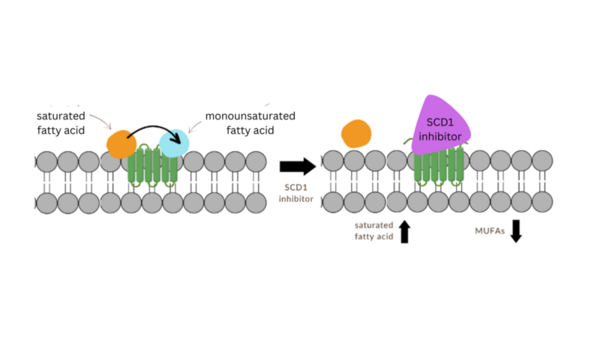
The authors use molecular modeling to test analogs of the stearoyl-coenzyme A desaturase 1 (SCD1) inhibitor MF-438 with implications for future development of Parkinson's disease therapeutics.
Read More...The sweetened actualities of neural membrane proteins: A computational structural analysis
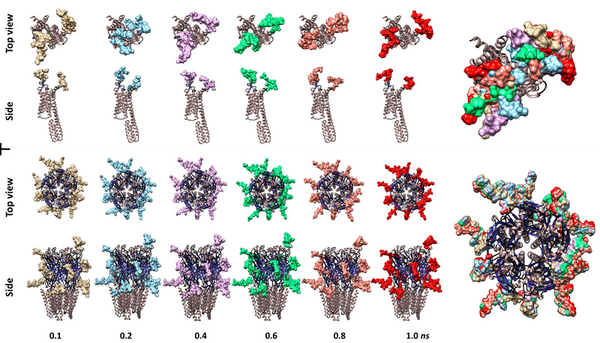
Here, seeking to better understand the roles of glycans in the receptors of active sites of neuronal cells, the authors used molecular dynamics simulations to to uncover the dynamic nature of N-glycans on membrane proteins. The authors suggest the study of theinteractions of these membrane poreins could provide future potential therapeutic targets to treat mental diseases.
Read More...Measuring effects of caffeine and melatonin on learning trends of Zebrafish juveniles
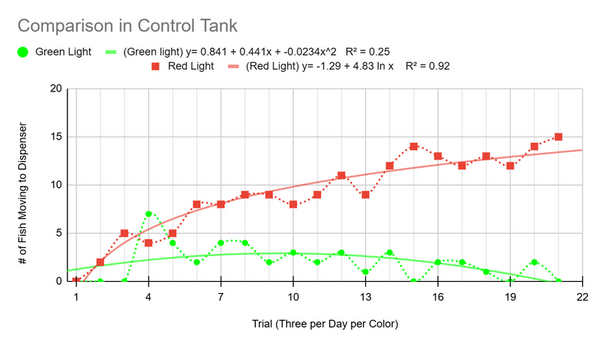
This study investigates how caffeine and melatonin affect learning in adolescent zebrafish, serving as a model for human teens. Using an automated system to track behavior, we found that melatonin slowed learning while caffeine caused erratic, inconsistent responses, suggesting both substances can negatively impact adolescent learning patterns. These findings highlight the need for further research into their physiological effects and potential implications for human adolescents.
Read More...High school students show some reluctance to COVID-19 guidelines
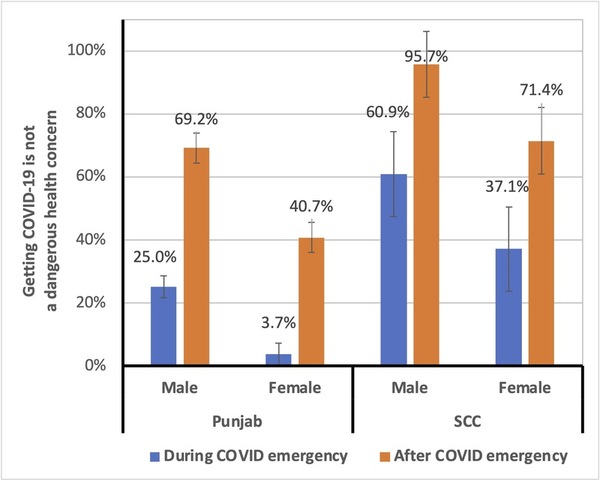
COVID-19 has officially been downgraded from the status of a global health emergency, but have COVID-19 safety practices become a new way of life for students? The authors collected survey data on COVID-19-related knowledge and behaviors of high-school students in Punjab, Pakistan and Santa Clara County, California, USA, so see where high-schoolers stand on pandemic safety today.
Read More...Investigating the connection between free word association and demographics

Utilization of neural network to analyze Free Word Association to predict accurately age, gender, first language, and current country.
Read More...The Impact of Effective Density and Compressive Strength on the Structure of Crumpled Paper Balls
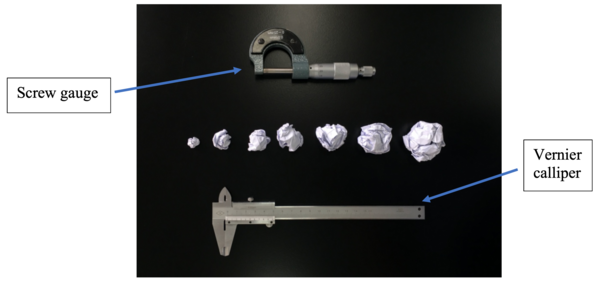
Crumpling is the process whereby a sheet of paper undergoes deformation to yield a three-dimensional structure comprising a random network of ridges and facets with variable density. The authors hypothesized that the more times a paper sheet is crumpled, the greater its compressive strength. Their results show a relatively strong linear relationship between the number of times a paper sheet is crumpled and its compressive strength.
Read More...