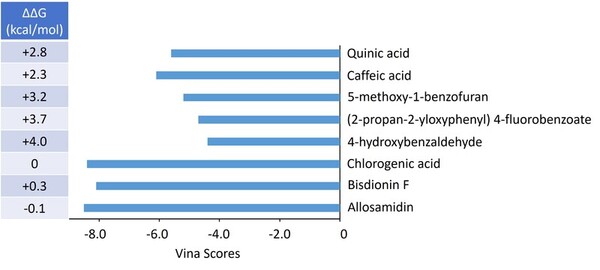
This study investigated whether chlorogenic acid, a plant compound with known health benefits, can interact with the proteins CHIT1 and CHI3L1, which could ultimately lead to new therapeutic strategies for a range of chronic diseases.
Read More...Computational prediction of chlorogenic acid binding to disease-linked proteins CHIT1 and CHI3L1
This study investigated whether chlorogenic acid, a plant compound with known health benefits, can interact with the proteins CHIT1 and CHI3L1, which could ultimately lead to new therapeutic strategies for a range of chronic diseases.
Read More...Applying centrality analysis on a protein interaction network to predict colorectal cancer driver genes
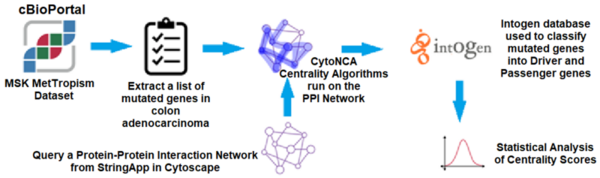
In this article the authors created an interaction map of proteins involved in colorectal cancer to look for driver vs. non-driver genes. That is they wanted to see if they could determine what genes are more likely to drive the development and progression in colorectal cancer and which are present in altered states but not necessarily driving disease progression.
Read More...Pancreatic Adenocarcinoma: An Analysis of Drug Therapy Options through Interaction Maps and Graph Theory
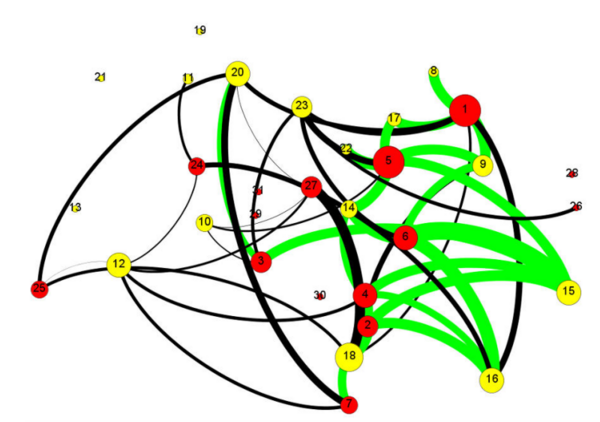
Cancer is often caused by improper function of a few proteins, and sometimes it takes only a few proteins to malfunction to cause drastic changes in cells. Here the authors look at the genes that were mutated in patients with a type of pancreatic cancer to identify proteins that are important in causing cancer. They also determined which proteins currently lack effective treatment, and suggest that certain proteins (named KRAS, CDKN2A, and RBBP8) are the most important candidates for developing drugs to treat pancreatic cancer.
Read More...Effect of the Herbal Formulation HF1 on the Expression of PD-L1 in PC3 cells
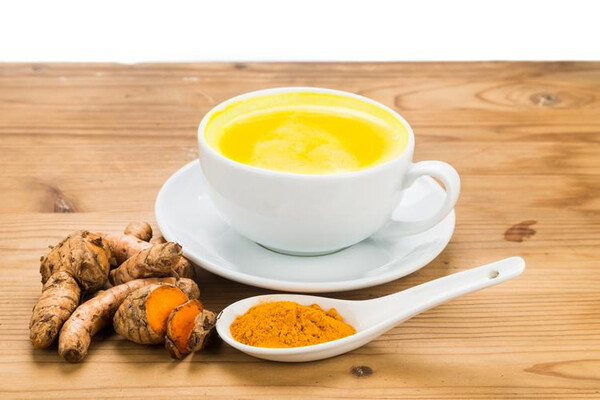
In this study, Imani et al. investigate whether a new proprietary herbal formulation, HF1, can inhibit expression of immune suppressor protein PD-L1. PD-L1 is a transmembrane protein that can be expressed by cancer cells to assist in their ability to avoid attacks from the immune system. Work from this study demonstrates that HF1 treatment can reduce expression of PD-L1 in cultured cancer cells, implicating HF1 as a potential new cancer therapy.
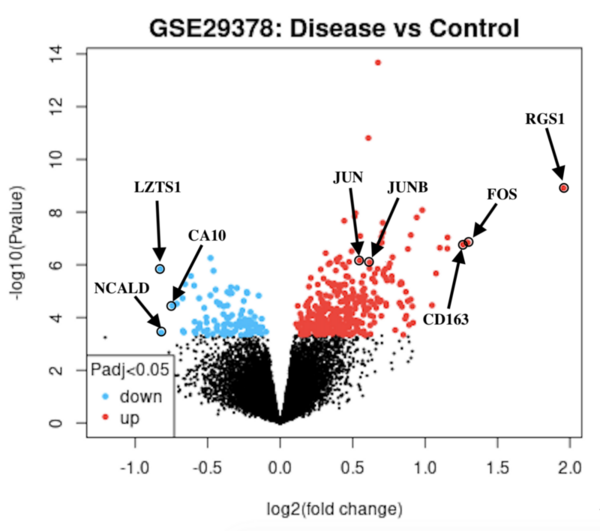
Read More...Upregulation of the AP-1 complex as a potential biomarker for Alzheimer’s disease (AD)
The Non-Thermal Effect of UV-B Irradiation on Onion Growth
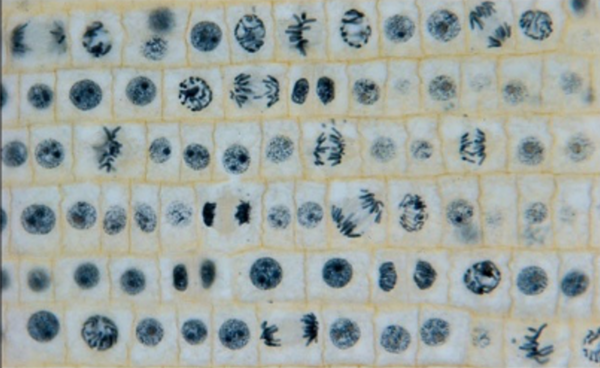
UV-B radiation due to the depletion of ozone threatens plant life, potentially damaging ecosystems and dismantling food webs. Here, the impact of UV-B radiation on the physiology and morphology of Allum cepa, the common onion, was assessed. Mitosis vitality decreased, suggesting UV-B damage can influence the plant’s physiology.
Read More...Peptidomimetics Targeting the Polo-box Domain of Polo-like Kinase 1
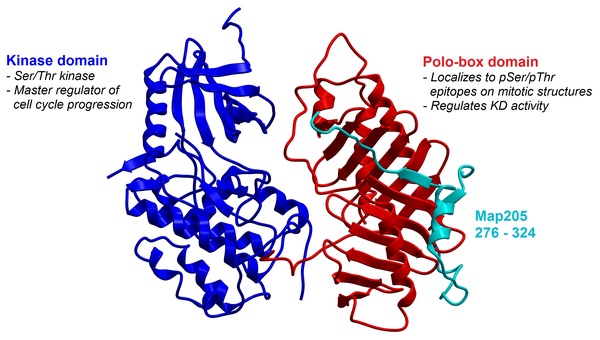
Polo-like kinase 1 (Plk1) is a master regulator of mitosis, initiating key steps of cell cycle regulation, and its overexpression is associated with certain types of cancer. In this study, the authors carefully designed peptides that were able to bind to Plk1 at a location that is important for its proper localization and function. Future studies could further develop these peptides to selectively target Plk1 in cancer cells and induce mitotic arrest.
Read More...Molecular Dynamics Simulations of Periplasmic Proteins Interacting With the Peptidoglycan Layer of Escherichia coli
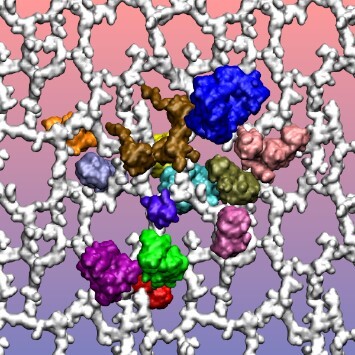
Molecular dynamics (MD) simulations are a great tool to model and study complex biological systems. In this paper, the authors use MD simulations to construct and simulate a model of the periplasmic space, the peptidoglycan layer and its associated proteins, in an Escherichia coli cell.
Read More...Racemic serine is less soluble than pure enantiomers due to stronger intermolecular hydrogen bonds
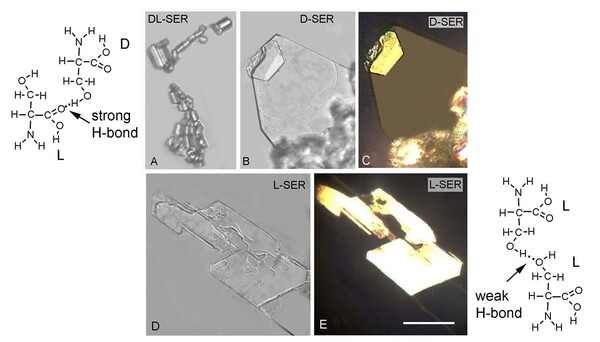
Seeking to develop a better understanding of the chemical and physical properties of amino acids that compose proteins, here the authors investigated the unusual relative insolubility of racemic mixtures of D- and L-serine compared to the solubility of pure D- or L-serine. The authors used a combination of microscopy and temperature measurements alongside previous X-ray diffraction studies to conclude that racemic DL-serine crystals consist of comparatively stronger hydrogen bond interactions compared to crystals of pure enantiomers. These stronger interactions were found to result in the unique release of heat during the crystallization of racemic mixtures.
Read More...The analysis of the viral transmission and structural interactions between the HIV-1 envelope glycoprotein and the lymphocyte receptor integrin α4β7
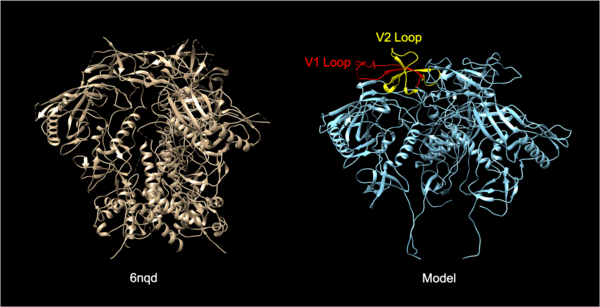
The Human Immunodeficiency Virus (HIV) infects approximately 40 million people globally, and one million people die every year from Acquired Immune Deficiency Syndrome (AIDS)-related illnesses. This study examined the interactions between the HIV-1 envelope glycoprotein gp120 and the human lymphocyte receptor integrin α4β7, the putative first long-range receptor for the envelope glycoprotein of the virus in mucosal tissues. Presented data support the claim that the V1 loop is involved in the binding between α4β7 and the HIV-1 envelope glycoprotein through molecular dockings.
Read More...