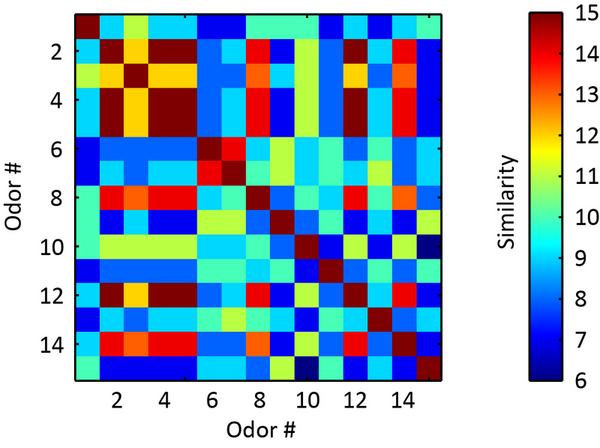
To address whether odor sensory circuits are organized topographically, the authors investigate whether the neuronal responses to similar odors amongst different mice mapped similarly in brain.
Read More...Lack of correlation between odor composition and neuron response in the olfactory cortex of mice
To address whether odor sensory circuits are organized topographically, the authors investigate whether the neuronal responses to similar odors amongst different mice mapped similarly in brain.
Read More...The Effects of Vibrotactile Feedback on Task Performance in a 3D-printed Myoelectric Prosthetic Arm
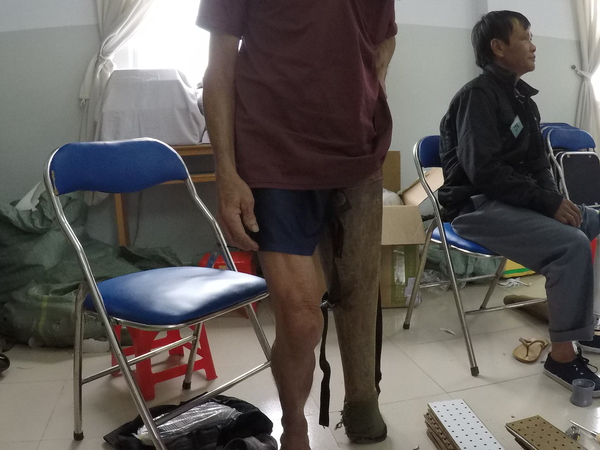
Here the authors strive to remedy the financial and mechanical deficiencies in current prosthetics by building a simple, noninvasive vibratory sensory feedback system into an inexpensive constructed 3D-printed prosthetic arm. They find that this simple feedback system has the potential to enhance feedback performance at a less cost.
Read More...Artificial Intelligence-Based Smart Solution to Reduce Respiratory Problems Caused by Air Pollution

In this report, Bhardwaj and Sharma tested whether placing specific plants indoors can reduce levels of indoor air pollution that can lead to lung-related illnesses. Using machine learning, they show that plants improved overall indoor air quality and reduced levels of particulate matter. They suggest that plant-based interventions coupled with sensors may be a useful long-term solution to reducing and maintaining indoor air pollution.
Read More...Pressing filtration for extraction of cabbage dietary fiber and soluble components

Here the authors introduce pressing filtration as a novel, efficient, and low-energy method for extracting dietary fiber from cabbage, which successfully retains heat-sensitive nutrients and achieves a high fiber yield. The study demonstrates the scalability and economic viability of this technique for commercial use, highlighting that the resulting high-fiber cabbage powder can be incorporated into familiar foods like hamburger buns and beef patties without compromising taste or sensory quality.
Read More...A 3D printed triboelectric nanogenerator for bridge vibration energy harvesting and sensing
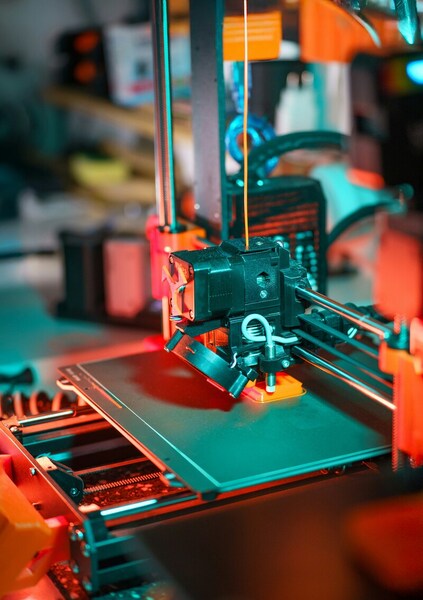
This study strongly illustrates that optimizing 3D printing parameters would enhance a triboelectric nanogenerator's performance. The design improvements substantiate the potential of optimized, 3D-printed TENGs for developing scalable, cost-effective solutions for powering low-energy electronics, particularly in applications such as structural health monitoring.
Read More...Indoor near-field target detection characteristics under radio and radar joint operation at 2.4 GHz ISM band
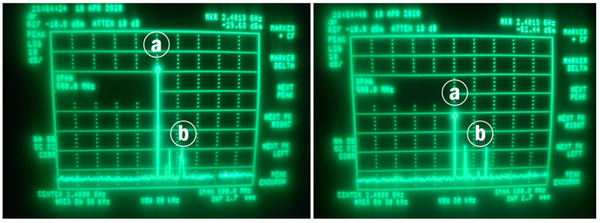
In our modern age, the burgeoning use of radios and radars has resulted in competition for electromagnetic spectrum resources. With recent research highlighting solutions to radio and radar mutual interference, there is a desperate need for a cost-effective configuration that permits a radar-radio joint system. In this study, the authors have set out to determine the feasibility of using single-tone continuous-wave radars in a radar-joint system. With this system, they aim to facilitate cost-effective near-field target detection by way of the popularized 2.4-GHz industrial, scientific, and medical (ISM) band.
Read More...A cost-effective IoT-based intelligent indoor air quality monitoring
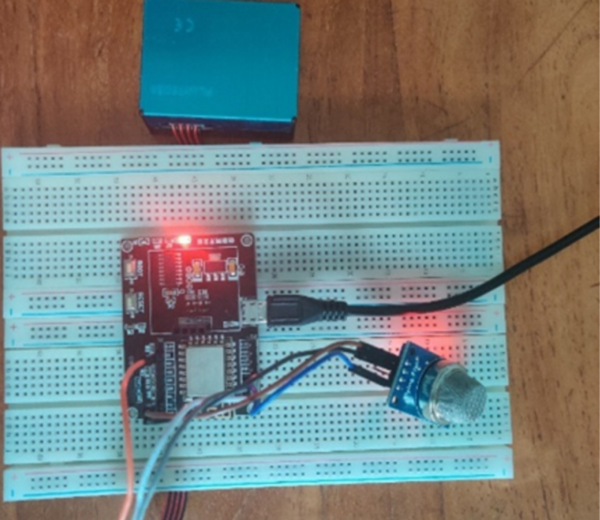
Poor air quality is associated with negative effects on human health but can be difficult to measure in an accurate and cost-effective manner. The authors design and test a monitor for measuring indoor air quality using low-cost components.
Read More...Using Artificial Intelligence to Forecast Continuous Glucose Monitor(CGM) readings for Type One Diabetes
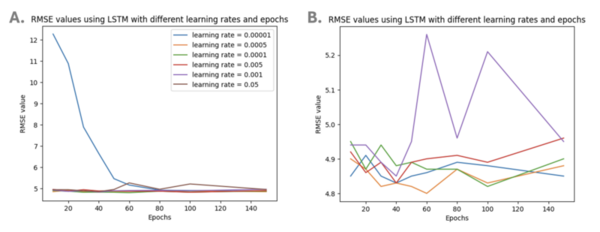
People with Type One diabetes often rely on Continuous Blood Glucose Monitors (CGMs) to track their blood glucose and manage their condition. Researchers are now working to help people with Type One diabetes more easily monitor their health by developing models that will future blood glucose levels based on CGM readings. Jalla and Ghanta tackle this issue by exploring the use of AI models to forecast blood glucose levels with CGM data.
Read More...Effects of Withania Somnifera on Charcot-Marie-Tooth Disease Type 1A in the model organism Eisenia Fetida
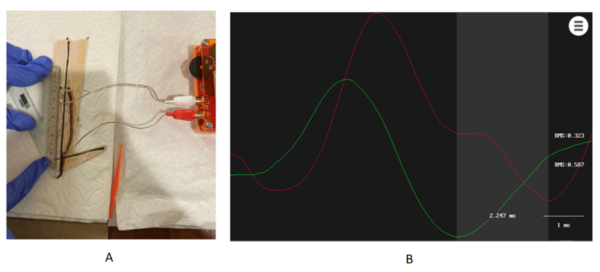
In this study, the authors investigate whether Eisenia Fetida nerve signal speed correlates with Withania somnifera ingestion, a possible way to protect against demyelination.
Read More...A Novel Method for Assessment of Proprioception

Trevithick & Park were interested in whether proprioception, the sense of the relative position of body parts and movement, differed between varsity and non-varsity athletes, as well as between the sport practiced. The authors found that there was no correlation between athleticism and better proprioception, but that dancers had superior proprioceptive abilities compared to those that practiced other sports.
Read More...