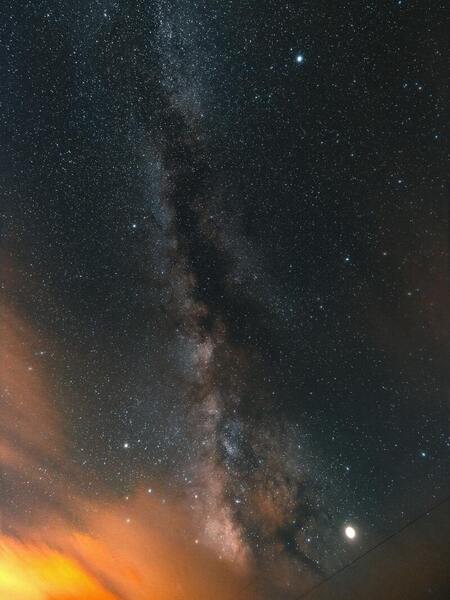
The authors explore how similar exoplanets are to Earth and whether they could be inhabited by humans and other living organisms.
Read More...Studying habitability of the exoplanents Kepler-504 b, Kepler-315 b, and Kepler-315 c
The authors explore how similar exoplanets are to Earth and whether they could be inhabited by humans and other living organisms.
Read More...Photometric analysis and light curve modeling of apparent transient 2020pni
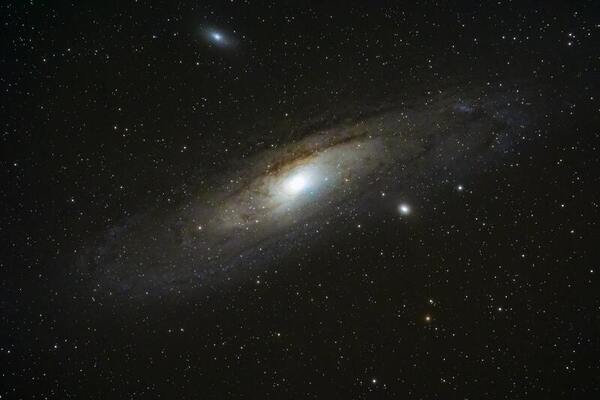
Supernovas are powerful explosions that result from gravitational collapse of a massive star. Using photometric analysis Arora et al. set out to investigate whether 2020pni (located in galaxy UGC 9684) was a supernova. They were ultimately able to identify 2020pni as a Type II-L supernova and determine it's distance from earth.
Read More...Ground-based Follow-up Observations of TESS Exoplanet Candidates
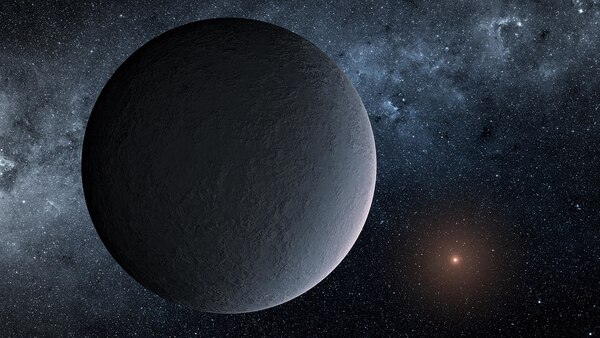
The goal of this study was to further confirm, characterize, and classify LHS 3844 b, an exoplanet detected by the Transiting Exoplanet Survey Satellite (TESS). Additionally, we strove to determine the likeliness of LHS 3844 b and similar planets as qualified candidates for observation with the James Webb Space Telescope (JWST).
Read More...An Analysis on Exoplanets and How They are Affected by Different Factors in Their Star Systems
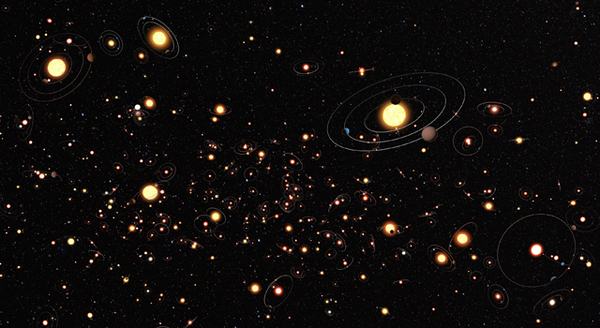
In this article, the authors systematically study whether the type of a star is correlated with the number of planets it can support. Their study shows that medium-sized stars are likely to support more than one planet, just like the case in our solar system. They predict that, of the hundreds of planets beyond our solar system, 6% might be habitable. As humans work to travel further and further into space, some of those might truly be suited for human life.
Read More...