Browse Articles

The Effectiveness of Different Palate Relievers Against a Hot Chili Pepper Sauce

Avendaño-Rodríguez et al. | Jun 11, 2016

The Effectiveness of Different Palate Relievers Against a Hot Chili Pepper Sauce

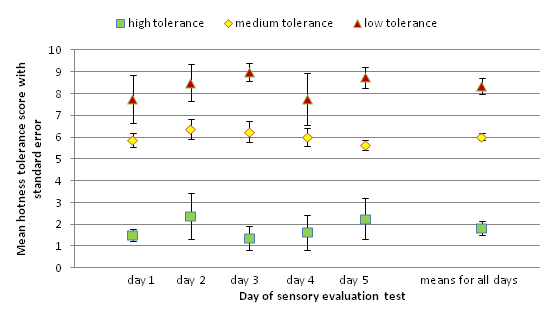
Cuisine with hot chili peppers can be tasty, but sometimes painful to consume because of the burning sensations caused by the capsaicin molecule. The authors wanted to find the palate reliever that decreases the burning sensation of capsaicin the most by testing water, soft drink, olive oil, milk, and ice-cream as possible candidates. The authors hypothesized that olive oil would be the best palate reliever as it is non-polar like the capsaicin molecule. The authors surveyed 12 panelists with low, medium, and high spice tolerances and found that across all levels of spice tolerance, milk and ice-cream were the best palate relievers and soft drink the worst.

Read More...

Fitness social media is positively associated with the use of performance-enhancing drugs among young men

Tamaki et al. | Feb 01, 2024

Fitness social media is positively associated with the use of performance-enhancing drugs among young men
Image credit: Samuel Girven

Here the authors investigated the relationship between fitness-related social media and the high usage of performance-enhancing drugs (PEDs) specifically by men in the US age 18-35. In a survey with 149 participants they identified that young men that use fitness-related social media are more likely to use PEDs. Their results suggest the necessity to consider potential risk behaviors which may be related to social media consumption.

Read More...

How planarians are affected by mouthwash and cough syrup

Mebane et al. | Nov 14, 2021

How planarians are affected by mouthwash and cough syrup

Since cough syrup and mouthwash are commonly used items and often end up flushed down the drain or toilet, they can eventually find their way into into freshwater waterways which can be harmful to many marine organisms, such as planarians (aquatic flatworms). To investigate the effects of these substances on planarians, the authors considered different concentrations of Listerine mouthwash and Robitussin syrup along with their active ingredients. By using a behavioral assay, they identified that the active ingredients of cough syrup detrimentally affect planarian behavior. They suggest that these findings could be used to guide disposal methods to lessen detrimental effects on aquatic life.

Read More...

Exploring Interactions between PFAS (Per- and Polyfluoroalkyl Substances) and proteins

Lu-Yang et al. | May 16, 2026

Exploring Interactions between PFAS (Per- and Polyfluoroalkyl Substances) and proteins
Image credit: Authors

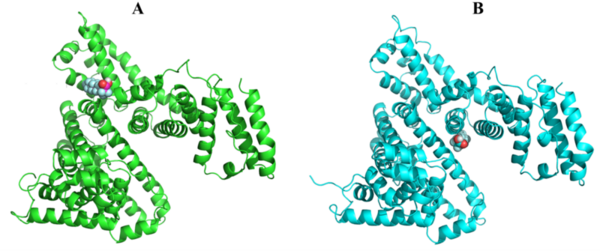
Here the authors investigated how the "forever chemical" perfluorooctanoic acid binds to bovine serum albumin (BSA) using computational software to simulate its potential impact on essential human plasma proteins. They identify a possible, high-energy binding configuration that could persistently impair protein functions, underscoring the critical need for further research into the long-term health risks of per- and poly-fluoroalkyl substances exposure.

Read More...

Integrated Ocean Cleanup System for Sustainable and Healthy Aquatic Ecosystems

Anand et al. | Nov 14, 2020

Integrated Ocean Cleanup System for Sustainable and Healthy Aquatic Ecosystems

Oil spills are one of the most devastating events for marine life. Finding ways to clean up oil spills without the need for harsh chemicals could help decrease the negative impact of such spills. Here the authors demonstrate that using a combination of several biodegradable substances can effectively adsorb oil in seawater in a laboratory setting. They suggest further exploring the potential of such a combination as a possible alternative to commonly-used non-biodegradable substances in oil spill management.

Read More...

Developing a Method to Remove Inorganic Arsenic from Rice with Natural Substances

Mukai et al. | Oct 27, 2020

Developing a Method to Remove Inorganic Arsenic from Rice with Natural Substances

In this study, the authors tested different approaches for removing arsenic from rice. Due to higher arsenic levels in water, some areas grow rice with higher levels as well. This is a health hazard and so developing methods to remove arsenic from the rice will be helpful to many. Using a rapid arsenic kit, the authors found that activated charcoal was the most effective at removing arsenic from rice.

Read More...