Browse Articles

Identification of microwave-related changes in tissue using an ultrasound scan

Shariff et al. | Apr 24, 2024

Identification of microwave-related changes in tissue using an ultrasound scan
Image credit: Shariff and Shariff 2024

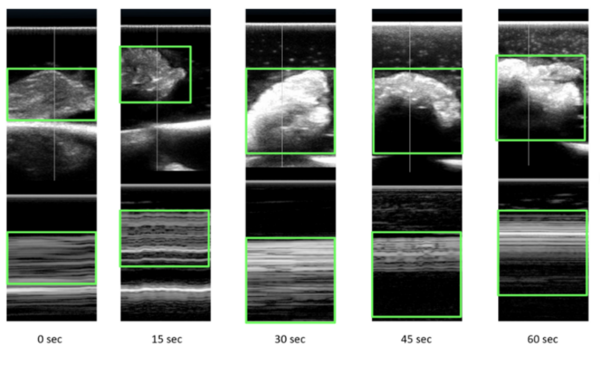
Microwave energy (ME) is used in the medical field to denature protein structures, resulting in inactivation or destruction of abnormal cells. Identifying the extent of destruction of abnormal tissue (cancer tissue or tissue with abnormal electrical activity) is essential for accomplishing successful therapy and reducing collateral damage. Our study was an ex vivo assessment of the changes on ultrasound scans (US) in chicken tissue exposed to ME. We hypothesized that any changes in tissue structures would be recognized on the reflected ultrasound waves. Ultrasound scans of tissues change with exposure to microwaves with increasing reflection of ultrasound waves. With exposure to microwaves, surface level brightness on the ultrasound scans increases statistically significantly. The findings could be used in heat related (ME and radiofrequency) procedures where clinicians would be able to actively assess lesions in real-time. Further studies are required to assess changes in tissue during active exposure to different types of energies.

Read More...
Autologous transplantation of fresh ovarian tissue in the ICR mice model

Wang et al. | Oct 24, 2022

Autologous transplantation of fresh ovarian tissue in the ICR mice model

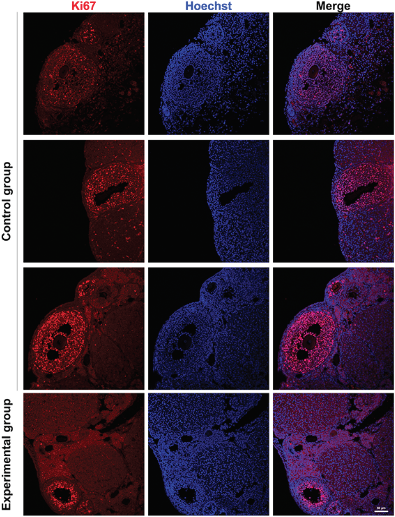
In this study, we performed orthotopic auto-transplantation of fresh ovarian tissues by transplanting unilateral half ovarian tissue to the contralateral ovary in the ICR (Institute of Cancer Research) strain of outbred, heterogeneous mice to determine if the transplanted tissue could be functional. We found that the freshly transplanted mouse ovarian tissue survived and functional, as histochemical and immunofluorescence assays have shown that not only both follicles at different developing stages and corpus luteum are available, but the morphology of them are properly maintained within the transplanted tissue.

Read More...

Phospholipase A2 increases the sensitivity of doxorubicin induced cell death in 3D breast cancer cell models

Lee et al. | Mar 30, 2022

Phospholipase A2 increases the sensitivity of doxorubicin induced cell death in 3D breast cancer cell models

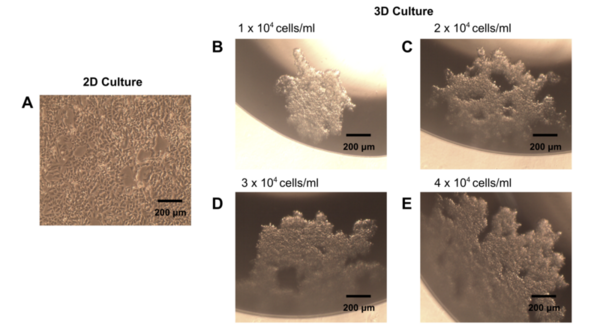
Inefficient penetration of cancer drugs into the interior of the three-dimensional (3D) tumor tissue limits drugs' delivery. The authors hypothesized that the addition of phospholipase A2 (PLA2) would increase the permeability of the drug doxorubicin for efficient drug penetration. They found that 1 mM PLA2 had the highest permeability. Increased efficiency in drug delivery would allow lower concentrations of drugs to be used, minimizing damage to normal cells.

Read More...

Predicting smoking status based on RNA sequencing data

Yang et al. | Aug 30, 2024

Predicting smoking status based on RNA sequencing data
Image credit: Yang and Stanley 2024

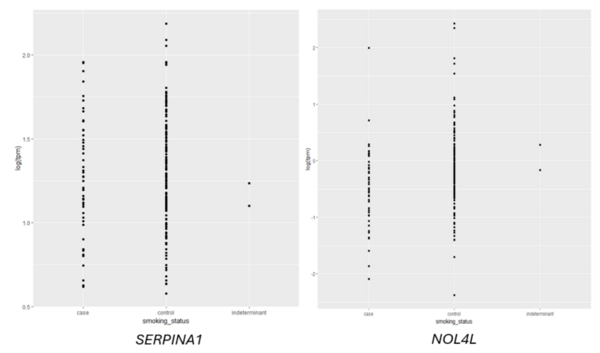
Given an association between nicotine addiction and gene expression, we hypothesized that expression of genes commonly associated with smoking status would have variable expression between smokers and non-smokers. To test whether gene expression varies between smokers and non-smokers, we analyzed two publicly-available datasets that profiled RNA gene expression from brain (nucleus accumbens) and lung tissue taken from patients identified as smokers or non-smokers. We discovered statistically significant differences in expression of dozens of genes between smokers and non-smokers. To test whether gene expression can be used to predict whether a patient is a smoker or non-smoker, we used gene expression as the training data for a logistic regression or random forest classification model. The random forest classifier trained on lung tissue data showed the most robust results, with area under curve (AUC) values consistently between 0.82 and 0.93. Both models trained on nucleus accumbens data had poorer performance, with AUC values consistently between 0.65 and 0.7 when using random forest. These results suggest gene expression can be used to predict smoking status using traditional machine learning models. Additionally, based on our random forest model, we proposed KCNJ3 and TXLNGY as two candidate markers of smoking status. These findings, coupled with other genes identified in this study, present promising avenues for advancing applications related to the genetic foundation of smoking-related characteristics.

Read More...

Unveiling the wound healing potential of umbilical cord derived conditioned medium: an in vitro study

Vasal et al. | Jun 17, 2024

Unveiling the wound healing potential of umbilical cord derived conditioned medium: an <em>in vitro</em> study

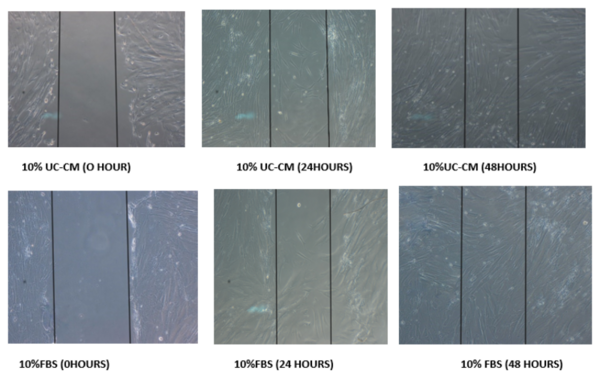
Chronic wounds pose a serious threat to an individual’s health and quality of life. However, due to the severity and morbidity of such wounds, many pre-existing treatments are inefficient or costly. While the use of skin grafts and other such biological constructs in chronic wound healing has already been characterized, the use of umbilical cord tissue has only recently garnered interest, despite the cytokine-rich composition of Wharton’s jelly (cord component). Our current study aimed to characterize the use of an umbilical cord derived conditioned medium (UC-CM) to treat chronic wounds.

Read More...

Osmotic characteristics of water retention structures of Bursera microphylla in relation to soil salinity

Groom et al. | Jul 12, 2023

Osmotic characteristics of water retention structures of <i>Bursera microphylla</i> in relation to soil salinity
Image credit: Lisa Fotios

This study hypothesized that sodium chloride was taken up through plant root structures to facilitate water transportation, and that sodium chloride accumulation was directly proportional to the soil salinity. Results showed that most cells within the “bulb” structures were isotonic at a concentration approximately twice as high as that of root tissue and ambient soil salinity, therefore supporting the presented hypothesis.

Read More...

Using machine learning to develop a global coral bleaching predictor

Madireddy et al. | Feb 21, 2023

Using machine learning to develop a global coral bleaching predictor
Image credit: Madireddy, Bosch, and McCalla

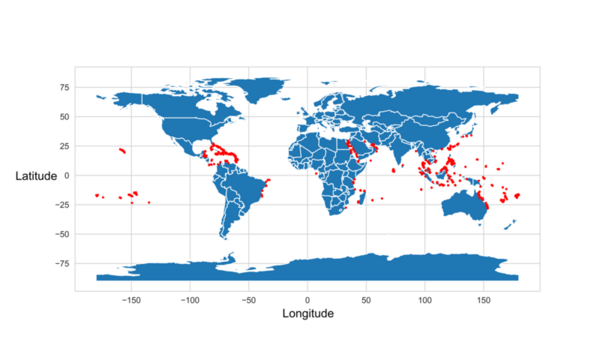
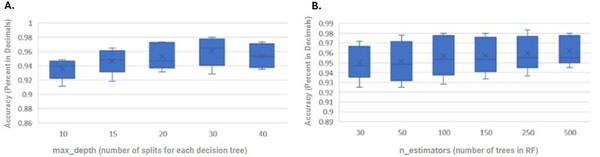
Coral bleaching is a fatal process that reduces coral diversity, leads to habitat loss for marine organisms, and is a symptom of climate change. This process occurs when corals expel their symbiotic dinoflagellates, algae that photosynthesize within coral tissue providing corals with glucose. Restoration efforts have attempted to repair damaged reefs; however, there are over 360,000 square miles of coral reefs worldwide, making it challenging to target conservation efforts. Thus, predicting the likelihood of bleaching in a certain region would make it easier to allocate resources for conservation efforts. We developed a machine learning model to predict global locations at risk for coral bleaching. Data obtained from the Biological and Chemical Oceanography Data Management Office consisted of various coral bleaching events and the parameters under which the bleaching occurred. Sea surface temperature, sea surface temperature anomalies, longitude, latitude, and coral depth below the surface were the features found to be most correlated to coral bleaching. Thirty-nine machine learning models were tested to determine which one most accurately used the parameters of interest to predict the percentage of corals that would be bleached. A random forest regressor model with an R-squared value of 0.25 and a root mean squared error value of 7.91 was determined to be the best model for predicting coral bleaching. In the end, the random model had a 96% accuracy in predicting the percentage of corals that would be bleached. This prediction system can make it easier for researchers and conservationists to identify coral bleaching hotspots and properly allocate resources to prevent or mitigate bleaching events.

Read More...

In silico modeling of emodin’s interactions with serine/threonine kinases and chitosan derivatives

Suresh et al. | Jan 10, 2022

<i>In silico</i> modeling of emodin’s interactions with serine/threonine kinases and chitosan derivatives

Here, through protein-ligand docking, the authors investigated the effect of the interaction of emodin with serine/threonine kinases, a subclass of kinases that is overexpressed in many cancers, which is implicated in phosphorylation cascades. Through molecular dynamics theyfound that emodin forms favorable interactions with chitosan and chitosan PEG (polyethylene glycol) copolymers, which could aid in loading drugs into nanoparticles (NPs) for targeted delivery to cancerous tissue. Both polymers demonstrated reasonable entrapment efficiencies, which encourages experimental exploration of emodin through targeted drug delivery vehicles and their anticancer activity.

Read More...

Effects of vascular normalizing agents on immune marker expression in T cells, dendritic cells, and melanoma cells

Yaskolko et al. | Nov 03, 2021

Effects of vascular normalizing agents on immune marker expression in T cells, dendritic cells, and melanoma cells

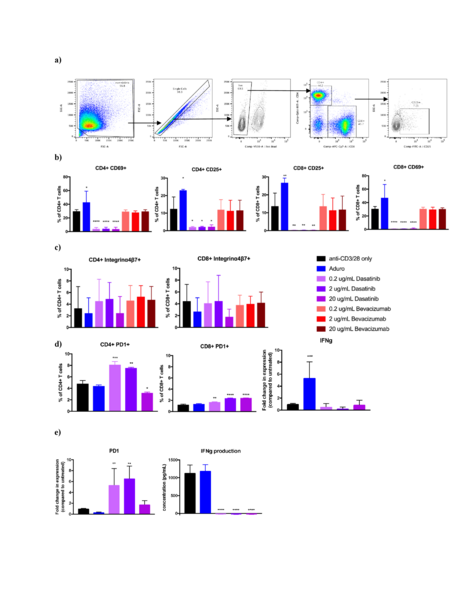
Tertiary lymphoid structures (TLS) are lymph node-like structures that form at sites of inflammation, and their presence in cancer patients is predictive of a better clinical outcome. One significant obstacle to TLS formation is reduced immune cell infiltration into the tumor microenvironment (TME). Recent studies have shown that vasculature normalizing (VN) agents may override this defect to improve tissue perfusion and increased immune cell entry into the TME. However, their effects on immune cell and tumor cell phenotype remain understudied. Here the authors investigate whether treating tumor cells with VN would reduce their immunosuppressive phenotype and promote production of chemokine that recruit immune cells and foster TLS formation.

Read More...