Browse Articles

Utilizing meteorological data and machine learning to predict and reduce the spread of California wildfires

Bilwar et al. | Jan 15, 2024

Utilizing meteorological data and machine learning to predict and reduce the spread of California wildfires
Image credit: Pixabay

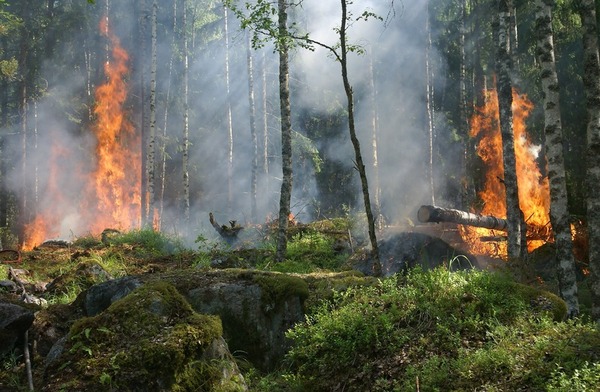
This study hypothesized that a machine learning model could accurately predict the severity of California wildfires and determine the most influential meteorological factors. It utilized a custom dataset with information from the World Weather Online API and a Kaggle dataset of wildfires in California from 2013-2020. The developed algorithms classified fires into seven categories with promising accuracy (around 55 percent). They found that higher temperatures, lower humidity, lower dew point, higher wind gusts, and higher wind speeds are the most significant contributors to the spread of a wildfire. This tool could vastly improve the efficiency and preparedness of firefighters as they deal with wildfires.

Read More...

Optimizing airfoil shape for small, low speed, unmanned gliders: A homemade investigation

Lara et al. | Mar 30, 2023

Optimizing airfoil shape for small, low speed, unmanned gliders: A homemade investigation
Image credit: Konrad Wojciechowski

Here, the authors sought to identify a method to optimize the lift generated by an airfoil based solely on its shape. By beginning with a Bernoullian model to predict an optimized wing shape, the authors then tested their model against other possible shapes by constructing them from Styrofoam and testing them in a small wind tunnel. Contrary to their hypothesis, they found their expected optimal airfoil shape did not result in the greatest lift generation. They attributed this to a variety of confounding variables and concluded that their results pointed to a correlation between airfoil shape and lift generation.

Read More...

A land use regression model to predict emissions from oil and gas production using machine learning

Cao et al. | Mar 24, 2023

A land use regression model to predict emissions from oil and gas production using machine learning

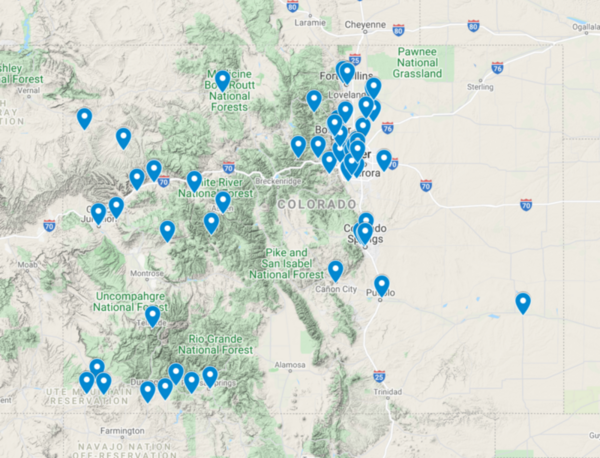
Emissions from oil and natural gas (O&G) wells such as nitrogen dioxide (NO2), volatile organic compounds (VOCs), and ozone (O3) can severely impact the health of communities located near wells. In this study, we used O&G activity and wind-carried emissions to quantify the extent to which O&G wells affect the air quality of nearby communities, revealing that NO2, NOx, and NO are correlated to O&G activity. We then developed a novel land use regression (LUR) model using machine learning based on O&G prevalence to predict emissions.

Read More...

Extroverts as Materialists: Correlating Personality Traits, Materialism, and Spending Behavior

Jackson et al. | Feb 19, 2017

Extroverts as Materialists: Correlating Personality Traits, Materialism, and Spending Behavior

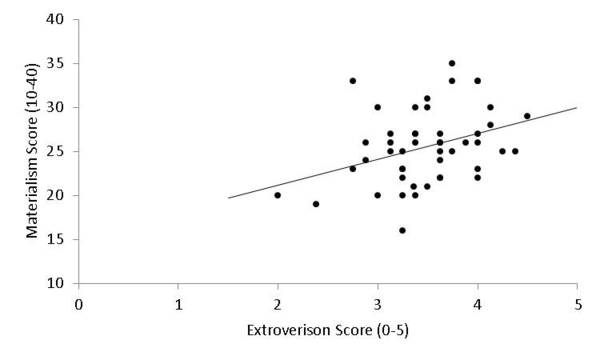
The authors investigated the relationship between personality traits and adolescent materialism, as well as how materialism relates to spending habits. Results indicate that extroversion was positively correlated with materialism, and that adolescents' purchases were affected by the purchasing behaviors of their friends or peers. Moreover, materialistic youth were more likely than non-materialistic youth to spend money on themselves when given a hypothetical windfall of $500.

Read More...

Impact of simple vs complex carbohydrates under time constraint before anaerobic and aerobic exercise

Cui et al. | Oct 13, 2022

Impact of simple vs complex carbohydrates under time constraint before anaerobic and aerobic exercise

The goal of this study was to determine the if carbohydrates or complex carbohydrates are better for athlete's performance in anaerobic and aerobic exercise. Ultimately, we found that, when one’s schedule only allows for 30 minutes to eat before a workout, the best pre-workout meal for optimal glycogen levels to prompt muscle hypertrophy, strength increases, and better endurance is one that is simple carbohydrate-heavy.

Read More...

Examining the impact of consecutive losses on gambling: When do we decide to quit?

Kim et al. | Apr 28, 2026

Examining the impact of consecutive losses on gambling: When do we decide to quit?
Image credit: Kim, Cragun, and Kim

This article explored the question of when do people decide to stop gambling and further tries to extrapolate why people stop gambling at that point. Their study showed that people tend to quit gambling after 4 consecutive losses, significantly more than 1-3 consecutive losses or a win previous to quitting. They also found that participants commonly quit at a point value approximately 5 points greater than or less than their starting balance. The authors concluded that these results may be important in understanding how to cut down on excessive gambling or in creating policies that make it easier for people to disengage from gambling.

Read More...

Monitoring drought using explainable statistical machine learning models

Cheung et al. | Oct 28, 2024

Monitoring drought using explainable statistical machine learning models

Droughts have a wide range of effects, from ecosystems failing and crops dying, to increased illness and decreased water quality. Drought prediction is important because it can help communities, businesses, and governments plan and prepare for these detrimental effects. This study predicts drought conditions by using predictable weather patterns in machine learning models.

Read More...