Browse Articles

The Development and Maximization of a Novel Photosynthetic Microbial Fuel Cell Using Rhodospirillum rubrum

Gomez et al. | Mar 02, 2014

The Development and Maximization of a Novel Photosynthetic Microbial Fuel Cell Using <em>Rhodospirillum rubrum</em>

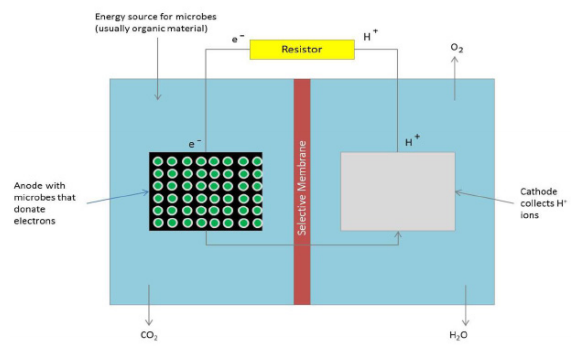
Microbial fuel cells (MFCs) are bio-electrochemical systems that utilize bacteria and are promising forms of alternative energy. Similar to chemical fuel cells, MFCs employ both an anode (accepts electrons) and a cathode (donates electrons), but in these devices the live bacteria donate the electrons necessary for current. In this study, the authors assess the functionality of a photosynthetic MFC that utilizes a purple non-sulfur bacterium. The MFC prototype they constructed was found to function over a range of environmental conditions, suggesting its potential use in industrial models.

Read More...

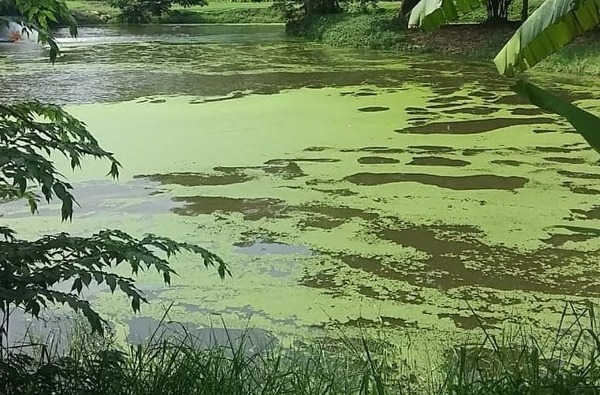
The Effects of Micro-Algae Characteristics on the Bioremediation Rate of Deepwater Horizon Crude Oil

Cao et al. | Jun 17, 2013

The Effects of Micro-Algae Characteristics on the Bioremediation Rate of Deepwater Horizon Crude Oil

Environmental disasters such as the Deepwater Horizon oil spill can be devastating to ecosystems for long periods of time. Safer, cheaper, and more effective methods of oil clean-up are needed to clean up oil spills in the future. Here, the authors investigate the ability of natural ocean algae to process crude oil into less toxic chemicals. They identify Coccochloris elabens as a particularly promising algae for future bioremediation efforts.

Read More...

Algorithmic barriers: Investigating student perceptions of AI bias in subjective “culture fit” hiring

Mahatara et al. | May 25, 2026

Algorithmic barriers: Investigating student perceptions of AI bias in subjective “culture fit” hiring
Image credit: JonTyson

This study investigated perceptions of the emerging workforce toward the use of artificial intelligence in hiring, specifically for assessing subjective "culture fit." Through a mixed-methods survey of 150 high school and early-college students in Nepal, we found a significant disconnect between organizational adoption of AI and the profound skepticism of young job candidates, who express deep concerns about fairness, transparency, and the potential for AI to perpetuate systemic discrimination.

Read More...

Examining the impact of consecutive losses on gambling: When do we decide to quit?

Kim et al. | Apr 28, 2026

Examining the impact of consecutive losses on gambling: When do we decide to quit?
Image credit: Kim, Cragun, and Kim

This article explored the question of when do people decide to stop gambling and further tries to extrapolate why people stop gambling at that point. Their study showed that people tend to quit gambling after 4 consecutive losses, significantly more than 1-3 consecutive losses or a win previous to quitting. They also found that participants commonly quit at a point value approximately 5 points greater than or less than their starting balance. The authors concluded that these results may be important in understanding how to cut down on excessive gambling or in creating policies that make it easier for people to disengage from gambling.

Read More...