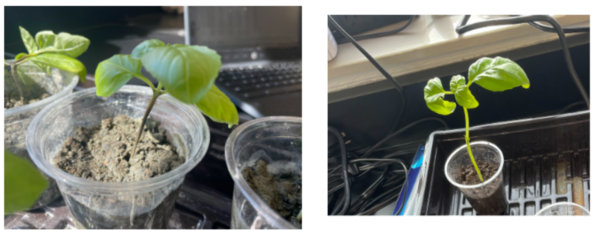
The authors test whether basil can grow in a simulated Martian soil improved with a waste-based fertilizer called Milorganite.
Read More...Analysis of Milorganite’s ability to sustain growth of Ocimum basilicum in simulated Martian soil
The authors test whether basil can grow in a simulated Martian soil improved with a waste-based fertilizer called Milorganite.
Read More...Statistically Analyzing the Effect of Various Factors on the Absorbency of Paper Towels

In this study, the authors investigate just how effectively paper towels can absorb different types of liquid and whether changing the properties of the towel (such as folding it) affects absorbance. Using variables of either different liquid types or the folded state of the paper towels, they used thorough approaches to make some important and very useful conclusions about optimal ways to use paper towels. This has important implications as we as a society continue to use more and more paper towels.
Read More...The Effect of the Stomatal Index on the Net Rate of Photosynthesis in the Leaves of Spinacia oleracea, Vinca minor, Rhododendron spp, Epipremnum aureum, and Hedera spp
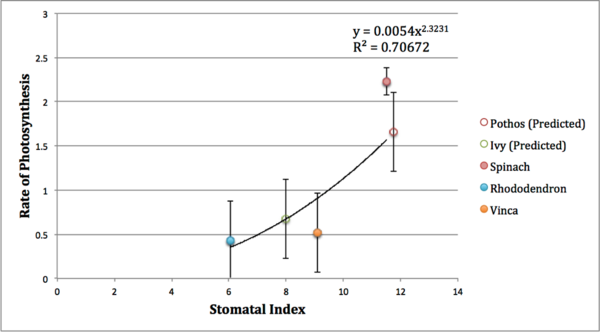
The density of stomata, or stomatal index, in plant leaves is correlated with the plant's rate of photosynthesis, and affected by the plant's climate. In this paper, authors measure the stomatal index of five plant species to derive their rates of photosynthesis. These results could help track changes in plants' photosynthetic rates with changing climate.
Read More...The Effects of Micro-Algae Characteristics on the Bioremediation Rate of Deepwater Horizon Crude Oil
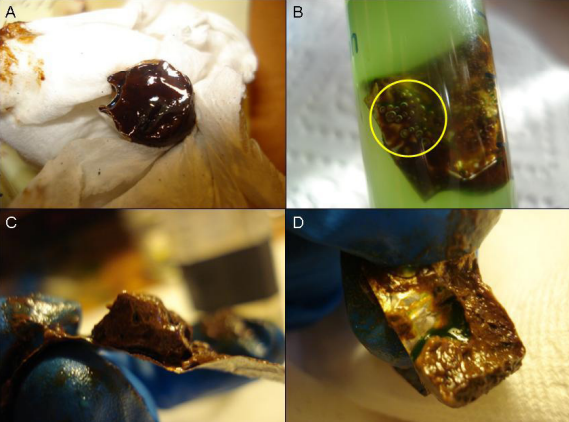
Environmental disasters such as the Deepwater Horizon oil spill can be devastating to ecosystems for long periods of time. Safer, cheaper, and more effective methods of oil clean-up are needed to clean up oil spills in the future. Here, the authors investigate the ability of natural ocean algae to process crude oil into less toxic chemicals. They identify Coccochloris elabens as a particularly promising algae for future bioremediation efforts.
Read More...Methanotrophic bioremediation for the degradation of oceanic methane and chlorinated hydrocarbons

Seeking an approach to address the increasing levels of methane and chlorinated hydrocarbons that threaten the environment, the authors worked to develop a novel, low-cost biotrickling filter for use as an ex situ method tailored to marine environments. By using methanotrophic bacteria in the filter, they observed methane degradation, suggesting the feasibility of chlorinated hydrocarbon degradation.
Read More...Exploring the possibilities for reactions between SiW and alkaline solutions to be renewable energy sources
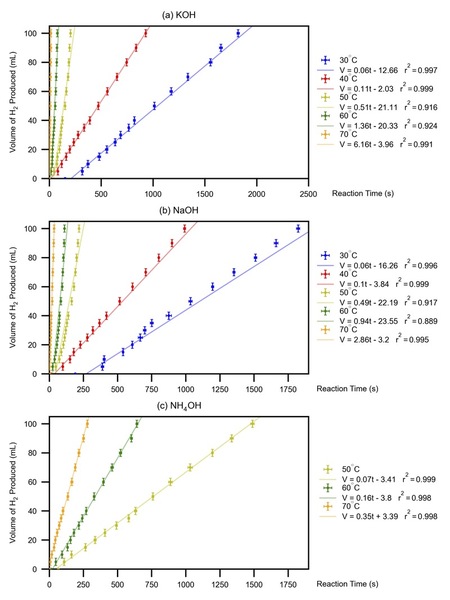
The authors looked at hydrogen gas production and how reaction temperature, concentration and alkaline solution used impacted the overall reaction with silicon. They found that all alkaline solutions tested would be viable options for using silicon waste to produce hydrogen gas to be used a renewable energy source.
Read More...Effect of different cooking methods on the levels of iron and ascorbic acid in green vegetables

This study compares different methods for cooking vegetables to determine which retain iron and ascorbic acid, or vitamin C, levels the most.
Read More...Efficacy of Mass Spectrometry Versus 1H Nuclear Magnetic Resonance With Respect to Denaturant Dependent Hydrogen-Deuterium Exchange in Protein Studies
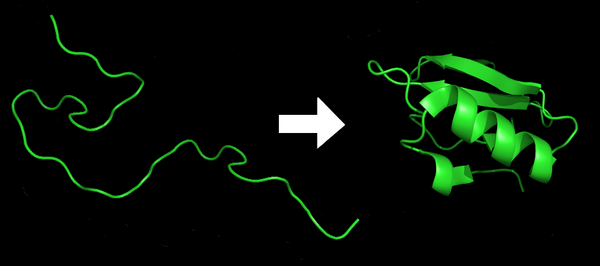
The misfolding of proteins leads to numerous diseases including Akzheimer’s, Parkinson’s and Type II Diabetes. Understanding of exactly how proteins fold is crucial for many medical advancements. Chenna and Englander addressed this problem by measuring the rate of hydrogen-deuterium exchange within proteins exposed to deuterium oxide in order to further elucidate the process of protein folding. Here, mass spectrometry was used to measure exchange in Cytochrome c and was compared to archived 1H NMR data.
Read More...Analysis of the effects of positive ions and boundary layer temperature at various hypersonic speeds on boundary layer density
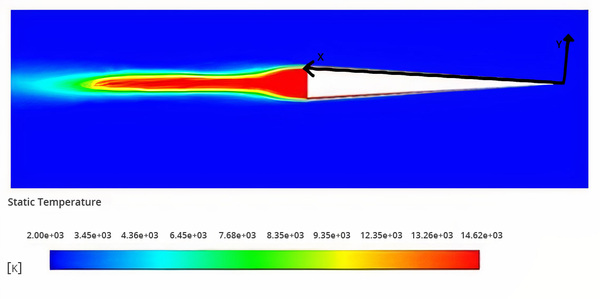
This study's goal was to identify the Mach numbers for which electrostatic drag and heat transfer manipulation would be most applicable inside the stratosphere. The experiments were conducted using computational fluid dynamics software. The study demonstrated that, on average, higher Mach speeds resulted in a considerably higher potential decrease in density. The study highlights that further research on the surface charge method is warranted to explore higher hypersonic speeds within the stratosphere.
Read More...