Browse Articles

Impact of Silverado Fire on soil carbon

Choi et al. | Feb 20, 2025

Impact of Silverado Fire on soil carbon

Soil stores three times more carbon than the atmosphere, making small changes in its storage and release crucial for carbon cycling and climate models. This study examined the impact of the 2020 California Silverado Fire on pyrogenic carbon (PyC) deposits using nitrogen and carbon isotopes as proxies. While the results showed significant variability in δ¹⁵N, δ¹³C, total carbon, and total nitrogen across sites, they did not support the hypothesis that wildfire increases δ¹⁵N while keeping δ¹³C constant, emphasizing the need for location-based controls when using δ¹⁵N to track PyC.

Read More...

Unveiling the wound healing potential of umbilical cord derived conditioned medium: an in vitro study

Vasal et al. | Jun 17, 2024

Unveiling the wound healing potential of umbilical cord derived conditioned medium: an <em>in vitro</em> study

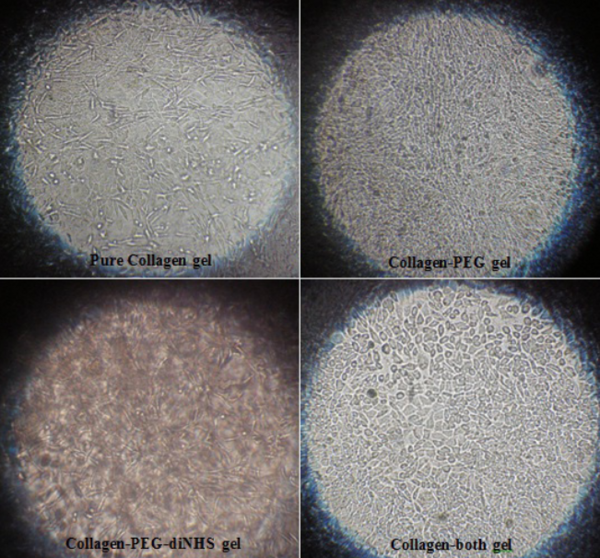
Chronic wounds pose a serious threat to an individual’s health and quality of life. However, due to the severity and morbidity of such wounds, many pre-existing treatments are inefficient or costly. While the use of skin grafts and other such biological constructs in chronic wound healing has already been characterized, the use of umbilical cord tissue has only recently garnered interest, despite the cytokine-rich composition of Wharton’s jelly (cord component). Our current study aimed to characterize the use of an umbilical cord derived conditioned medium (UC-CM) to treat chronic wounds.

Read More...

The impact of genetic analysis on the early detection of colorectal cancer

Agrawal et al. | Aug 24, 2023

The impact of genetic analysis on the early detection of colorectal cancer

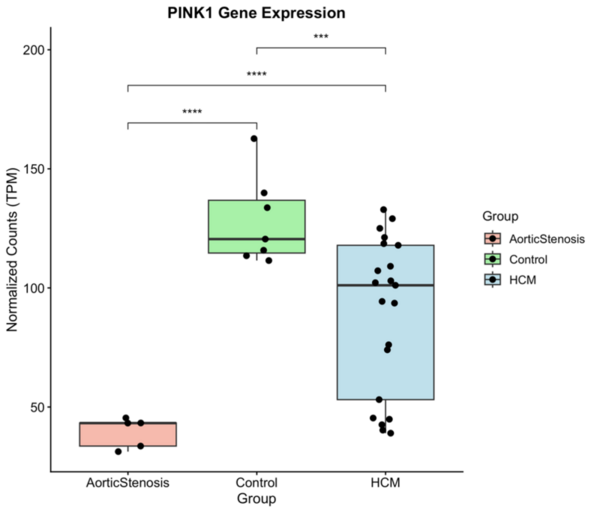
Although the 5-year survival rate for colorectal cancer is below 10%, it increases to greater than 90% if it is diagnosed early. We hypothesized from our research that analyzing non-synonymous single nucleotide variants (SNVs) in a patient's exome sequence would be an indicator for high genetic risk of developing colorectal cancer.

Read More...

Effects of various alkaline carbonic solutions on the growth of the freshwater algae Chlorophyceae

Jani et al. | Aug 11, 2023

Effects of various alkaline carbonic solutions on the growth of the freshwater algae Chlorophyceae
Image credit: Jordan Whitfield

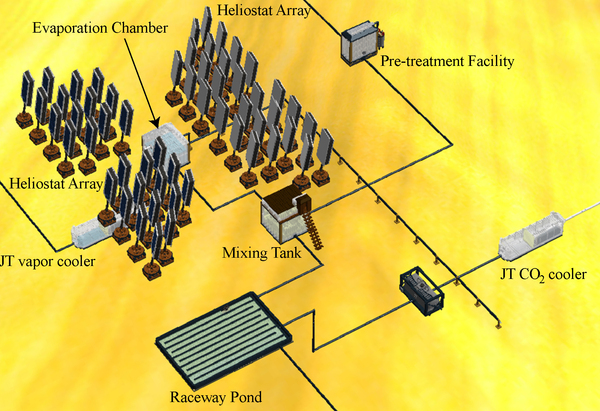
Modern day fossil fuels are prone to polluting our environment, which can provide major habitat loss to many animals in our ecosystems. Algae-based biofuels have become an increasingly popular alternative to fossil fuels because of their sustainability, effectiveness, and environmentally-friendly nature. To encourage algae growth and solidify its role as an emerging biofuel, we tested basic (in terms of pH) solutions on pond water to determine which solution is most efficient in inducing the growth of algae.

Read More...

The impacts of different Al(NO3)3 concentrations on the mitotic index of Allium sativum

Jimenez Pol et al. | Jul 10, 2023

The impacts of different Al(NO<sub>3</sub>)<sub>3</sub> concentrations on the mitotic index of <i>Allium sativum</i>
Image credit: Kylie Paz

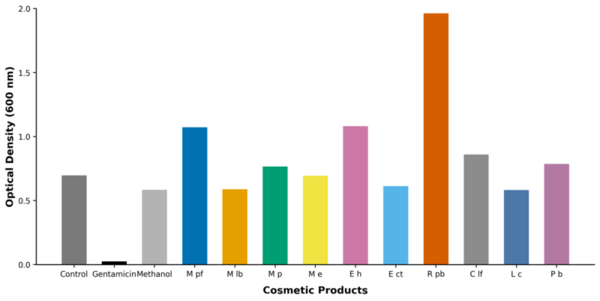
Recognizing the increasing threat of acid deposition inn soil through the reaction of NOx and SO2 pollutants with water in Spain, the authors investigates the effects of Al(NO3)3 concentrations on the health of Allium sativum. By tracking its mitotic index, they found a negative exponential correlation between Al(NO3)3 concentrations and the mitotic index of A. sativum.

Read More...

Quantitative definition of chemical synthetic pathway complexity of organic compounds

Baranwal et al. | Jun 19, 2023

Quantitative definition of chemical synthetic pathway complexity of organic compounds

Irrespective of the final application of a molecule, synthetic accessibility is the rate-determining step in discovering and developing novel entities. However, synthetic complexity is challenging to quantify as a single metric, since it is a composite of several measurable metrics, some of which include cost, safety, and availability. Moreover, defining a single synthetic accessibility metric for both natural products and non-natural products poses yet another challenge given the structural distinctions between these two classes of compounds. Here, we propose a model for synthetic accessibility of all chemical compounds, inspired by the Central Limit Theorem, and devise a novel synthetic accessibility metric assessing the overall feasibility of making chemical compounds that has been fitted to a Gaussian distribution.

Read More...