Browse Articles

Decolorization of textile dyes by edible white rot fungi

Lin et al. | Apr 29, 2022

Decolorization of textile dyes by edible white rot fungi

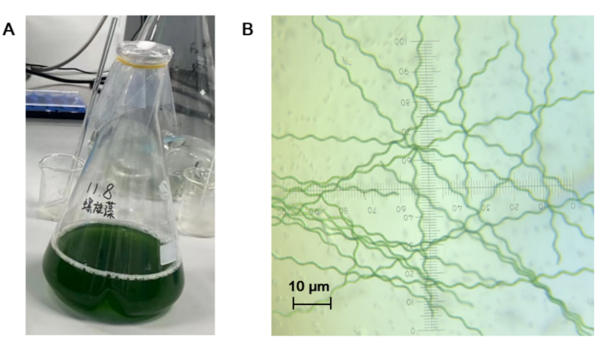
As fast fashion explodes in popularity, the fashion industry remains one of the most prominent industries responsible for pollution. This pollution includes a lack of treatment for textile dyes that remain toxic or carcinogenic as they persist in wastewater. To resolve this, the authors of this study set out to determine the efficacy of using edible white rot fungi for cell-based biodegradation of textile dyes into harmless chemicals. This method takes advantage of fungi found in excess from the fungi industry, decreasing food waste while addressing textile waste in tandem.

Read More...

Formation and sticking of air bubbles in water in d-block containers

Gupta et al. | Jun 21, 2021

Formation and sticking of air bubbles in water in d-block containers

Bubbles! In this study, the authors investigate the effects that different materials, temperature, and distance have on the formation of water bubbles on the surface of copper and steel. They calculated mathematical relations based on the outcomes to better understand whether interstitial hydrogen present in the d-block metals form hydrogen bonds with the water bubbles to account for the structural and mechanical stability.

Read More...

Exploring a Possible Link Between ADHD and Inattentional Blindness

Younger et al. | Dec 21, 2020

Exploring a Possible Link Between ADHD and Inattentional Blindness

Attention Deficit Hyperactivity Disorder (ADHD) is characterized by impulsivity, hyperactivity, and inattention. The authors hypothesized that people with ADHD would display more inattentional blindness in perceptually simple tasks and less inattentional blindness in perceptually complex tasks. The results indicate that there is no significant correlation between ADHD and inattentional blindness in either type of task.

Read More...

Transfer Learning for Small and Different Datasets: Fine-Tuning A Pre-Trained Model Affects Performance

Gupta et al. | Oct 18, 2020

Transfer Learning for Small and Different Datasets: Fine-Tuning A Pre-Trained Model Affects Performance

In this study, the authors seek to improve a machine learning algorithm used for image classification: identifying male and female images. In addition to fine-tuning the classification model, they investigate how accuracy is affected by their changes (an important task when developing and updating algorithms). To determine accuracy, a set of images is used to train the model and then a separate set of images is used for validation. They found that the validation accuracy was close to the training accuracy. This study contributes to the expanding areas of machine learning and its applications to image identification.

Read More...