Browse Articles

The Effect of Different Fructose Diets on the Lifespan of C. elegans

Chen et al. | May 10, 2020

The Effect of Different Fructose Diets on the Lifespan of <em>C. elegans</em>

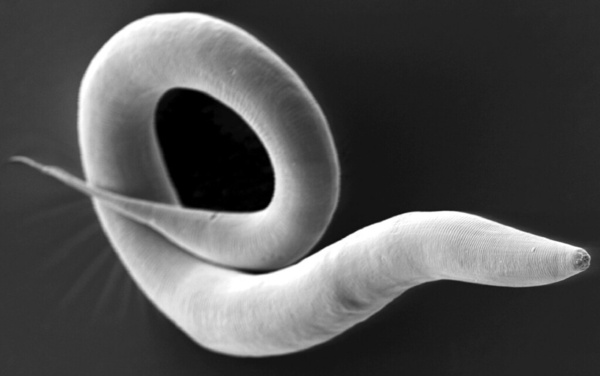
High-fructose diets consumed widely in modern societies predisposes to metabolic diseases such as diabetes. Using the worm C. elegans, the authors of this study investigated the effect of fructose on the worm's survival rates. They found that worms fed 15% fructose had a lower life expectancy than those on a fructose-free diet. These results suggest that, like in humans, fructose has a negative effect on worm survival, which makes them an easy, attractive model to study the effects of fructose on health.

Read More...
Efficacy of Mass Spectrometry Versus 1H Nuclear Magnetic Resonance With Respect to Denaturant Dependent Hydrogen-Deuterium Exchange in Protein Studies

Chenna et al. | Jan 22, 2020

Efficacy of Mass Spectrometry Versus 1H Nuclear Magnetic Resonance With Respect to Denaturant Dependent Hydrogen-Deuterium Exchange in Protein Studies

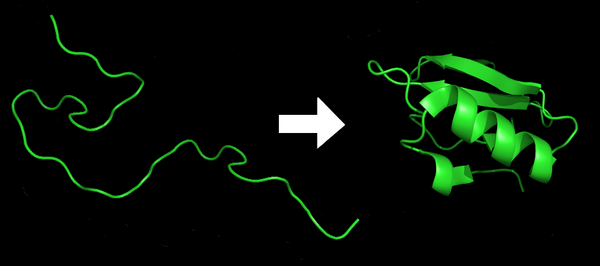
The misfolding of proteins leads to numerous diseases including Akzheimer’s, Parkinson’s and Type II Diabetes. Understanding of exactly how proteins fold is crucial for many medical advancements. Chenna and Englander addressed this problem by measuring the rate of hydrogen-deuterium exchange within proteins exposed to deuterium oxide in order to further elucidate the process of protein folding. Here, mass spectrometry was used to measure exchange in Cytochrome c and was compared to archived 1H NMR data.

Read More...

Reactivity-informed design, synthesis, and Michael addition kinetics of C-ring andrographolide analogs

Zhou et al. | Nov 17, 2022

Reactivity-informed design, synthesis, and Michael addition kinetics of C-ring andrographolide analogs

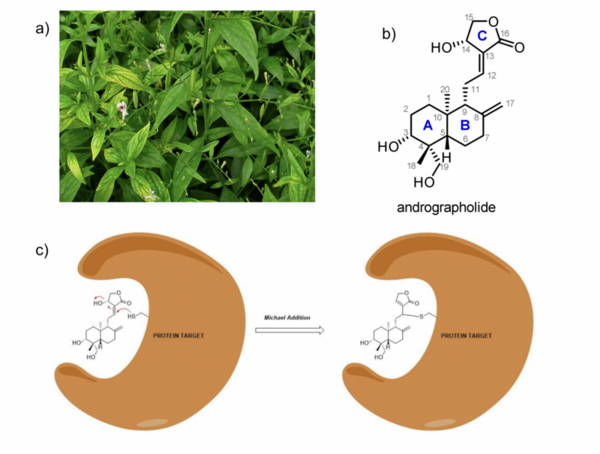
Here, based on the identification of androgapholide as a potential therapeutic treatment against cancer, Alzheimer's disease, diabetes, and multiple sclerosis, due to its ability to inhibit a signaling pathway in immune system function, the authors sought ways to optimize the natural product human systems by manipulating its chemical structure. Through the semisynthesis of a natural product along with computational studies, the authors developed an understanding of the kinetic mechanisms of andrographolide and semisynthetic analogs in the context of Michael additions.

Read More...

Utilizing 25-Hydroxyvitamin D3 to prevent the appearance of diabetic-like phenotypes in Drosophila melanogaster

Zaverchand et al. | Sep 20, 2021

Utilizing 25-Hydroxyvitamin D3 to prevent the appearance of diabetic-like phenotypes in Drosophila melanogaster

This study aimed to assess the role of 25-hydroxyvitamin D3 solution, at varying concentrations, in protecting vertical transmission of diabetic-like phenotypes. We hypothesized that the highest concentration of vitamin D solution (55 ng/mL) would be most effective in having a protective role. The results indicated that the hypothesis was partially supported; overall, all three concentrations of the vitamin D solution administered to the flies reared on HSDs had a protective effect, to varying extents.

Read More...

Developing novel plant waste-based hydrogels for skin regeneration and infection detection in diabetic wounds

Mathew et al. | Aug 10, 2023

Developing novel plant waste-based hydrogels for skin regeneration and infection detection in diabetic wounds

The purpose of this investigation is to develop a hydrogel to aid skin regeneration by creating an extracellular matrix for fibroblast growth with antibacterial and infection-detection properties. Authors developed two natural hydrogels based on pectin and potato peels and characterized the gels for fibroblast compatibility through rheology, scanning electron microscopy, swelling, degradation, and cell cytotoxicity assays. Overall, this experiment fabricated various hydrogels capable of acting as skin substitutes and counteracting infections to facilitate wound healing. Following further testing and validation, these hydrogels could help alleviate the 13-billion-dollar financial burden of foot ulcer treatment.

Read More...

Machine learning for retinopathy prediction: Unveiling the importance of age and HbA1c with XGBoost

Ramachandran et al. | Sep 05, 2024

Machine learning for retinopathy prediction: Unveiling the importance of age and HbA1c with XGBoost

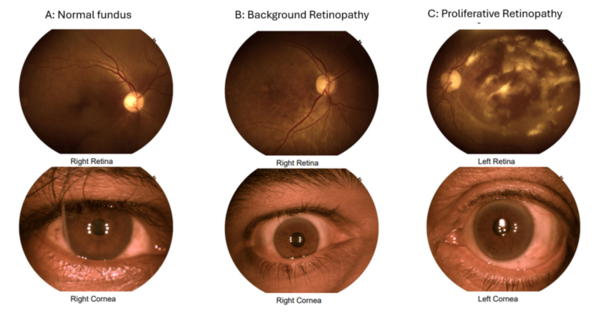
The purpose of our study was to examine the correlation of glycosylated hemoglobin (HbA1c), blood pressure (BP) readings, and lipid levels with retinopathy. Our main hypothesis was that poor glycemic control, as evident by high HbA1c levels, high blood pressure, and abnormal lipid levels, causes an increased risk of retinopathy. We identified the top two features that were most important to the model as age and HbA1c. This indicates that older patients with poor glycemic control are more likely to show presence of retinopathy.

Read More...