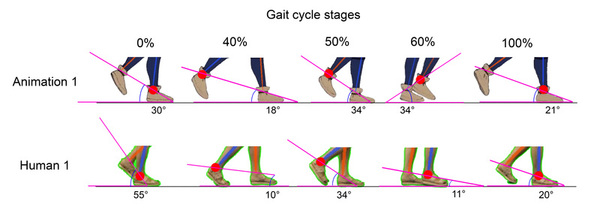
In their attempt to evoke a greater emotional connection with viewers, animators have strived to replicate human movements in their animations. However, animation movements still appear distinct from human movements. With a focus on walking, we hypothesized that animations, unaffected by real external forces (e.g. gravity), would move with a universally distinct, gliding gait that is discernible from humans.
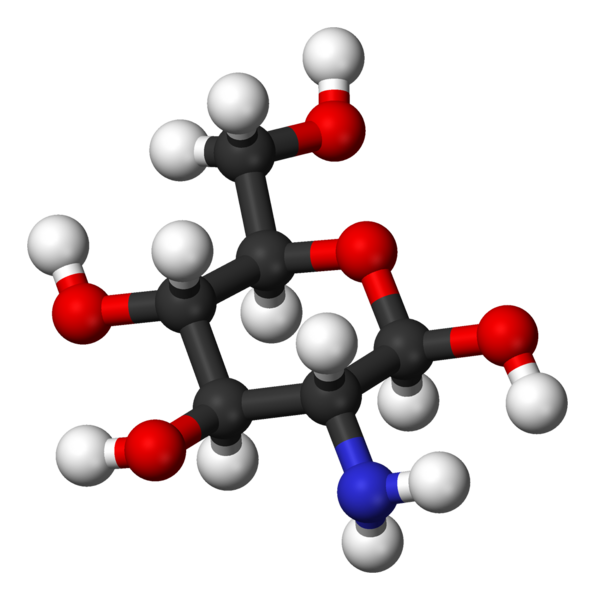
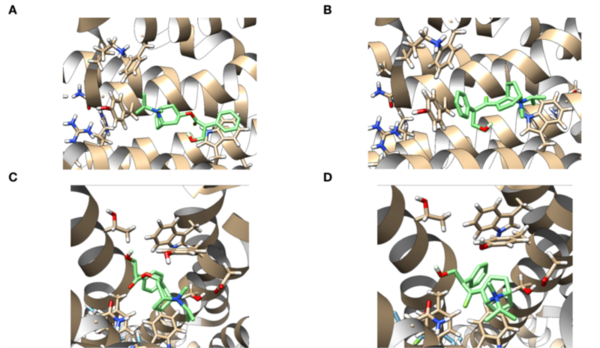
Anticholinergics are used in treating asthma, a chronic inflammation of the airways. These drugs block human M1 and M2 muscarinic acetylcholine receptors, inhibiting bronchoconstriction. However, studies have reported complications of anticholinergic usage, such as exacerbated eosinophil production and worsened urinary retention. Modification of known anticholinergics using bioisosteric replacements to increase efficacy could potentially minimize these complications. The present study focuses on identifying viable analogs of anticholinergics to improve binding energy to the receptors compared to current treatment options. Glycopyrrolate (G), ipratropium (IB), and tiotropium bromide (TB) were chosen as parent drugs of interest, due to the presence of common functional groups within the molecules, specifically esters and alcohols. Docking score analysis via AutoDock Vina was used to evaluate the binding energy between drug analogs and the muscarinic acetylcholine receptors. The final results suggest that G-A3, IB-A3, and TB-A1 are the most viable analogs, as binding energy was improved when compared to the parent drug. G-A4, IB-A4, IB-A5, TB-A3, and TB-A4 are also potential candidates, although there were slight regressions in binding energy to both muscarinic receptors for these analogs. By researching the effects of bioisosteric replacements of current anticholinergics, it is evident that there is a potential to provide asthmatics with more effective treatment options.
In this study, the authors investigated the time-dependent cytokine secretion ability of phyto-hemagglutinin (PHA)-activated T cells derived from human peripheral (PB) and cord blood (CB). They hypothesized that the anti-inflammatory cytokine, IL-10, and pro-inflammatory cytokine, TNFα, levels would be higher in PHA-activated T cells obtained from PB as compared to the levels obtained from CB and would decrease over time. Upon PHA-activation, the IL-10 levels were relatively high while the TNFα levels decreased, making these findings applicable in therapeutic treatments e.g., rheumatoid arthritis, psoriasis, and organ transplantation.
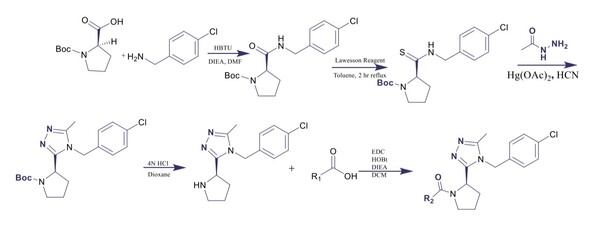
Glioblastoma is a brain cancer caused by the presence of a fast-growing, malignant tumor in the brain. As of now, this cancer is universally lethal due to lack of efficacious treatment options. C-C chemokine receptor 1 (CCR1) is a G-protein coupled receptor that controls chemotaxis, the movement of cells in response to chemical stimuli. This research aims to synthesize potential CCR1 antagonists by coupling carboxylic acids with a triazole core. We synthesized these compounds using a simple carboxylic acid coupling and confirmed the identity of the final compounds using nuclear magnetic resonance (NMR) spectroscopy.
The current five-year survival rate of metastasized prostate cancer is only 30% and occurs in every one in nine men. Researchers have shown that people with a type of dwarfism called Laron’s Syndrome are immune to cancer due to their low levels of insulin-like growth factor-1 (IGF-1). For this reason, experimentally modifying the level of IGF-1 could provide better insight into whether lowering the levels of IGF-1 in prostate cancer cell lines (e.g. PC-3) could be an effective treatment to reduce their rates of proliferation and migration and increase apoptosis. We selected three compounds, which researchers have shown decrease IGF-1 levels, to test and combine to determine which is the most promising.
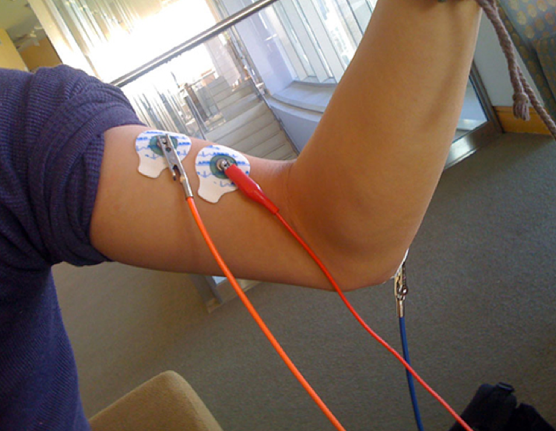
Control of voluntary and involuntary movements is one of the most important aspects of human neurological function, but the mechanisms of motor control are not completely understood. In this study, the authors use transcranial magnetic stimulation (TMS) to stimulate a portion of the motor cortex while subjects performed either discrete (e.g. throwing) or rhythmic (e.g. walking) movements. By recording electrical activity in the muscles during this process, the authors showed that motor evoked potentials (MEPs) measured in the muscles during TMS stimulation are larger in amplitude for discrete movements than for rhythmic movements. Interestingly, they also found that MEPs during transitions between rhythmic and discrete movements were nearly identical and larger in amplitude than those recorded during either rhythmic or discrete movements. This research provides important insights into the mechanisms of neurological control of movement and will serve as the foundation for future studies to learn more about temporal variability in neural activity during different movement types.
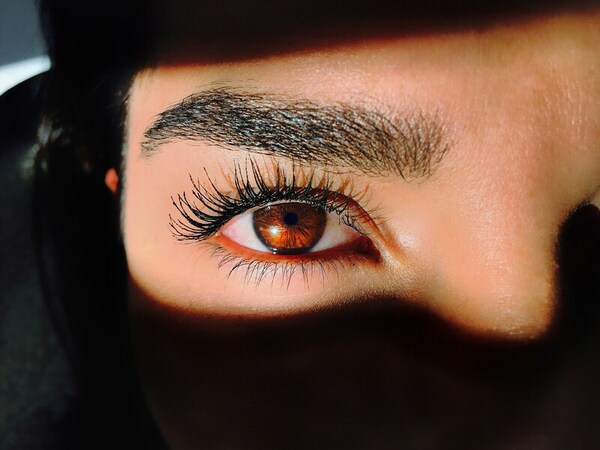
Here, seeking to better understand how facial features provide important visual cues to help convey emotions, the authors evaluated the accuracy and reaction time of participants in regards to experimental photographs where a person's eyebrows were obscured and ones where they were not. Their findings revealed that removing eyebrows resulted in a significant decrease in a participant's ability to recognize anger, with adolescents most likely to misidentify emotions.
A bottleneck in deleting algal blooms is that current data section is manual and is reactionary to an existing algal bloom. These authors made a custom-designed Seek and Destroy Algal Mitigation System (SDAMS) that detects harmful algal blooms at earlier time points with astonishing accuracy, and can instantaneously suppress the pre-bloom algal population.
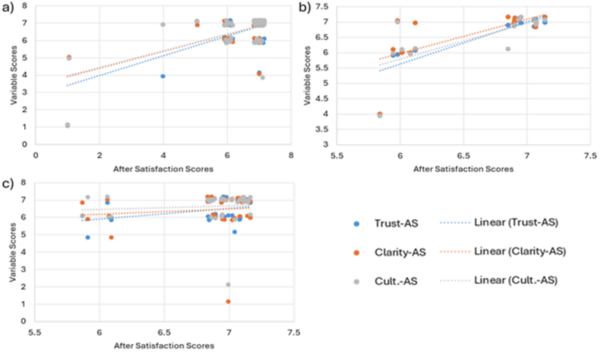
This manuscript explores the use of Spanish language translators in an outpatient clinic in New Jersey. The authors surveyed patients before and after in person, video, and telephone appointments to determine which modality was most acceptable to the patients. The authors found that the three modalities did not differ in patient satisfaction, but that patients were grateful for translations services and that patient trust may be expanded by the use of these services and by focuses of translator soft skills.
.png)