Browse Articles

Large-scale brain network connectivity under anxiety induced by naturalistic story listening

Chang et al. | Jun 03, 2026

Large-scale brain network connectivity under anxiety induced by naturalistic story listening

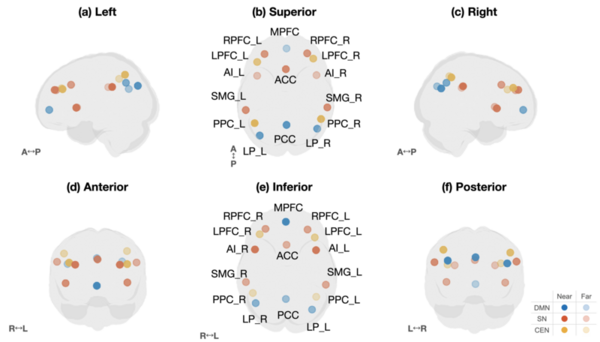
This study found that anxiety induced by a suspenseful story increased communication between the brain’s salience, default mode, and central executive networks, with the central executive network acting as a bridge during peak tension. These findings suggest that anxiety alters large-scale brain connectivity patterns and may help inform future diagnostic tools and personalized treatments for anxiety disorders.

Read More...

The Effects of Atmospheric Attenuation on Cosmic Ray Muons: How is Surface Level Cosmic Ray Muon Flux Affected by Atmospheric Attenuation?

Sun et al. | Sep 11, 2021

The Effects of Atmospheric Attenuation on Cosmic Ray Muons: How is Surface Level Cosmic Ray Muon Flux Affected by Atmospheric Attenuation?

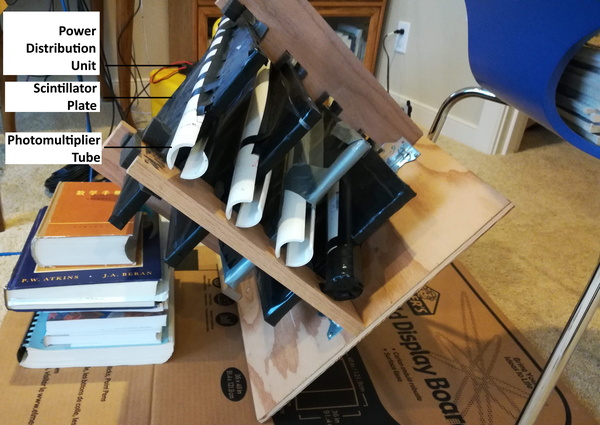
Cosmic rays are high-energy astronomical particles originating from various sources across the universe. Here, The authors sought to understand how surface-level cosmic-ray muon flux is affected by atmospheric attenuation by measuring the variation in relative muon-flux rate relative to zenith angle, testing the hypothesis that muons follow an exponential attenuation model. The attenuation model predicts an attenuation length of 6.3 km. This result implies that only a maximum of 24% of muons can reach the Earth’s surface, due to both decay and atmospheric interactions.

Read More...

The Role of Temporal Lobe Epilepsy in Cardiac Structure and Function

Choi et al. | Aug 15, 2018

The Role of Temporal Lobe Epilepsy in Cardiac Structure and Function

Cardiac autonomic and structural changes may occur in temporal lobe epilepsy patients and contribute to the risk of sudden unexpected death in epilepsy patients. Choi and colleagues reviewed clinical charts to obtain patients’ lifetime seizure count, antiepileptic drug use, and history of heart disease, followed by transthoracic echocardiogram to calculate left ventricle dimensions, ejection fraction, and left ventricle mass. By comparing epilepsy patients to control subjects, they found that epilepsy patients had thinner left ventricle walls and smaller ejection fraction, but with no significant difference in left ventricle mass.

Read More...