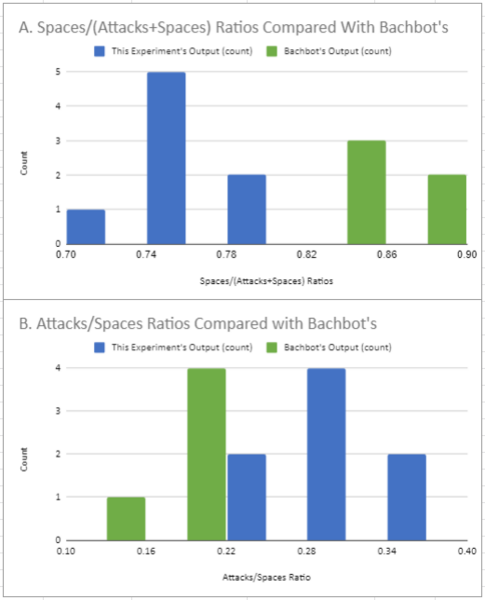
Recurrent neural networks (RNNs) are useful for text generation since they can generate outputs in the context of previous ones. Baroque music and language are similar, as every word or note exists in context with others, and they both follow strict rules. The authors hypothesized that if we represent music in a text format, an RNN designed to generate language could train on it and create music structurally similar to Bach’s. They found that the music generated by our RNN shared a similar structure with Bach’s music in the input dataset, while Bachbot’s outputs are significantly different from this experiment’s outputs and thus are less similar to Bach’s repertoire compared to our algorithm.
Read More...Browse Articles
Gene expression profiling of MERS-CoV-London strain
In this study, the authors identify transcripts and gene networks that are changed after infection with the Middle East Respiratory Syndrome-related coronavirus (MERS-CoV).
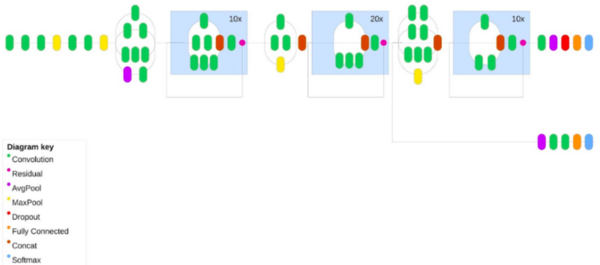
Read More...Determining the best convolutional neural network for identifying tuberculosis and pneumonia in chest x-rays
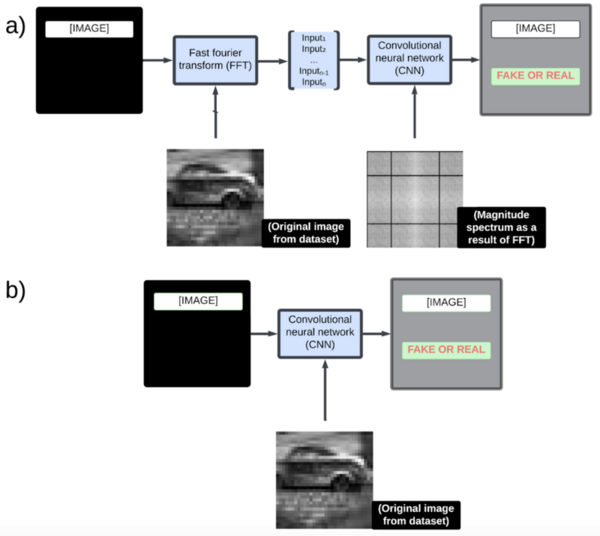
To best identify tuberculosis and pneumonia diagnoses in chest x-rays, the authors compare different deep learning convolution neural networks.
Read More...Effects of social support on adolescent identity development
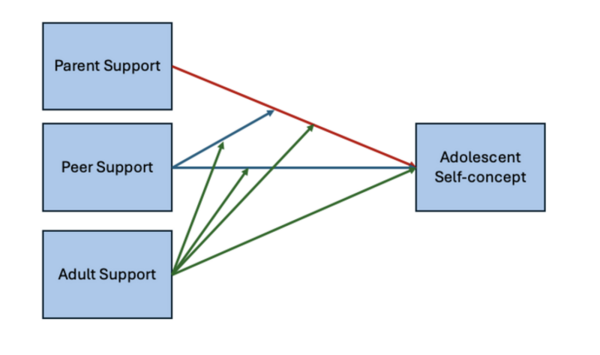
Adolescence is a critical period for self-identity formation, heavily influenced by feedback from social networks. This research examined the interplay between social support from parents and peers and self-concept development in adolescents using data from the National Longitudinal Study of Adolescent to Adult Health. While individual support from parents and peers did not directly impact self-concept, their combined interaction significantly influenced it, highlighting the importance of various social supports in fostering healthy self-concept development and overall adolescent well-being.
Read More...Large-scale brain network connectivity under anxiety induced by naturalistic story listening
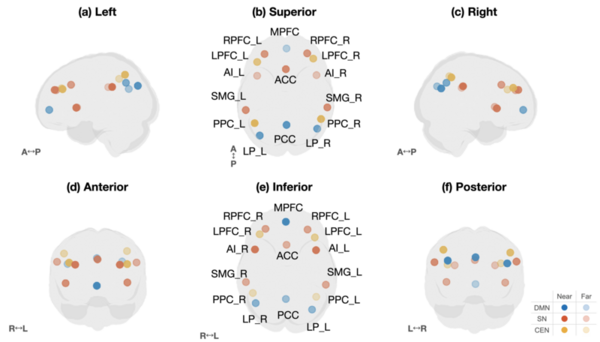
This study found that anxiety induced by a suspenseful story increased communication between the brain’s salience, default mode, and central executive networks, with the central executive network acting as a bridge during peak tension. These findings suggest that anxiety alters large-scale brain connectivity patterns and may help inform future diagnostic tools and personalized treatments for anxiety disorders.
Read More...Quantitative analysis and development of alopecia areata classification frameworks
This article discusses Alopecia areata, an autoimmune disorder causing sudden hair loss due to the immune system mistakenly attacking hair follicles. The article introduces the use of deep learning (DL) techniques, particularly convolutional neural networks (CNN), for classifying images of healthy and alopecia-affected hair. The study presents a comparative analysis of newly optimized CNN models with existing ones, trained on datasets containing images of healthy and alopecia-affected hair. The Inception-Resnet-v2 model emerged as the most effective for classifying Alopecia Areata.
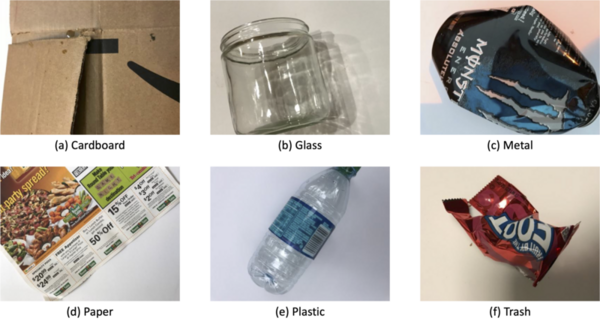
Read More...Collaboration beats heterogeneity: Improving federated learning-based waste classification
Based on the success of deep learning, recent works have attempted to develop a waste classification model using deep neural networks. This work presents federated learning (FL) for a solution, as it allows participants to aid in training the model using their own data. Results showed that with less clients, having a higher participation ratio resulted in less accuracy degradation by the data heterogeneity.
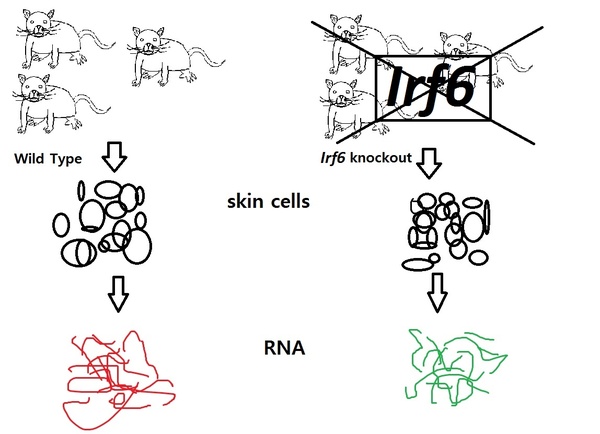
Read More...Activated NF-κB Pathway in an Irf6-Deficient Mouse Model for Van der Woude Syndrome
Van der Woude syndrome is a common birth defect caused by mutations in the gene Irf6. In this project, students used microarray expression analysis from wild-type and Irf6-deficient mice in order to identify gene networks or pathways differentially regulated due to the Irf6 mutation. They found NF-κB pathway to be activated in deficient mice.
Read More...Vineyard vigilance: Harnessing deep learning for grapevine disease detection
Globally, the cultivation of 77.8 million tons of grapes each year underscores their significance in both diets and agriculture. However, grapevines face mounting threats from diseases such as black rot, Esca, and leaf blight. Traditional detection methods often lag, leading to reduced yields and poor fruit quality. To address this, authors used machine learning, specifically deep learning with Convolutional Neural Networks (CNNs), to enhance disease detection.
Read More...Differential privacy in machine learning for traffic forecasting
In this paper, we measured the privacy budgets and utilities of different differentially private mechanisms combined with different machine learning models that forecast traffic congestion at future timestamps. We expected the ANNs combined with the Staircase mechanism to perform the best with every value in the privacy budget range, especially with the medium high values of the privacy budget. In this study, we used the Autoregressive Integrated Moving Average (ARIMA) and neural network models to forecast and then added differentially private Laplacian, Gaussian, and Staircase noise to our datasets. We tested two real traffic congestion datasets, experimented with the different models, and examined their utility for different privacy budgets. We found that a favorable combination for this application was neural networks with the Staircase mechanism. Our findings identify the optimal models when dealing with tricky time series forecasting and can be used in non-traffic applications like disease tracking and population growth.
Read More...