
Using machine learning to predict the risk of algae bloom
Read More...Using two-step machine learning to predict harmful algal bloom risk
Using machine learning to predict the risk of algae bloom
Read More...Differences in the effect of copper sulfate on the mortality rate of Ostracod and Daphnia
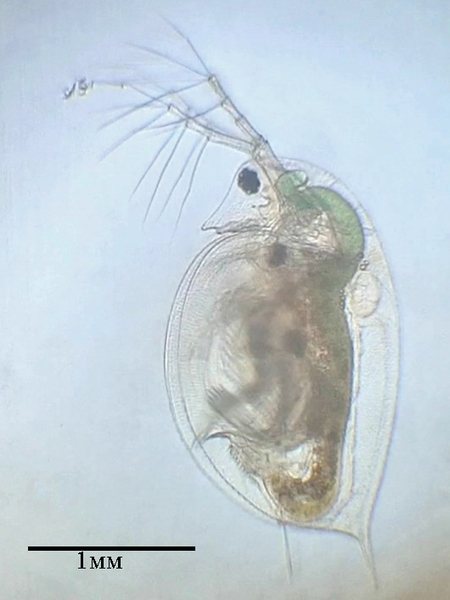
Chemical pollution can have significant effects on freshwater organisms. In this study, the effect of copper sulfate on the survival of Daphnia pulex and Ostracoda was investigated.
Read More...Determining the impact of caffeine on aggression in Betta splendens
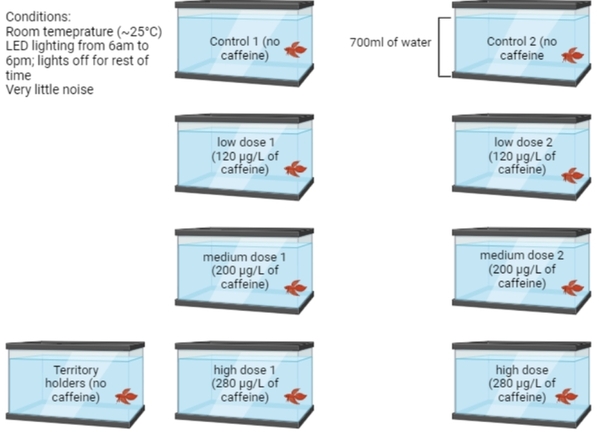
The authors test the effect of caffeine on the behavior of the Siamese fighting fish Betta splendens.
Read More...Survival of Escherichia coli K-12 in various types of drinking water

For public health, drinking water should be free of bacterial contamination. The objective of this research is to identify the fate of bacteria if drinking water becomes contaminated and inform consumers on which water type enables the least bacteria to survive. We hypothesized that bottled mineral water would provide the most sufficient conditions for E. coli to survive. We found that if water becomes contaminated, the conditions offered by the three water types at room temperature allow E. coli to survive up to three days. At 72 hours, the bottled spring water had the highest average colony forming units (CFUs), with tap and mineral water CFU values statistically lower than spring water but not significantly different from each other. The findings of this research highlight the need of implementing accessible quality drinking water for the underserved population and for the regulation of water sources.
Read More...Bacterial Load Consistency Among Three Independent Water Distribution Systems
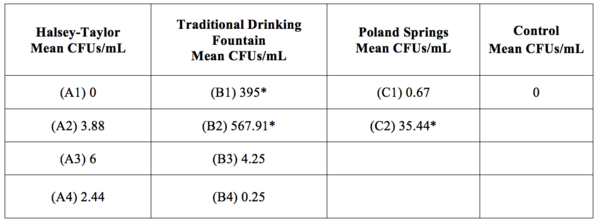
Clean drinking water is an essential component to maintaining public health. The authors of this study tested the bacterial load of water from three different disinfection and filtration systems in order to determine which system might be superior.
Read More...Heavy Metal Contamination of Hand-Pressed Well Water in HuNan, China

Unprocessed water from hand-pressed wells is still commonly used as a source of drinking water in Chenzhou, the “Nonferrous Metal Village” of China. Long et al. conducted a study to measure the heavy metal contamination levels and potential health effects in this area. Water samples were analyzed through Inductively Coupled Plasma Optical Emission Spectroscopy (ICPOES) and the concentrations of 20 metal elements. Results showed that although none of the samples had dangerous levels of heavy metals, the concentrations of Al, Fe, and Mn in many locations substantially exceeded those suggested in the Chinese Drinking Water Standard and the maximum contaminant levels of Environmental Protection Agency (EPA). The authors have made an important discovery regarding the water safety in HuNan and their suggestions to install water treatment systems would greatly benefit the community.
Read More...Efficacy of electrolytic treatment on degrading microplastics in tap water

Here seeking to identify a method to remove harmful microplastics from water, the authors investigated the viability of using electrolysis to degrade microplastics in tap water. Compared to control samples, they found electrolysis treatment to significantly the number of net microplastics, suggesting that this treatment could potentially implemented into homes or drinking water treatment facilities.
Read More...Effects of polyethylene microplastics on the growth of Arabidopsis thaliana & Phaseolus vulgaris and their soil
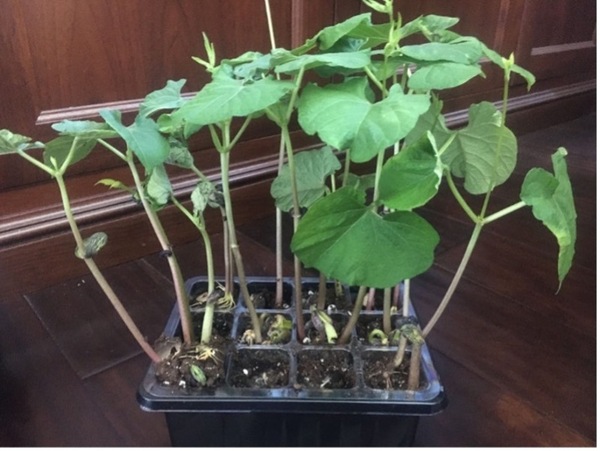
In this study, the authors investigate whether microplastics affect terrestrial plant growth and soil quality.
Read More...Exploring the Factors that Drive Coffee Ratings

This study explores the factors that influence coffee quality ratings using data from the Coffee Quality Institute. Through a regression model based on gradient descent, the authors aimed to predict coffee ratings (total cup points) and hypothesized that sweetness and the coffee producer would be the most influential factors.
Read More...Detection method of black goji berry anthocyanin content based on colorimetry
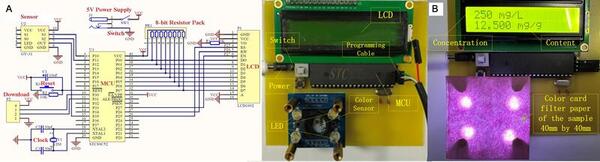
Black goji berries have attracted interest for their high levels of anthocyanin pigment, which believed to have health-boosting effects. Yu and Zhu research a method for measuring goji berry quality by detecting anthocyanin content under different conditions.
Read More...