Browse Articles

Ground-based Follow-up Observations of TESS Exoplanet Candidates

Tang et al. | May 29, 2020

Ground-based Follow-up Observations of  TESS Exoplanet Candidates

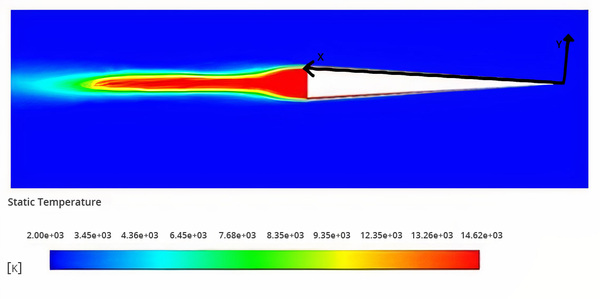
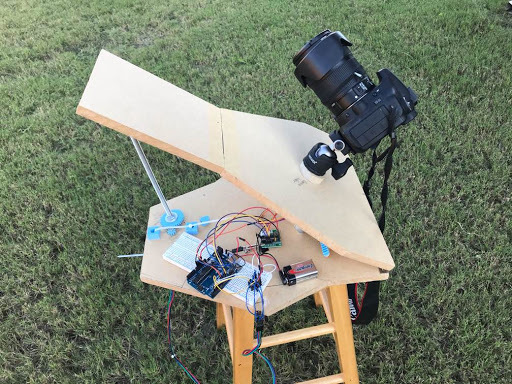
The goal of this study was to further confirm, characterize, and classify LHS 3844 b, an exoplanet detected by the Transiting Exoplanet Survey Satellite (TESS). Additionally, we strove to determine the likeliness of LHS 3844 b and similar planets as qualified candidates for observation with the James Webb Space Telescope (JWST).

Read More...

Trajectories Between Cigarette Smoking and Electronic Nicotine Delivery System Use Among Adults in the U.S.

Primack et al. | Apr 30, 2020

Trajectories Between Cigarette Smoking and Electronic Nicotine Delivery System Use Among Adults in the U.S.

In this study, the authors characterized the trends of cigarette use amongst people who do and don't use electronic nicotine delivery systems (or ENDS). This was done to help determine if the use of ENDS is aiding in helping smokers quit, as the data on this has been controversial. They found that use of ENDS among people either with or without previous cigarette usage were more likely to continue using cigarettes in the future. This is important information contributing to our understanding of ways to effectively (and not effectively) reduce cigarette use.

Read More...

The Cohesiveness of the Oscillating Belousov-Zhabotinsky Reaction

Gottlieb et al. | Dec 18, 2018

The Cohesiveness of the Oscillating Belousov-Zhabotinsky Reaction

In this study the author undertakes a careful characterization of a special type of chemical reaction, called an oscillating Belousov-Zhabotinsky (or B-Z) reaction, which has a number of existing applications in biomedical engineering as well as the potential to be useful in future developments in other fields of science and engineering. Specifically, she uses experimental measurements in combination with computational analysis to investigate whether the reaction is cohesive – that is, whether the oscillations between chemical states will remain consistent or change over time as the reaction progresses. Her results indicate that the reaction is not cohesive, providing an important foundation for the development of future technologies using B-Z reactions.

Read More...

Simulations of Cheetah Roaming Demonstrate the Effect of Safety Corridors on Genetic Diversity and Human-Cheetah Conflict

Acton et al. | Apr 02, 2018

Simulations of Cheetah Roaming Demonstrate the Effect of Safety Corridors on Genetic Diversity and Human-Cheetah Conflict

Ecological corridors are geographic features designated to allow the movement of wildlife populations between habitats that have been fragmented by human landscapes. Corridors can be a pivotal aspect in wildlife conservation because they preserve a suitable habitat for isolated populations to live and intermingle. Here, two students simulate the effect of introducing a safety corridor for cheetahs, based on real tracking data on cheetahs in Namibia.

Read More...

Characterization of a UPEC DegS Mutant in vitro and in vivo

Bradley et al. | Mar 16, 2015

Characterization of a UPEC <em>DegS</em> Mutant <em>in vitro</em> and <em>in vivo</em>

DegS is an integral inner membrane protein in E. coli that helps break down misfolded proteins. When it is mutated, there is a large increase in the production of outer membrane vesicles (OMVs), which are thought to play a role in pathogenesis. This study used mutant strains of uropathogenic E. coli (UPEC) to characterize the role of DegS and OMVs on UPEC virulence.

Read More...

A 3D printed triboelectric nanogenerator for bridge vibration energy harvesting and sensing

Walavalkar et al. | Jul 19, 2026

A 3D printed triboelectric nanogenerator for bridge vibration energy harvesting and sensing
Image credit: Jakub Żerdzicki

This study strongly illustrates that optimizing 3D printing parameters would enhance a triboelectric nanogenerator's performance. The design improvements substantiate the potential of optimized, 3D-printed TENGs for developing scalable, cost-effective solutions for powering low-energy electronics, particularly in applications such as structural health monitoring.

Read More...

Evaluating need for adversarial training data given algorithmic defense methods against adversarial attacks

Yian et al. | Jul 05, 2026

Evaluating need for adversarial training data given algorithmic defense methods against adversarial attacks

The purpose of this study was to determine the necessity of previous non-algorithmic attacks (Adversarial Training) in light of algorithmic defense methods (Gradient Masking and Defensive Distillation) against FGSM attacks. We found a significant increase in image classification accuracy from defense methods with the non-algorithmic defense method compared to ones without. By analyzing the significance with a McNemar test, we determined that the inclusion of non-algorithmic defense methods is still necessary in light of new algorithmic defense methods.

Read More...