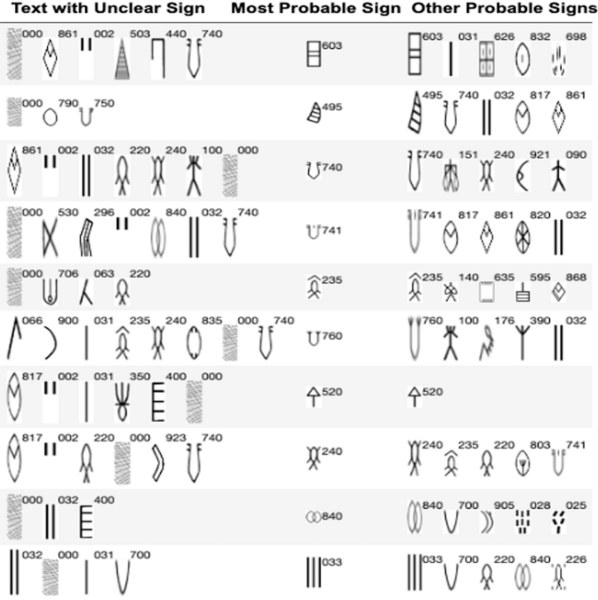
This study utilizes machine learning models to predict missing and unclear signs from the Indus script, a writing system from an ancient civilization in the Indian subcontinent.
Read More...Statistical models for identifying missing and unclear signs of the Indus script
This study utilizes machine learning models to predict missing and unclear signs from the Indus script, a writing system from an ancient civilization in the Indian subcontinent.
Read More...The study of technology and the use of individual cognitive effort

A trial study was performed in 2021 to investigate the link between technology and transactive memory. Transactive memory is shared knowledge in which members share the responsibility to encode, store, and retrieve certain tasks or assignments, leading to a successful and collective performance. We hypothesize that a participants’ expected access to an external source affects the recall rate and retrieval of information.
Read More...Virtual Screening of Cutibacterium acnes Antibacterial Agent Using Natural Compounds Database
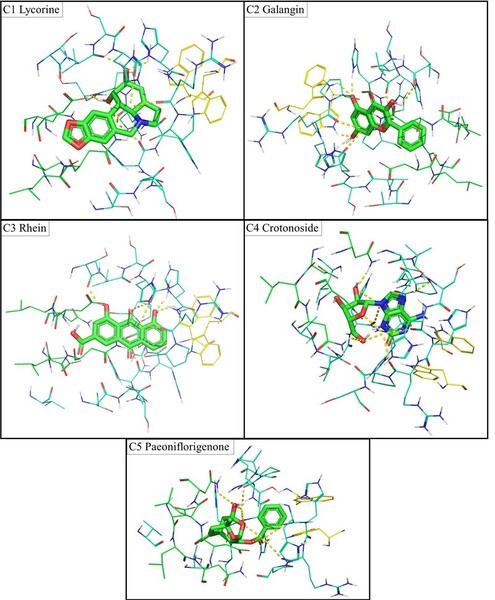
A common form of Acne is caused by a species of bacterium called Cutibacterium acnes. By using a predictive algorithm and structural analysis, the authors identified 5 small molecules with high affinity to growth factors in Catibacterium acnes. This has potential implications for supplemental skincare products.
Read More...Improving Wound Healing by Breaking Down Biofilm Formation and Reducing Nosocomial Infections
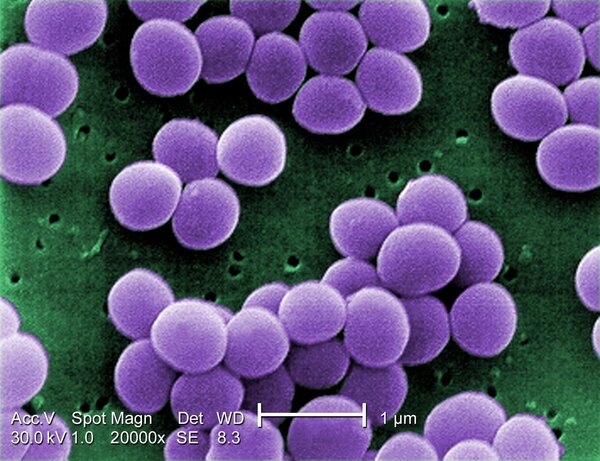
In a 10-year period in the early 2000’s, hospital-based (nosocomial) infections increased by 123%, and this number is increasing as time goes on. The purpose of this experiment was to use hyaluronic acid, silver nanoparticles, and a bacteriophage cocktail to create a hydrogel that promotes wound healing by increasing cell proliferation while simultaneously disrupting biofilm formation and breaking down Staphylococcus aureus and Pseudomonas aeruginosa, which are two strains of bacteria that attribute to nosocomial infections and are increasing in antibiotic resistance.
Read More...Impact of daf-25 and daf-11 Mutations on Olfactory Function in C. elegans
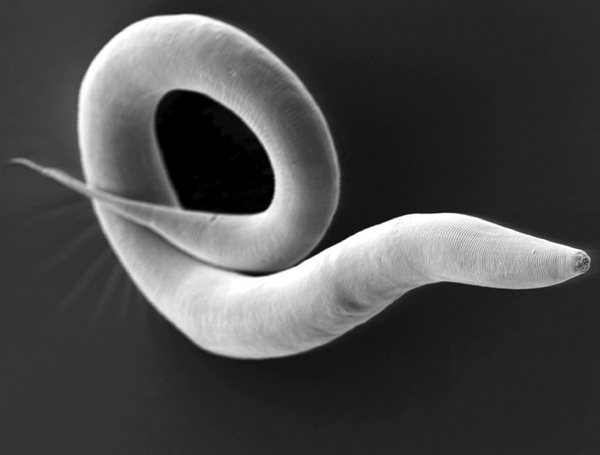
Cilia are little hair-like protrusions on many cells in the human body, including those lining the trachea where they play a role in clearing our respiratory tract of mucous and other irritants. Genetic mutations that impair ciliary function have serious consequences on our well-being making it important to understand how ciliary function is regulated. By using a simple organism, such as the worm C. elegans that use cilia to move, the authors explore the effect of certain genetic mutations on the cilia of the worms by measuring their ability to move towards or away from certain odorants.
Read More...The Effect of Interactive Electronics Use on Psychological Well Being and Interpersonal Relationship Quality in Adults

In recent years, usage of interactive electronic devices such as computers, smartphones, and tablets has increased dramatically. Many studies have examined the potential adverse effects of excessive usage of such devices on children and adolescents, but the effects on adults are not well understood. In this study, the authors examined the relationship between adult usage of interactive electronic devices and a variety of clinical measures of psychological well-being. They found that according to some metrics, higher usage of interactive electronic devices is associated with several adverse psychological outcomes, suggesting a need for more careful consideration of such usage patterns in clinical settings.
Read More...The Effect of Various Liquid Mediums on the Transport of Photonic Energy and its Impact on the Quantum Efficiency of Photovoltaic Cells
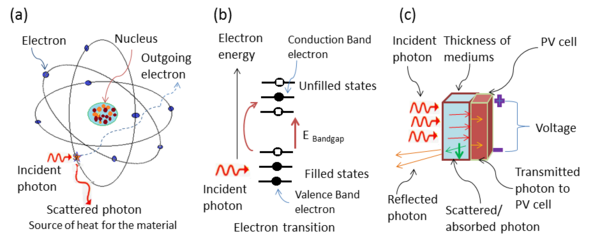
A photovoltaic cell (PV cell), or solar cell, converts the energy of light into electricity and is the basis for solar power. In order to increase the efficiency of PV cells, the authors in this study used common household items as photon transmissions mediums and measured their effects on the temperature and voltage output of the PV cells.
Read More...Osmotic characteristics of water retention structures of Bursera microphylla in relation to soil salinity

This study hypothesized that sodium chloride was taken up through plant root structures to facilitate water transportation, and that sodium chloride accumulation was directly proportional to the soil salinity. Results showed that most cells within the “bulb” structures were isotonic at a concentration approximately twice as high as that of root tissue and ambient soil salinity, therefore supporting the presented hypothesis.
Read More...Impact of simple vs complex carbohydrates under time constraint before anaerobic and aerobic exercise

The goal of this study was to determine the if carbohydrates or complex carbohydrates are better for athlete's performance in anaerobic and aerobic exercise. Ultimately, we found that, when one’s schedule only allows for 30 minutes to eat before a workout, the best pre-workout meal for optimal glycogen levels to prompt muscle hypertrophy, strength increases, and better endurance is one that is simple carbohydrate-heavy.
Read More...How visualization influences strength endurance

Recognizing a potential link between mental focus and physical endurance, here, the authors considered the effects of mental visualization on strength endurance. By comparing the number of repetitions completed in sets where the lifter was aware of the weight to be lifted against sets where the lifter was kept unaware, they found that the lifter was able to maintain strength endurance when unable to accurately visualize the weight they lifted in this exploratory study.
Read More...