Browse Articles

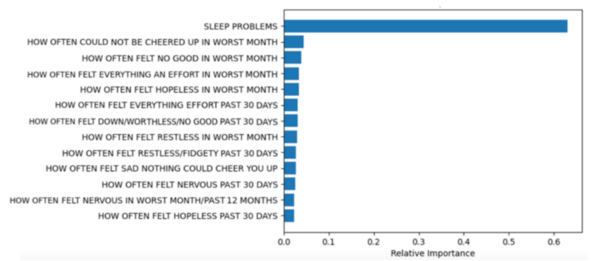
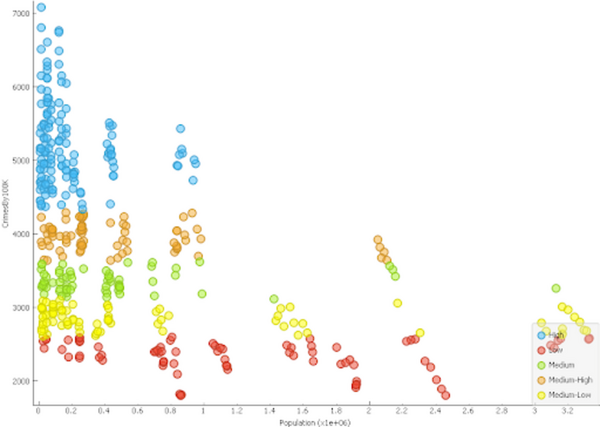
Risk factors contributing to Pennsylvania childhood asthma

Li et al. | Oct 30, 2024

Risk factors contributing to Pennsylvania childhood asthma
Image credit: The authors

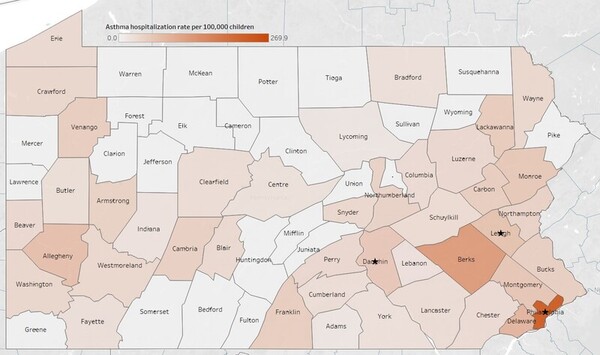
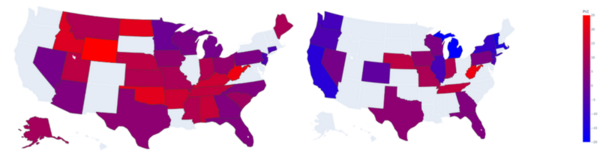
Asthma is one of the most prevalent chronic conditions in the United States. But not all people experience asthma equally, with factors like healthcare access and environmental pollution impacting whether children are likely to be hospitalized for asthma's effects. Li, Li, and Ruffolo investigate what demographic and environmental factors are predictive of childhood asthma hospitalization rates across Pennsylvania.

Read More...

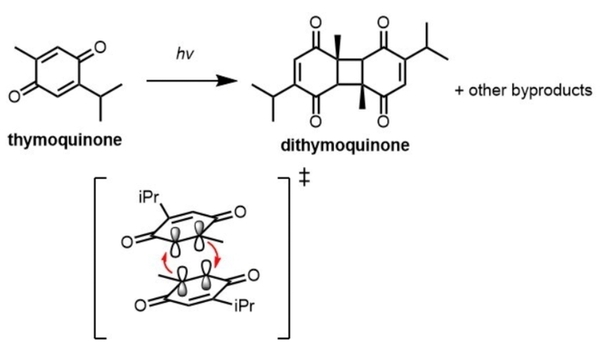
Quantitative NMR spectroscopy reveals solvent effects in the photochemical degradation of thymoquinone

Mandava et al. | Dec 16, 2023

Quantitative NMR spectroscopy reveals solvent effects in the photochemical degradation of thymoquinone

Thymoquinone is a compound of great therapeutic potential and scientific interest. However, its clinical administration and synthetic modifications are greatly limited by its instability in the presence of light. This study employed quantitative 1H nuclear magnetic resonance (NMR) spectroscopy to identify the effect of solvation on the degradation of thymoquinone under ultraviolet light (UV). It found that the rate of degradation is highly solvent dependent occurs maximally in chloroform.

Read More...

Strain-selective in vitro and in silico structure activity relationship (SAR) of N-acyl β-lactam broad spectrum antibiotics

Poosarla et al. | Oct 19, 2021

Strain-selective <i>in vitro</i> and <i>in silico</i> structure activity relationship (SAR) of N-acyl β-lactam broad spectrum antibiotics

In this study, the authors investigate the antibacterial efficacy of penicillin G and its analogs amoxicillin, carbenicillin, piperacillin, cloxacillin, and ampicillin, against four species of bacteria. Results showed that all six penicillin-type antibiotics inhibit Staphylococcus epidermidis, Escherichia coli, and Neisseria sicca with varying degrees of efficacy but exhibited no inhibition against Bacillus cereus. Penicillin G had the greatest broad-spectrum antibacterial activity with a high radius of inhibition against S. epidermidis, E. coli, and N. sicca.

Read More...

The Effects of Atmospheric Attenuation on Cosmic Ray Muons: How is Surface Level Cosmic Ray Muon Flux Affected by Atmospheric Attenuation?

Sun et al. | Sep 11, 2021

The Effects of Atmospheric Attenuation on Cosmic Ray Muons: How is Surface Level Cosmic Ray Muon Flux Affected by Atmospheric Attenuation?

Cosmic rays are high-energy astronomical particles originating from various sources across the universe. Here, The authors sought to understand how surface-level cosmic-ray muon flux is affected by atmospheric attenuation by measuring the variation in relative muon-flux rate relative to zenith angle, testing the hypothesis that muons follow an exponential attenuation model. The attenuation model predicts an attenuation length of 6.3 km. This result implies that only a maximum of 24% of muons can reach the Earth’s surface, due to both decay and atmospheric interactions.

Read More...