Browse Articles

Presoaking Seeds with Vinegar Improves Seed Development and Drought Tolerance in Maize Plants

D'Agate et al. | Jul 24, 2020

Presoaking Seeds with Vinegar Improves Seed Development and Drought Tolerance in Maize Plants

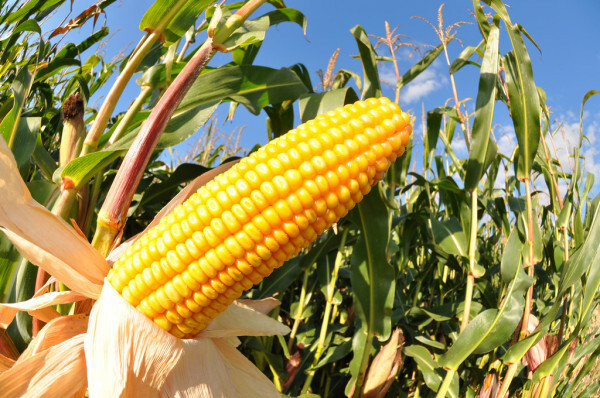
Climate change has contributed to the increasing annual temperatures around the world and poses a grave threat to Maize crops. Two methods proven to help combat plant drought stress effects are presoaking seeds (seeds are soaked in a liquid before planting) and the application of Acetic Acid (vinegar) to soil. The purpose of this experiment was to explore if combining these two methods by presoaking seeds with a vinegar solution can improve the seed development and plant drought tolerance of Maize plants during drought conditions.

Read More...
Friend or Foe: Investigating the Relationship between a Corn Crop and a Native Ragweed Population

Wainwright et al. | May 07, 2014

Friend or Foe: Investigating the Relationship between a Corn Crop and a Native Ragweed Population

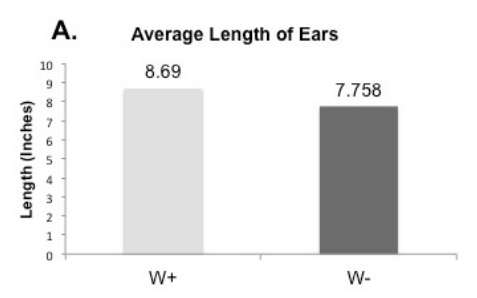
Farmers will need to increase crop yields to feed the world's growing population efficiently. The authors here investigate the effects of growing corn in the presence or absence of ragweed, an invasive weed found in many fields and gardens. Surprisingly, the authors found that corn grown in the presence of weeds grew taller and were more productive than corn that had weeds removed. This may help gardeners rethink the necessity of weeding, and may point a way to improve farm yields in the future.

Read More...

Implications of various pure tones on Phaseolus vulgaris and Gaultheria shallon

Judit et al. | Jul 13, 2026

Implications of various pure tones on <i>Phaseolus vulgaris</i> and <i>Gaultheria shallon<i>

This study investigated how different sound frequencies (0, 1,000, 5,000, and 15,000 Hz) affect the growth of Phaseolus vulgaris and the transpiration rates of Gaultheria shallon. Although some differences in plant growth were observed, the authors found no consistent evidence that sound frequency enhanced overall growth or transpiration, highlighting the need for further research.

Read More...

Performance comparison of indoor polyculture utilizing hydroponic and soil-based systems

Sreenath et al. | Jul 26, 2026

Performance comparison of indoor polyculture utilizing hydroponic and soil-based systems

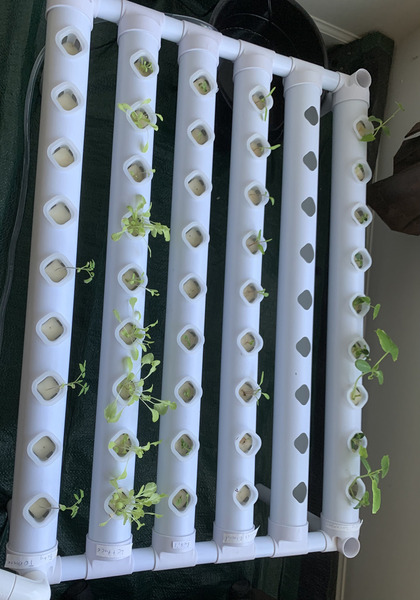
Hydroponics is often promoted as a highly efficient alternative to traditional soil farming, but its effectiveness in small indoor polyculture systems is not well understood. In this study, students compared plant growth and maturity across hydroponic and soil-based indoor polycultures and found that soil grown plants were generally taller and more mature than those grown hydroponically. These results suggest that soil-based methods may outperform hydroponics in certain household polyculture settings.

Read More...

Population Forecasting by Population Growth Models based on MATLAB Simulation

Li et al. | Aug 31, 2020

Population Forecasting by Population Growth Models based on MATLAB Simulation

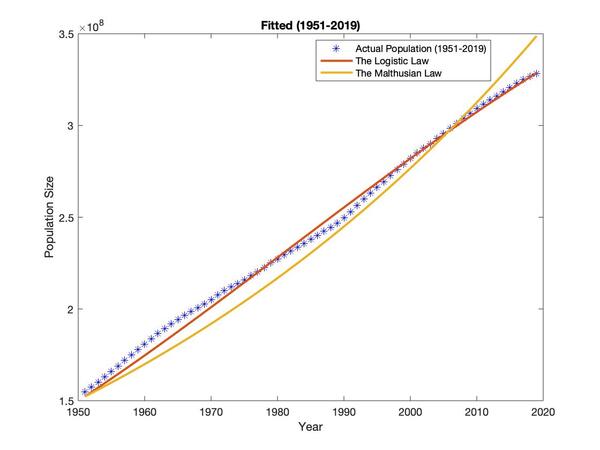
In this work, the authors investigate the accuracy with which two different population growth models can predict population growth over time. They apply the Malthusian law or Logistic law to US population from 1951 until 2019. To assess how closely the growth model fits actual population data, a least-squared curve fit was applied and revealed that the Logistic law of population growth resulted in smaller sum of squared residuals. These findings are important for ensuring optimal population growth models are implemented to data as population forecasting affects a country's economic and social structure.

Read More...