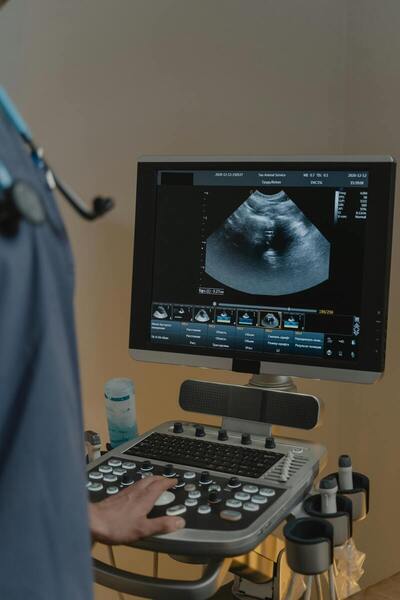
The authors created a 1D model to diagnose hepatomegaly and cirrhosis via ultrasound of the liver.
Read More...A 1D model of ultrasound waves for diagnosing of hepatomegaly and cirrhosis
The authors created a 1D model to diagnose hepatomegaly and cirrhosis via ultrasound of the liver.
Read More...Nanotexturing as a method to reduce dust accumulation on solar panels
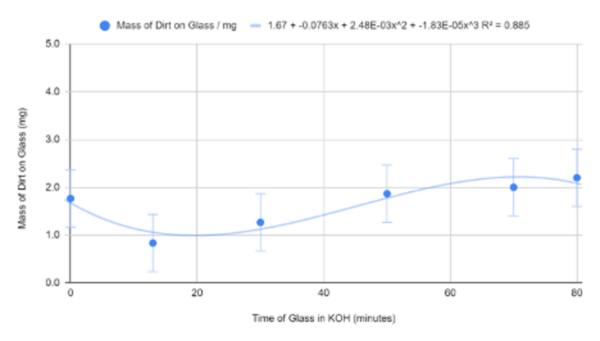
Dust accumulation on solar panels can reduce electricity output by 20–50%, posing a major challenge for solar energy collection. Instead of altering panel design, we explored a simpler approach by modifying surface energy through nanotexturing, predicting that hydrophobic surfaces would repel both water and dust. This study found that treating glass and silicone surfaces with potassium hydroxide (KOH) for 13 and 10 minutes, respectively, created optimal nanotextures (445 nm for glass, 205 nm for silicone), significantly reducing dirt accumulation and improving solar energy capture.
Read More...Estimating the liquid jet breakdown height using dimensional analysis with experimental evidence
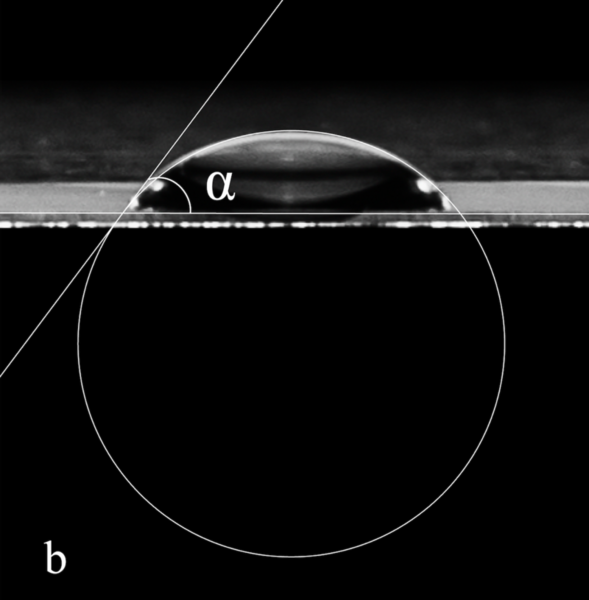
These authors mathematically deduce a model that explains the interesting (and unintuitive) physical phenomenon that occurs when water falls.
Read More...Solving a new NP-Complete problem that resembles image pattern recognition using deep learning
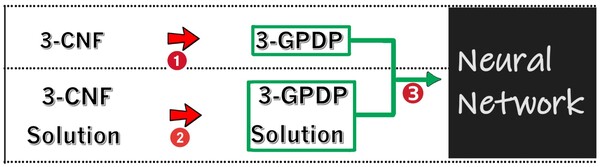
In this study, the authors tested the ability and accuracy of a neural net to identify patterns in complex number matrices.
Read More...A Quantitative Assessment of Time, Frequency, and Time-frequency Algorithms for Automated Seizure Detection and Monitoring
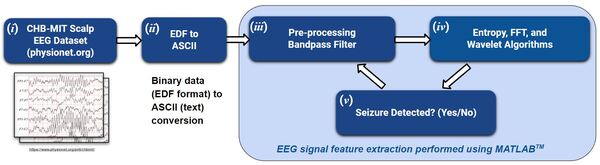
Each year, over 100,000 patients die from Sudden Unexpected Death in Epilepsy (SUDEP). A reliable seizure warning system can help patients stay safe. This work presents a comprehensive, comparative analysis of three different signal processing algorithms for automated seizure/ictal detection. The experimental results show that the proposed methods can be effective for accurate automated seizure detection and monitoring in clinical care.
Read More...Population Forecasting by Population Growth Models based on MATLAB Simulation
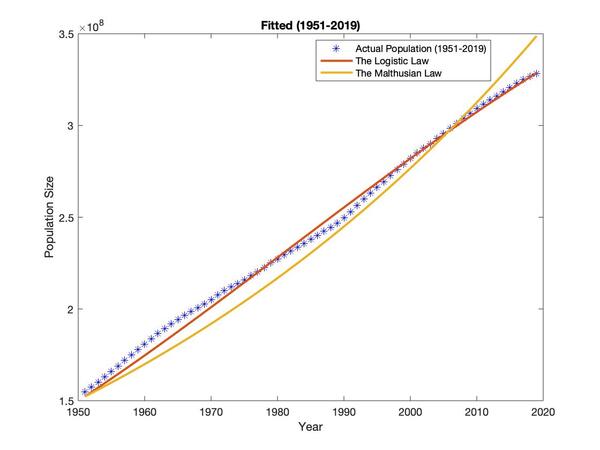
In this work, the authors investigate the accuracy with which two different population growth models can predict population growth over time. They apply the Malthusian law or Logistic law to US population from 1951 until 2019. To assess how closely the growth model fits actual population data, a least-squared curve fit was applied and revealed that the Logistic law of population growth resulted in smaller sum of squared residuals. These findings are important for ensuring optimal population growth models are implemented to data as population forecasting affects a country's economic and social structure.
Read More...An Analysis on Exoplanets and How They are Affected by Different Factors in Their Star Systems
In this article, the authors systematically study whether the type of a star is correlated with the number of planets it can support. Their study shows that medium-sized stars are likely to support more than one planet, just like the case in our solar system. They predict that, of the hundreds of planets beyond our solar system, 6% might be habitable. As humans work to travel further and further into space, some of those might truly be suited for human life.
Read More...Optimizing Interplanetary Travel Using a Genetic Algorithm
In this work, the authors develop an algorithm that solves the problem of efficient space travel between planets. This is a problem that could soon be of relevance as mankind continues to expand its exploration of outer space, and potentially attempt to inhabit it.
Read More...A comparative study of dynamic scoring formulas for capture-the-flag competitions
The use of gamification in cybersecurity education, particularly through capture-the-flag competitions, involves scoring challenges based on their difficulty and the number of teams that solve them. The study investigated how changing the scoring formulas affects competition outcomes, predicting that different formulas would alter score distributions.
Read More...The effect of activation function choice on the performance of convolutional neural networks
With the advance of technology, artificial intelligence (AI) is now applied widely in society. In the study of AI, machine learning (ML) is a subfield in which a machine learns to be better at performing certain tasks through experience. This work focuses on the convolutional neural network (CNN), a framework of ML, applied to an image classification task. Specifically, we analyzed the performance of the CNN as the type of neural activation function changes.
Read More...