Browse Articles

Analysis of ultraviolet light as a bactericide of gram-negative bacteria in Cladophora macroalgae extracts

Newell et al. | Nov 07, 2022

Analysis of ultraviolet light as a bactericide of gram-negative bacteria in <em>Cladophora</em> macroalgae extracts

Here, the authors sought to use Cladophora macroalgae as a possible antibiotic to address the growing threat of antibiotic resistance in pathogenic bacteria. However, when they observed algae extracts to be greatly contaminated with gram-negative bacteria, they adapted to explore the ability to use ultraviolet light as a bactericide. They found that treatment with ultraviolet light had a significant effect.

Read More...


Comparative screening of dose-dependent and strain-specific antimicrobial efficacy of berberine against a representative library of broad-spectrum antibiotics

Sun et al. | May 10, 2021

Comparative screening of dose-dependent and strain-specific antimicrobial efficacy of berberine against a representative library of broad-spectrum antibiotics

We hypothesize that berberine has broad-spectrum antibacterial properties, along with potency that is comparable to current broad-spectrum antibiotics that are commercially available. Here, we screened berberine against four strains of bacteria and evaluated its antimicrobial activity against five broad-spectrum antibiotics from different classes to better quantify berberine’s antibacterial activity and compare its efficacy as an antibacterial agent to the broad-spectrum antibiotics. Our results indicated that berberine had strain-selective cytotoxic effects and was significantly less potent than most of the broad-spectrum antibiotics

Read More...

Don’t Waste the Medical Waste: Reducing Improperly Classified Hazardous Waste in a Medical Facility

Hemani et al. | Jun 20, 2018

Don’t Waste the Medical Waste: Reducing Improperly Classified Hazardous Waste in a Medical Facility

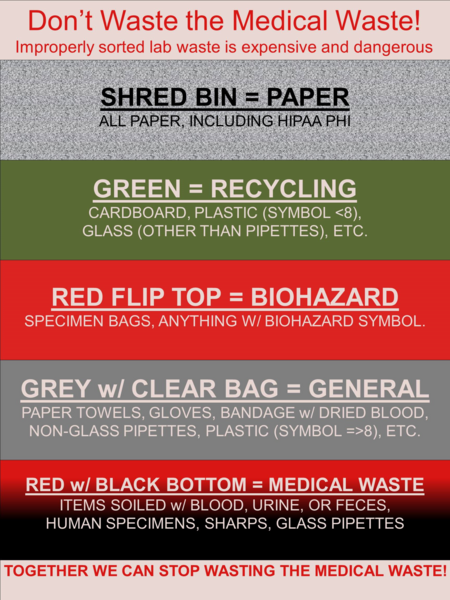
Hemani et al. tackled the problem of rampant hospital waste by implementing staff training to help inform hospital workers about proper waste disposal. The authors observed a significant increase in proper waste disposal after the training, showing that simple strategies, such as in-person classroom training and posters, can have a profound effect on limiting improper waste handling.

Read More...

Country-level relationship of OTC medicine consumption and frequency of GP consultation

Hirai et al. | Dec 09, 2024

Country-level relationship of OTC medicine consumption and frequency of GP consultation

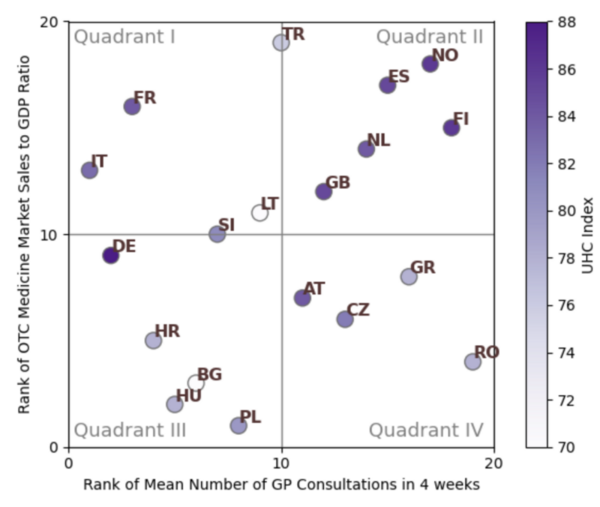
The discussion surrounding self-medication with non-prescription medicines has gained significance in healthcare and public health, particularly given the global increase in consumption of non-prescription drugs. This study aimed to examine the association between the frequency of general practitioner (GP) consultations and the proportion of economic resources spent on OTC medicine.

Read More...

Shortage of Black physicians: Florida Black medical student enrollment from 2013 to 2021

Khan et al. | Sep 18, 2024

Shortage of Black physicians: Florida Black medical student enrollment from 2013 to 2021

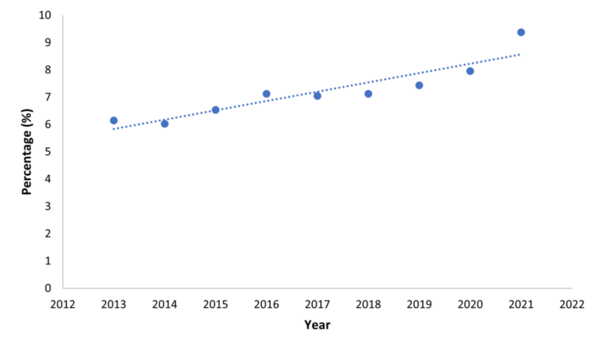
Black patients tend to have better health outcomes when cared for by Black physicians, yet Black doctors make up only 5% of U.S. physicians, despite Black people comprising 14% of the population. This analysis of data from Florida medical schools showed a higher enrollment of Black first-year students (13.5%) compared to the national average (9%), and a national increase from 6% in 2013 to 9% in 2021, aligning with the rise of social justice movements. Increasing Black medical student enrollment could reduce health disparities and improve outcomes for Black communities.

Read More...

A comparison of use of the mobile electronic health record by medical providers based on clinical setting

Stover et al. | Jul 12, 2023

A comparison of use of the mobile electronic health record by medical providers based on clinical setting
Image credit: Tima Miroshnichenko

The electronic health record (EHR), along with its mobile application, has demonstrated the ability to improve the efficiency and accuracy of health care delivery. This study included data from 874 health care providers over a 12-month period regarding their usage of mobile phone (EPIC® Haiku) and tablet (EPIC® Canto) mEHR. Ambulatory and inpatient care providers had the greatest usage levels over the 12-month period. Awareness of workflow allows for optimization of mEHR design and implementation, which should increase mEHR adoption and usage, leading to better health outcomes for patients.

Read More...