In this study, with consideration for the increasing participation of high school students in indoor rowing, the authors analyzed World Indoor Rowing Championship data. Statistical analysis revealed two key features that can determine the performance of a rower as well as increasing competitiveness in nearly all categories considered. They conclude by offering a 2000-meter ergometer time distribution that can help junior rowers assess their current performance relative to the world competition.
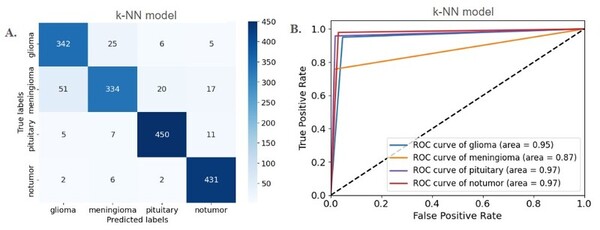
This manuscript explores the performance of five different machine learning models in classifying brain tumors from a dataset of MRI scans. The authors find that several of the models showed >90% accuracy. Thus, the authors suggest that machine learning models demonstrate potential for effective implementation in clinical settings, including as a diagnostic tool that can be used to complement the expertise of neuroradiologists.
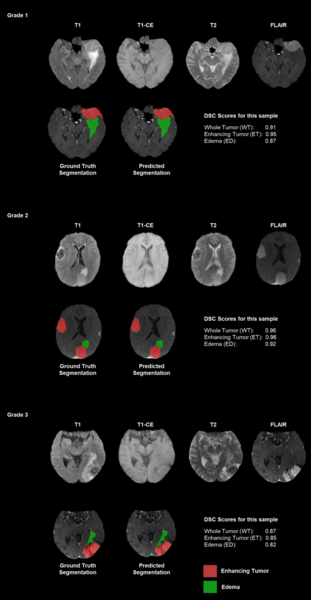
Authors emphasize the challenges of manual tumor segmentation and the potential of deep learning models to enhance accuracy by automatically analyzing MRI scans.
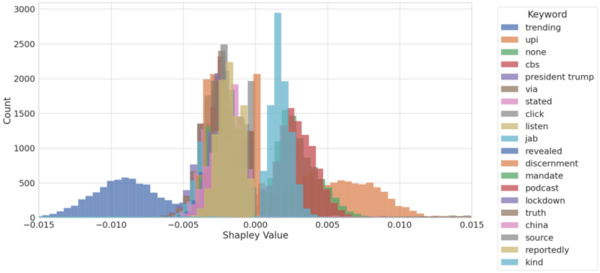
The authors looked at the ability of machine learning algorithms to interpret language given their increasing use in moderating content on social media. Using an explainable model they were able to achieve 81% accuracy in detecting fake vs. real news based on language of posts alone.
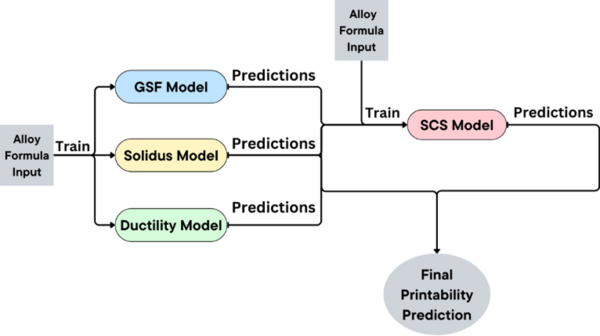
Additive manufacturing (AM) is transforming the production of complex metal parts, but challenges like internal cracking can arise, particularly in critical sectors such as aerospace and automotive. Traditional methods to assess cracking susceptibility are costly and time-consuming, prompting the use of machine learning (ML) for more efficient predictions. This study developed a multi-model ML pipeline that predicts solidification cracking susceptibility (SCS) more accurately by considering secondary alloy properties alongside composition, with Random Forest models showing the best performance, highlighting a promising direction for future research into SCS quantification.
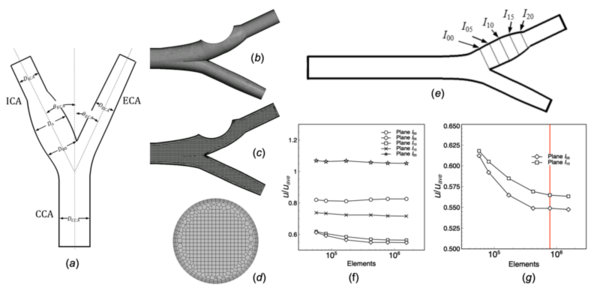
Physics‑Informed Neural Networks (PINNs) offer a promising way to estimate blood‑flow behavior in arteries, especially near the vessel wall where traditional methods struggle. In this study, students tested how sensor density and placement affect PINN accuracy in modeling carotid artery flow and found that accuracy improves up to a moderate sensor density and depends strongly on how close sensors are placed to the arterial wall. Applying the optimized configuration to a patient‑specific carotid model produced velocity predictions closely matching computational fluid dynamics results, highlighting PINNs’ potential for future personalized cardiovascular assessment.
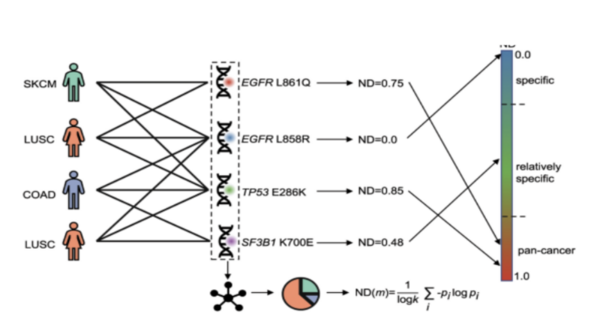
Breast cancer is the most common cancer in women, with approximately 300,000 diagnosed with breast cancer in 2023. It ranks second in cancer-related deaths for women, after lung cancer with nearly 50,000 deaths. Scientists have identified important genetic mutations in genes like BRCA1 and BRCA2 that lead to the development of breast cancer, but previous studies were limited as they focused on specific populations. To overcome limitations, diverse populations and powerful statistical methods like genome-wide association studies and whole-genome sequencing are needed. Explainable artificial intelligence (XAI) can be used in oncology and breast cancer research to overcome these limitations of specificity as it can analyze datasets of diagnosed patients by providing interpretable explanations for identified patterns and predictions. This project aims to achieve technological and medicinal goals by using advanced algorithms to identify breast cancer subtypes for faster diagnoses. Multiple methods were utilized to develop an efficient algorithm. We hypothesized that an XAI approach would be best as it can assign scores to genes, specifically with a 90% success rate. To test that, we ran multiple trials utilizing XAI methods through the identification of class-specific and patient-specific key genes. We found that the study demonstrated a pipeline that combines multiple XAI techniques to identify potential biomarker genes for breast cancer with a 95% success rate.
In this article the authors looked at different attributes of apps within the Google Play store to determine how those may impact the overall app rating out of five stars. They found that review count, amount of storage needed and when the app was last updated to be the most influential factors on an app's rating.