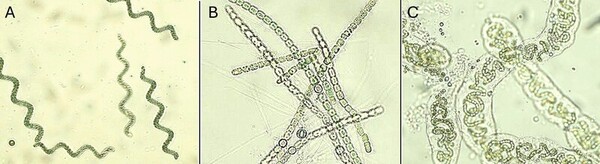
The authors test symbiotic relationships among cyanobacteria species to generate more robust cultures for potential biofuel production.
Read More...Optimizing Arthrospira platensis growth for biofuel production via symbiosis between cyanobacteria strains
The authors test symbiotic relationships among cyanobacteria species to generate more robust cultures for potential biofuel production.
Read More...Mechanistic deconvolution of autoreduction in tetrazolium-based cell viability assays
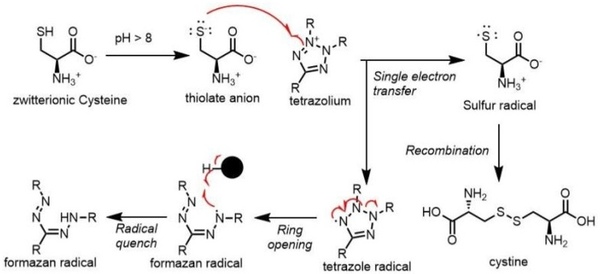
Optical reporters like tetrazolium dyes, exemplified by 5-diphenyl tetrazolium bromide (MTT), are effective tools for quantifying cellular responses under experimental conditions. These dyes assess cell viability by producing brightly-colored formazan dyes when reduced inside active cells. However, certain small molecules, including reducing agents like ascorbic acid, cysteine, and glutathione (GSH), can interfere with MTT assays, potentially compromising accuracy.
Read More...Rhizosphere metagenome analysis and wet-lab approach to derive optimal strategy for lead remediation in situ
The Environmental Protection Agency (EPA) reports a significant number of heavy metal-contaminated sites across the United States. To address this public health concern, rhizoremediation using microbes has emerged as a promising solution. Here, a combination of soil microbes were inoculated in the rhizosphere in soil contaminated with 500 parts per million (ppm) of lead. Results showed rhizoremediation is an effective bioremediation strategy and may increase crop productivity by converting nonarable lands into arable lands.
Read More...Integrating microbial fuel cell with sedum green roof for stormwater retention and renewable energy generation
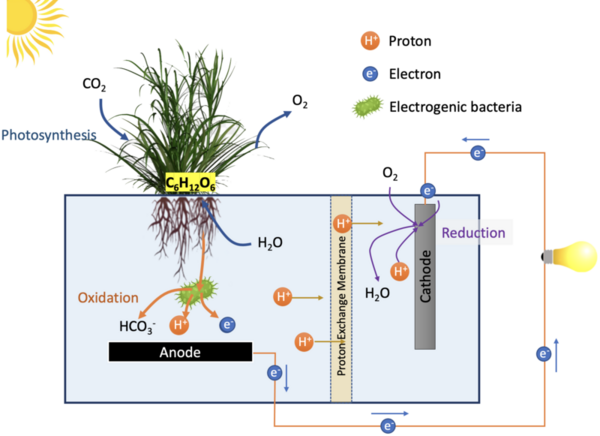
The authors looked at renewable energy generators and the ability to utilize green roofs as a solution to climate change.
Read More...Examining the Growth of Methanotrophic Bacteria Immersed in Extremely Low-Frequency Electromagnetic Fields
Scientist are investigating the use of methane-consuming bacteria to aid the growing problem of rising greenhouse gas emissions. While previous studies claim that low-frequency electromagnetic fields can accelerate the growth rate of these bacteria, Chu et al. demonstrate that this fundamental ideology is not on the same wavelength with their data.
Read More...A comparison study in the expansion of human bone marrow mesenchymal stem cells
In this study, the effects of different sources of serum on growing mesenchymal stem cells are compared with the goal of identifying one more suitable for clinical use.
Read More...Taft linear free-energy relationships in the biocatalytic hydrolysis of sterically hindered nitrophenyl ester substrates
This study applies Taft linear free-energy relationships to study kinetic trends in the enzymatic hydrolysis of sterically hindered substrates.
Read More...Investigating Hydrogen as a Potential Alternative to Kerosene in Fueling Commercial Aircraft
Growing climate concerns have intensified research into zero-emission transportation fuels, notably hydrogen. Hydrogen is considered a clean fuel because its only major by-product is water. This project analyzes how hydrogen compares to kerosene as a commercial aircraft fuel with respect to cost, CO2 emissions, and flight range.
Read More...Low environmental pH inhibits phagosome formation and motility of Tetrahymena pyriformis
In this study, the authors look into some of the implications of rising carbon dioxide levels by studying the effects of acidic pH on the ability of T. pyriformis to feed by quantifying phagosome formation and motility.
Read More...The Effects of Different Aquatic Environments on the Rate of Polyethylene Biodegradation by Bacillus subtilis
Here the authors test the ability of the bacterium Bacillus subtilis to degrade the polyethylene from plastic waste in various aquatic environments. They determined that degradation can occur among all samples while it was the highest in fresh water and lowest in ocean water.
Read More...