Browse Articles

The use of computer vision to differentiate valley fever from lung cancer via CT scans of nodules

El Kereamy et al. | Nov 12, 2024

The use of computer vision to differentiate valley fever from lung cancer via CT scans of nodules

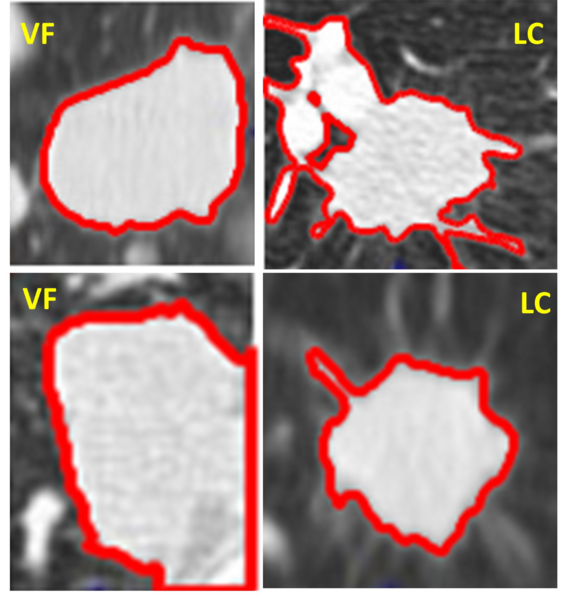
Pulmonary diseases like lung cancer and valley fever pose serious health challenges, making accurate and rapid diagnostics essential. This study developed a MATLAB-based software tool that uses computer vision techniques to differentiate between these diseases by analyzing features of lung nodules in CT scans, achieving higher precision than traditional methods.

Read More...

The Role of Corresponding Race, Gender, and Species as Incentives for Charitable Giving

Antonides-Jensen et al. | Jul 31, 2019

The Role of Corresponding Race, Gender, and Species as Incentives for Charitable Giving

Inherent bias is often the unconscious driver of human behavior, and the first step towards overcoming these biases is our awareness of them. In this article the authors investigate whether race, gender or species affect the choice of charity by middle class Spaniards. Their conclusions serve as a starting point for further studies that could help charities refine their campaigns in light of these biases effectively transcending them or taking advantage of them to improve their fundraising attempts.

Read More...

Identification of potential therapeutic targets for multiple myeloma by gene expression analysis

Kochenderfer et al. | Apr 26, 2024

Identification of potential therapeutic targets for multiple myeloma by gene expression analysis
Image credit: The authors

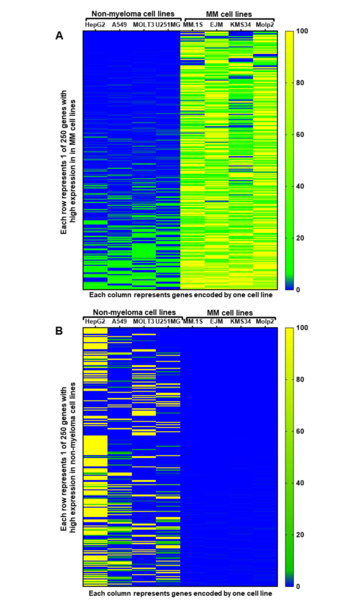
A central challenge of cancer therapy is identifying treatments that will effectively target cancer cells while minimizing effects on healthy cells. To identify potential targets for treating a multiple myeloma, a frequently incurable cancer, Kochenderfer and Kochenderfer analyze RNA sequencing data from the Cancer Cell Line Encyclopedia to find genes with high expression in multiple myeloma cells and low expression in normal tissues

Read More...

Quantitative analysis and development of alopecia areata classification frameworks

Dubey et al. | Jun 03, 2024

Quantitative analysis and development of alopecia areata classification frameworks

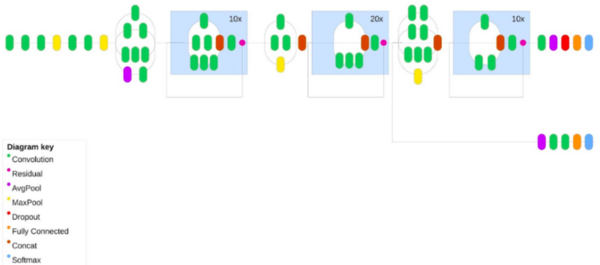
This article discusses Alopecia areata, an autoimmune disorder causing sudden hair loss due to the immune system mistakenly attacking hair follicles. The article introduces the use of deep learning (DL) techniques, particularly convolutional neural networks (CNN), for classifying images of healthy and alopecia-affected hair. The study presents a comparative analysis of newly optimized CNN models with existing ones, trained on datasets containing images of healthy and alopecia-affected hair. The Inception-Resnet-v2 model emerged as the most effective for classifying Alopecia Areata.

Read More...

A novel approach for early detection of Alzheimer’s disease using deep neural networks with magnetic resonance imaging

Ganesh et al. | Mar 20, 2022

A novel approach for early detection of Alzheimer’s disease using deep neural networks with magnetic resonance imaging

In the battle against Alzheimer's disease, early detection is critical to mitigating symptoms in patients. Here, the authors use a collection of MRI scans, layering with deep learning computer modeling, to investigate early stages of AD which can be hard to catch by human eye. Their model is successful, able to outperform previous models, and detected regions of interest in the brain for further consideration.

Read More...

How are genetically modified foods discussed on TikTok? An analysis of #GMOFOODS

Basch et al. | Nov 20, 2023

How are genetically modified foods discussed on TikTok? An analysis of #GMOFOODS
Image credit: Camilo Jimenez

Here, the authors investigated engagement with #GMOFOODS, a hashtag on TikTok. They hypothesized that content focused on the negative effects of genetically modified organisms would receive more interaction driven by consumers. They found that the most common cateogry focused on the disadvantages of GMOs related to nutrition and health with the number of views determining if the video would be provided to users.

Read More...

Testing Simarouba amara’s therapeutic effects against weedicide-induced tumor-like morphology in planarians

Thiagarajan et al. | Apr 26, 2024

Testing Simarouba amara’s therapeutic effects against weedicide-induced tumor-like morphology in planarians

According to the World Health Organization, cancer is a leading cause of death globally. The disease’s prevalence is rapidly increasing in association with factors including the increased use of pesticides and herbicides, such as glyphosate, which is one of the most widely used herbicide ingredients. Natural antioxidants and phytochemicals are being tested as anti-cancer agents due to their antiproliferative, antioxidative, and pro-apoptotic properties. Thus, we aimed to investigate the potential role of S. amara extract as a therapeutic agent against glyphosate-induced toxicity and tumor-like morphologies in regenerating and homeostatic planaria (Dugesia dorotocephala).

Read More...

Behavioral Longevity: The Impact of Smoking, Alcohol Consumption, and Obesity on Life Expectancy

Han et al. | Oct 03, 2019

Behavioral Longevity: The Impact of Smoking, Alcohol Consumption, and Obesity on Life Expectancy

In this article, the authors look into what is already known about the factor affecting longevity and determine the importance of behavioral factors including alcohol consumption, smoking, and obesity on longevity. The authors quantify data from over 150 countries and, interestingly, find that the impact each factor has on longevity is at least in part dependent on the country's economic development status. Overall, they conclude that an average person’s life expectancy can increase by more than 3 years if smoking and alcohol consumption is reduced by a half and weight is decreased by 10%.

Read More...